
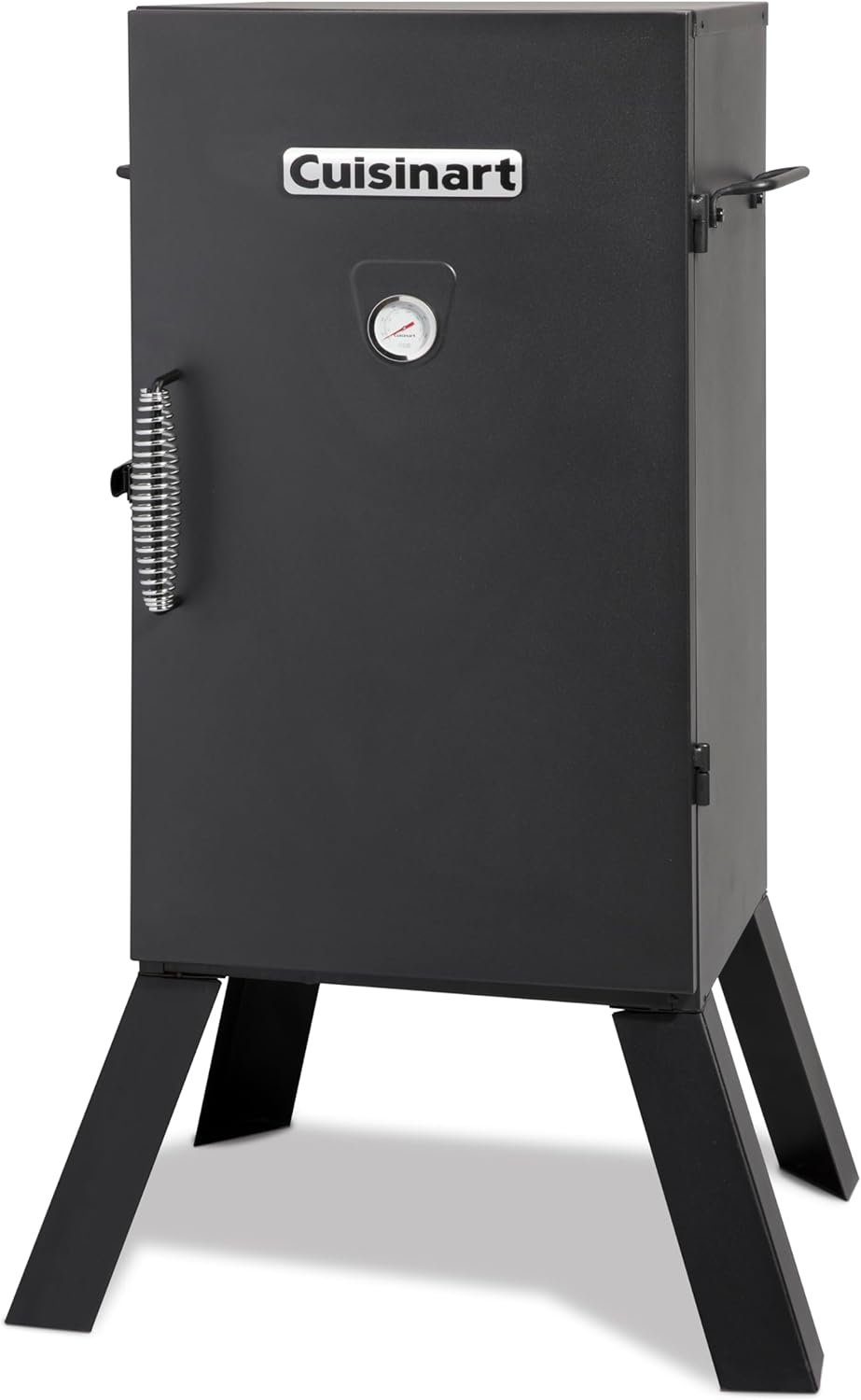
Why Smoker Selection Matters for Home BBQ
Choosing the right smoker shapes cooking results, workflow, and maintenance for any outdoor cook. Selection decisions hinge on intended cooking style — low-and-slow smoking, faster hot smoking, or occasional roasting — and on fuel preferences, space constraints, and tolerance for hands-on fire management. For a corded-electric unit like the Cuisinart COS-330, priorities are different from charcoal, gas, or pellet systems: electric models trade direct-flame flavor intensity for steady temperature management, simpler setup, and reduced ash cleanup. Buyers should align expectations with the heater type, temperature range, and internal volume when evaluating whether a vertical electric smoker will meet needs for brisket, salmon, jerky, or mixed-plate entertaining. Durability, rack configuration, and cleaning access further determine long-term satisfaction. The following review describes how the COS-330’s specifications and common owner feedback map to practical performance criteria for backyard hosts and entry-level-to-intermediate smokers.
Quick Overview
| Feature | Details |
|---|---|
| Smoker type | Vertical corded electric smoker |
| Fuel type | Electric (corded) |
| Total cooking area | 548 sq. in. across three chrome racks |
| Temperature range | 100°F to 400°F, dial-adjustable |
| Heating specification | Manufacturer lists a 1,500-watt heating element and references 15,000 BTU in product information |
| Materials & construction | Stainless steel outer material, chrome-steel racks, removable water and wood chip trays |
| Control system | Manual dial with built-in analog thermometer on door |
| Best suited cooking styles | Low-and-slow smoking, hot smoking, smoking fish/jerky, small roasts |
| Intended use cases | Backyard entertaining, beginner to intermediate users, compact vertical smoking operations |
| Warranty | Refer to manufacturer documentation for warranty details |
The Quick Overview presents the COS-330 as a vertical electric smoker with a modest footprint and three rack levels that support a variety of smoking tasks. The dial control and built-in thermometer point to manual temperature management suited to cooks who prefer simple operation, while the removable water pan and wood tray enable wet-smoking techniques and the addition of wood chips for smoke flavor.

Temperature Control and Smoking Versatility
Temperature control is a primary decision factor for electric smokers because the heating method defines the practical cooking envelope and ease of maintaining steady temperatures. The COS-330 offers a manufacturer-specified range from 100°F to 400°F, adjusted via a front dial with a built-in analog thermometer on the door. This range covers common low-and-slow smoking targets as well as higher-temperature hot smoking and finishing tasks. Electric heating elements provide steady heat without direct flame, reducing flare and ash. For users prioritizing exact set-and-forget control, the COS-330’s manual dial and analog readout are straightforward, though they lack the fine digital PID regulation found on higher-end electric or pellet systems.

Temperature range and precision for typical smoking tasks
The 100°F to 400°F range covers most smoking and finishing requirements: the low end supports dehydration and jerky, mid-range temperatures suit classic smoking for ribs or salmon, and the higher end enables hot smoking and short roasts. Precision depends on the dial setting and how the unit stabilizes around the set point; electric elements normally respond more predictably than charcoal but can still show some fluctuation without digital feedback control. External ambient temperature, loading patterns, and door openings will influence ramp-up time and steady-state accuracy, so plan for modest adjustments and use a probe thermometer for critical doneness checks.
Wood chip and water pan impact on smoke generation and moisture
The inclusion of a removable wood chip tray and a water pan supports both smoke generation and moisture control. Wood chips smolder when placed near the heating element and produce smoke that circulates through the vertical chamber; the water pan aids in maintaining humidity, which can improve smoke adherence and tenderness. Electric smokers typically produce a gentler smoke profile than charcoal or wood-burning rigs, so using denser wood chips or longer soak/dry cycles can intensify flavor. Tray placement and chip quantity determine smoke density and burn time; these are practical levers for users adjusting flavor strength.
Control interface and thermometer considerations
A manual dial and a built-in analog thermometer provide straightforward operation but limit automated precision. Analog dials are durable and intuitive but do not offer programmable ramps or alerts. The door-mounted thermometer gives a general indication of chamber temperature but may lag relative to probe thermometers positioned next to food. For cooks targeting tight temperature bands for brisket or other long smokes, adding a digital probe thermometer for meat and chamber monitoring is a recommended complement to the smoker’s native controls.
Heat Distribution, Airflow, and Thermal Performance
Heat distribution and airflow management directly influence cooking consistency across multiple racks. The COS-330’s vertical design encourages convective flow from the heating element upward through the chamber, passing by the water pan and wood tray. Good vertical smokers leverage stacked racks and natural convection to create predictable thermal zones, but rack position and load size will establish hot and cool pockets. The manufacturer’s stainless steel construction and chrome-steel racks are commonly used to reflect heat and limit distortion, yet thin-walled assemblies can exhibit greater temperature gradients than heavy-gauge units. Venting, including any adjustable air inlets or outlets, affects oxygen supply to wood chips and overall airflow; users should account for airflow when arranging meats and rotating racks if evenness is a priority.

Heating element characteristics and implications for evenness
The COS-330 lists a 1,500-watt heating element and references 15,000 BTU in product information, which indicates a design balanced for steady heat generation rather than rapid searing. Electric elements heat predictably and are less influenced by crosswinds or ambient drafts than open-flame systems, but they rely on conduction and convection within the chamber. Evenness depends on insulation, chamber volume, and the distance between heat source and racks. For larger cuts, placing meat closer to the central flow path and monitoring internal temperatures with probes will mitigate uneven cooking. Periodic rack rotation can also help balance results across levels.
Airflow pathways and smoke circulation
Vertical smokers like the COS-330 use a bottom-up airflow model: heat and smoke generated near the element travel upward, carrying flavor through each rack level. Effective circulation requires unobstructed space between racks and vents that allow a gentle exchange of air without rapid drafts. The removable water and chip trays serve as baffles that can moderate flow and hold moisture, while rack spacing influences how evenly smoke contacts food surfaces. Dense loading reduces circulation and may create cooler pockets, so load planning matters for consistent results when smoking multiple items simultaneously.
Rack placement, loading strategies, and hotspot management
Rack spacing and load distribution directly affect hotspot formation. The COS-330’s three chrome racks provide flexibility but require thoughtful placement of larger cuts to avoid overcrowding. For mixed loads — for example, brisket plus vegetables — place denser items lower or closer to the center of the flow and lighter items higher where temperatures may be milder. Using probe thermometers at multiple rack heights can reveal the smoker’s thermal profile and guide rotation or repositioning during long cooks. Airflow gaps of at least an inch around larger pieces preserve circulation and reduce the need for corrective measures mid-smoke.
Cooking Capacity, Layout, and Practical Use Cases
Cooking capacity defines what types of meals and events the smoker is best suited to handle. With 548 square inches of cooking area spread across three chrome-steel racks, the COS-330 is positioned as a large-capacity vertical electric smoker for backyard entertaining and multi-item smoking. The vertical footprint allows multiple thin or moderate-thickness cuts to be cooked concurrently — salmon fillets, slabs of ribs, links of sausage, jerky trays, and smaller poultry pieces are common candidates. The three removable racks offer flexibility for rearranging load patterns and for cleaning access. Users planning to smoke very large cuts like whole briskets or full pork shoulders should confirm fit and consider vertical orientation constraints for long pieces.

Rack measurements, space planning, and typical yields
The 548 sq. in. total is a practical indicator for planning yields rather than a guarantee of fit for specific cuts. For example, several rib racks, multiple fillets, or dozens of jerky strips are feasible with staggered placement. Thicker cuts require vertical clearance and benefit from placement near center flow for even exposure. The removable chrome racks simplify loading and unloading, and flexible rack spacing allows optimizing clearance for taller items. For hosting, the COS-330 accommodates moderate batch sizes suited to family gatherings or small parties rather than professional catering volumes.
Vertical footprint advantages and limitations
A vertical smoker’s compact footprint economizes patio space while maximizing usable surface area within the chamber. This design benefits users with limited horizontal space, enabling multiple rack layers without a wide grill profile. However, tall items may be limited by the internal height between racks and the top of the chamber, so extremely long cuts could require trimming or angling. Additionally, heat rises in vertical designs, which creates thermal gradients between lower and upper racks; these gradients are managed through rack arrangement and monitoring rather than by moving the heat source.
Best foods and cooking style match
The COS-330 is well-suited to classic smoking tasks that favor consistent low to moderate temperatures: smoked fish, pork ribs, poultry, sausages, jerky, and small roasts. Its temperature range also supports hot smoking and finishing tasks, offering versatility across smoking styles. For cooks who prioritize deep, thick smoke rings and heavy charcoal flavor, a charcoal or offset smoker remains the more suitable choice; for users seeking convenience, minimal ash cleanup, and steady heat for repeated weekend smokes, an electric vertical model aligns well with those priorities.
Construction, Maintenance, and Durability Considerations
Construction materials and maintenance needs shape long-term ownership costs and expected lifespan. The COS-330’s stainless steel exterior provides corrosion resistance against outdoor environments, while chrome-steel racks are dishwasher-safe per product descriptions, simplifying cleanup. Removable water and wood chip trays reduce direct contact of drippings with the element and help isolate residue for cleaning. The unit’s 58.5-pound weight and 20″D x 22″W x 40″H dimensions indicate a transportable but stable assembly; however, thin-gauge panels common in many consumer electric smokers can dent or warp under rough handling or extreme heat over prolonged years. Regular maintenance of trays, sealing door gaskets, and protection from weather will support longevity.

Materials, corrosion resistance, and structural robustness
Stainless steel outer panels offer baseline resistance to rust and make exterior cleaning straightforward. Chrome-steel racks resist sticking and can be placed in dishwashers, but chrome plating may wear over time from scrubbing and heat cycles. The internal trays for wood chips and water are engineered for frequent removal and cleaning; corrosion on these parts is the most common wear vector and is addressed through routine cleaning and drying. Heavier-gauge construction would improve thermal inertia and durability, so users expecting constant heavy-duty use may consider stepping up to thicker-wall or commercial-grade units.
Cleaning workflow and dishwasher-safe components
Dishwasher-safe chrome racks and removable trays streamline daily maintenance. The water pan and wood tray collect residue and are sized for straightforward extraction, which reduces contact with ash and grease inside the chamber. Door seals and corner crevices still require periodic hand cleaning to prevent buildup. Regular inspection of the heating element area and electrical cord for debris and moisture is recommended per manufacturer guidance to preserve function and safety. Simpler cleaning tends to encourage more consistent maintenance routines and longer service life.
Warranty, expected lifespan, and recommended users to avoid this model
Manufacturer warranty details are available through Cuisinart documentation and should be reviewed before purchase. Typical lifespan expectations for consumer electric smokers range based on frequency of use and maintenance habits; routine cleaning and sheltered storage improve longevity. This model is best suited to backyard hosts, beginners, and intermediate users seeking simple electric operation. Those requiring heavy commercial throughput, advanced digital control (PID), or intense charcoal/wood flavor profiles should consider alternative fuel types or higher-end models, as electric vertical smokers trade some flavor intensity and control sophistication for convenience.

Pros & Cons
Pros
- Generous vertical capacity with three removable chrome-steel racks. The 548 sq. in. cooking area supports multiple items at once, making it practical for family meals and small gatherings while the removable racks add flexibility for different load sizes.
- Wide temperature range from 100°F to 400°F. The span covers dehydration and jerky production up through hot smoking and finishing, supporting a broad set of smoking techniques and recipes without complex controls.
- Electric power simplifies setup and reduces cleanup. A corded electric heater removes ash management and direct flame handling, offering stable heat input that aligns with set-and-monitor smoking approaches commonly favored by backyard users.
- Removable water pan and wood chip tray for wet smoking and smoke customization. These trays make it straightforward to add humidity and controlled smoke from chips, enabling users to tweak flavor intensity and meat texture.
- Stainless steel exterior resists corrosion and cleans readily. The finish supports outdoor use with reasonable maintenance and helps maintain appearance over time compared with painted alternatives.
- Dishwasher-safe racks streamline maintenance. Ease of cleaning encourages routine upkeep and reduces time spent on post-cook scrubbing, which supports longer equipment life.
- Compact vertical footprint suits smaller patios. The tall, narrow design maximizes internal capacity while preserving horizontal outdoor space for other equipment and seating.
Cons
- Manual dial and analog thermometer limit precise temperature regulation. Without digital PID control, the unit can exhibit modest temperature fluctuations, which may require more manual monitoring for long, low-temperature smokes.
- Electric heating yields milder smoke intensity than charcoal/wood methods. Users seeking deep, heavy smoky flavors may find the electric profile less pronounced and may need additional wood chip strategies to compensate.
- Potential thermal gradients between rack levels. As a vertical design, temperatures typically rise toward upper racks; this requires load planning and rotation to ensure uniform results across multiple shelves.
- Not optimized for very large cuts without verification of fit. Oversized briskets or whole shoulders may require trimming or creative positioning due to internal height limitations, so measurement prior to purchase is advisable.
Final Verdict: Who This Grill or Smoker Is Best For (and Who Should Skip It)
The Cuisinart COS-330 targets backyard hosts, household cooks, and beginners who prioritize convenience, moderate capacity, and simplified operation. Its 548 sq. in. area and three removable racks accommodate a range of smoking tasks — from salmon and ribs to jerky and small roasts — while the removable water pan and wood chip tray allow classic wet-smoking techniques. Electric power suits users who prefer a low-maintenance setup without ash cleanup and who value a compact vertical footprint for smaller outdoor spaces. The manual dial and built-in thermometer make it easy to operate, though adding a probe thermometer will improve internal monitoring for long cooks.
This smoker is not the best choice for those seeking heavy charcoal-infused flavor, commercial-scale throughput, or highly accurate digital temperature control. Users who regularly cook very large whole cuts should confirm fit before committing, and frequent, heavy-duty usage may favor more robust, commercial-grade construction. For backyard cooks seeking a practical balance of capacity, simplicity, and predictable electric heating, the COS-330 presents a capable option among consumer vertical electric smokers.

Frequently Asked Questions (FAQs)
How does an electric smoker like the Cuisinart COS-330 compare to charcoal or pellet smokers?
Electric smokers provide steady, controllable heat with minimal ash and no direct flame, simplifying setup and cleanup. Charcoal and pellet smokers typically deliver stronger wood-fired flavors and more dynamic high-heat searing, but require more active fuel management. For users prioritizing convenience and predictable temperature control, an electric unit offers advantages; those seeking intense smoky profiles or searing capability may prefer charcoal or pellet systems.
What foods and cooking styles are best suited to the COS-330’s temperature range?
The COS-330’s 100°F to 400°F range supports dehydration and jerky production at the low end, classic low-and-slow smoking for ribs and salmon in the mid-range, and hot smoking or short roasts near higher temperatures. This versatility makes the unit suitable for smoked fish, poultry, sausages, ribs, and moderate roasts when monitored with a probe thermometer for doneness.
How should wood chips and the water pan be used in this electric smoker?
The removable wood chip tray is designed for direct placement of chips near the heating element to produce smoke, while the water pan adds humidity to reduce dryness and promote smoke adhesion. Use measured chip quantities for desired smoke intensity and consider denser hardwood chips for longer smoke durations. The water pan should be inspected and refilled during long cooks to maintain consistent humidity.
What are practical tips for achieving even cooking across all three racks?
Avoid overcrowding and maintain at least an inch of clearance around larger pieces to preserve airflow. Place heavier, thicker items nearer the center of upward flow and lighter items higher. Use multiple probe thermometers to monitor thermal zones and rotate racks or pieces if temperature gradients become apparent during multi-hour smokes.
Is the COS-330 easy to clean and maintain?
Yes. The unit includes removable trays and chrome-steel racks that are listed as dishwasher-safe, simplifying cleanup. Routine removal of the water pan and chip tray to discard residue, periodic wiping of interior surfaces, and inspection of door seals and the heating element area help maintain performance and longevity. Drying components before storage reduces corrosion risk.
Who should avoid buying this electric smoker?
Those who require heavy, charcoal-forward smoke flavor, commercial-level throughput, or advanced digital PID temperature control may find this electric vertical smoker limiting. Also, cooks who frequently smoke very large whole cuts should verify internal dimensions to ensure fit, since vertical chamber height can restrict extremely long pieces.
Does the COS-330 require special electrical setup?
The COS-330 is a corded electric appliance intended to run from standard household outlets as specified by the manufacturer. Users should consult the product manual for recommended outlet specifications and follow local electrical codes. Avoid extension cords that are undersized for the element’s rated wattage to prevent voltage drop and potential hazards.
How long can wood chip smoke last in an electric smoker without refilling?
Smoke duration depends on chip type, quantity, and tray design; small batches of chips can produce smoke for a short period, while larger or denser chips burn longer. In electric smokers, chips are typically replenished every 45 minutes to 2 hours for continuous smoke, but actual intervals vary by ambient temperature and desired smoke intensity. Staged additions help maintain steady smoke during long cooks.