
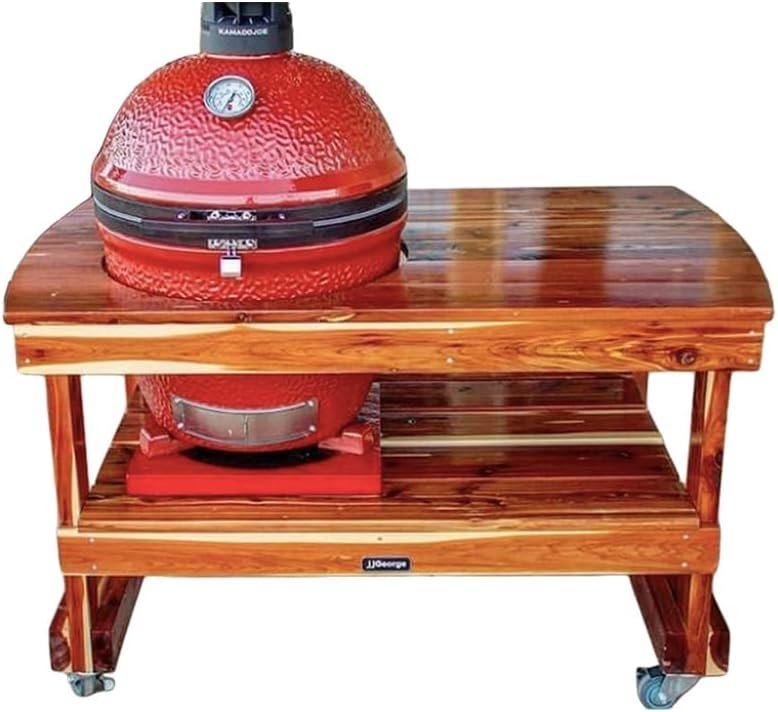
Why Grill Table Selection Matters
Choosing the right grill table or cart affects the efficiency, safety, and overall workflow of outdoor cooking. For kamado-style cookers such as the Classic Kamado Joe II, a dedicated table must reconcile three priorities: a stable mounting surface capable of supporting concentrated weight, a prep and staging area sized to match typical cooking volumes, and materials that tolerate outdoor exposure and incidental heat. Fuel choice—charcoal for kamado cooks—creates distinct requirements for clearance, ash handling, and accessory storage compared with gas, pellet, or electric setups. Buyers should consider how tabletop dimensions, lower-shelf capacity, and caster mobility will interact with typical cooking tasks like hot-lid handling, food staging, and tool organization. Equally important are material properties (resistance to rot and dimensional stability) and finish details that determine maintenance frequency and long-term appearance. The table reviewed here centers on Eastern red cedar construction, a specific weight recommendation, and a supplied cover; evaluating those specifications in the context of kamado operation helps determine whether the unit supports a given user’s cooking style and site conditions.
Quick Overview
| Feature | Details |
|---|---|
| Product type | Grill table / cart sized for Classic Kamado Joe II (Big Joe II or III model number compatibility) |
| Fuel type | Designed for kamado-style charcoal cookers (charcoal-focused workflows) |
| Dimensions | 52″ W x 32″ D x 32″ H (top surface height 32″) |
| Maximum weight recommendation | 200 Pounds |
| Materials & construction | Eastern red cedar top and base; wood frame finished with clear spar-urethane |
| Control system | Manual (no integrated temperature or electronic controls) |
| Best suited cooking styles | Grilling and low-and-slow smoking on kamado-style grills; prep and staging tasks |
| Intended use cases | Outdoor prep table and stable mount for Classic Kamado Joe series |
| Warranty / origin | Made in the USA; manufacturer-supplied components include table cover |
The table’s footprint and butcher-block-style cedar surface provide a dedicated staging and prep area tailored to kamado cooking where charcoal fueling dominates. The 200-pound recommendation supports most kamado configurations while leaving room for accessory storage below; the wooden construction prioritizes weather resistance and natural appearance over integrated electronics or metal-heavy heat management.
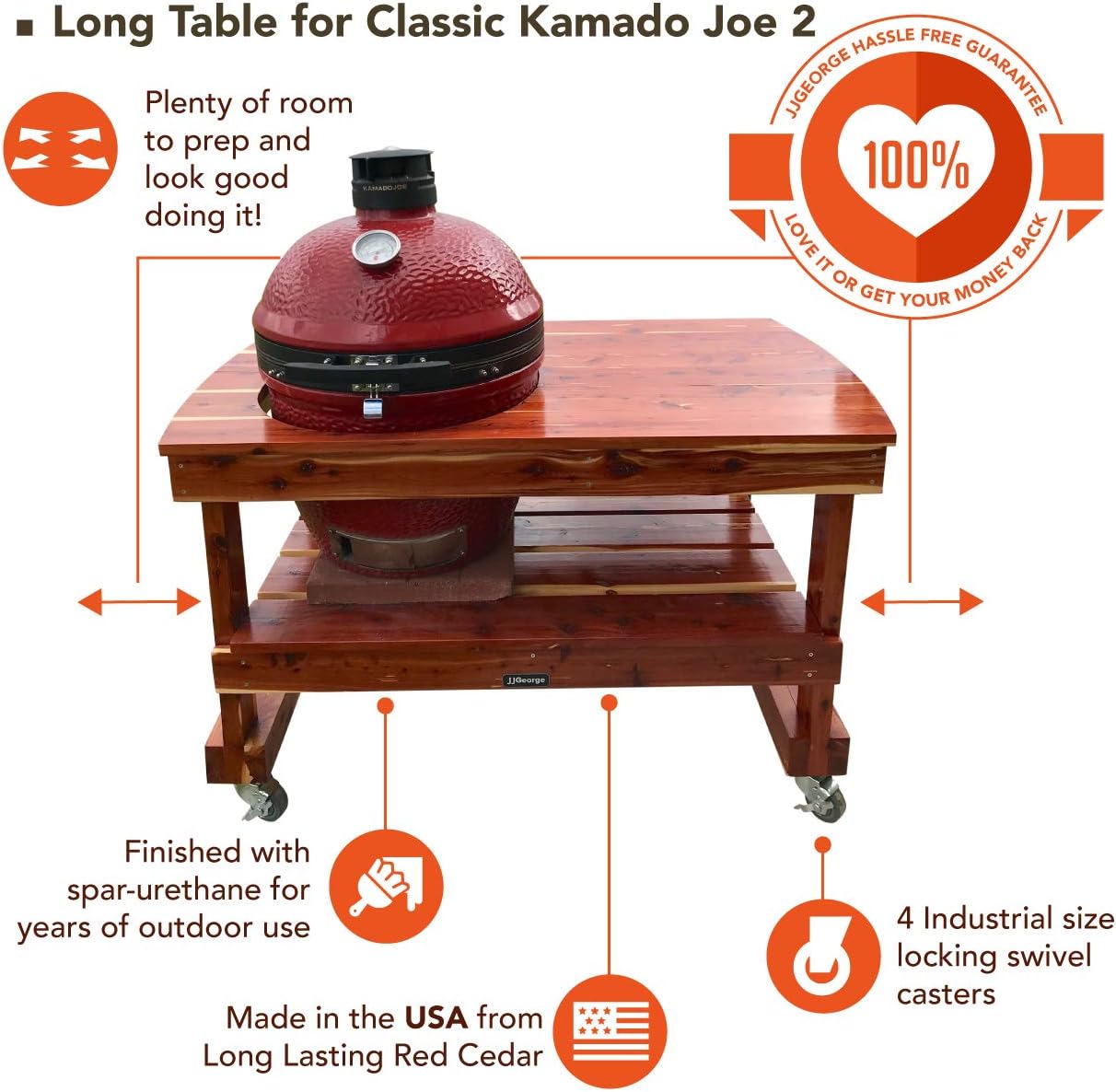
Fit and Compatibility with Kamado Joe Classic II
The compatibility of a grill table with a specific kamado model is central to purchase decisions because misalignment can compromise stability and workflow. The JJGeorge table is specified for Classic Kamado Joe II and III models, with a 52″ width and a 32″ top height that aligns with typical kamado dome heights and handle positions. A 200-pound maximum weight recommendation accommodates common kamado assemblies but is a specification limit rather than a performance claim; the actual load-bearing behavior will depend on grill footprint and accessories. Buyers should consider tabletop overhang, clearances for side shelves and dome handles, and how the table’s fixed depth will affect access to the grill profile. Compatible accessory placement and the inclusion of a protective cover are further practical compatibility considerations for kamado owners seeking a matching furniture solution.

Dimensions and Weight Capacity
Dimension and load specifications determine whether the table will accept the kamado securely and provide usable prep space. The 52″ width allows a kamado base and some lateral workspace; the 32″ depth gives a single broad surface suitable for handling utensils and small prep bowls adjacent to the grill. The 32″ height places the cooking surface near ergonomic working height for most cooks but may differ from other carts or countertops used in a given setup. A 200-pound maximum is typical for wooden grill tables but is a design limit that should be observed; larger kamado models fitted with heavy ceramic or steel accessories may approach that threshold. Stability depends on how the kamado’s leg or base interfaces with the table surface and how weight is distributed during loading and operation.
Compatibility with Grilling Accessories
Compatibility with common kamado accessories influences versatility. The table’s top and lower shelf configuration supports placement of side-walled tools, ash catchers temporarily staged items, and accessory boxes, but fixed wooden surfaces lack integrated mounting points for some accessory brackets or drop-in heat shields used on metal carts. Because there are no built-in gas connections, electrical outlets, or digital controllers, the table suits charcoal-based kamado workflows and manual accessory placement. Users planning to mount heavy add-ons such as pellet-fired smokers, additional metal racks, or full-size rotisseries should verify combined weights and mechanical attachment methods. The included protective cover helps preserve finish compatibility with accessories stored beneath or beside the grill.
Construction, Materials, and Weather Resistance
Material selection affects longevity and maintenance requirements in outdoor furniture. Eastern red cedar used for the top and base offers natural resistance to decay, dimensional stability, and a distinctive appearance; the factory-applied clear spar-urethane finish adds water repellency and surface protection while preserving the wood’s tone. Cedar’s lower density compared with hardwoods reduces weight but also means reasonable precautions against gouging and deep scratches. Manufacturer disclosures emphasize hand-crafted construction in the USA and cedar joinery rather than metal plate framing; this implies a different set of failure modes—fastener loosening, finish wear, and moisture-related movement—than all-metal carts. The supplied cover mitigates direct weather exposure, UV fade, and precipitation when the unit is not in use. Maintenance routines appropriate for finished cedar—periodic inspection of finish integrity, light sanding and recoat if needed—will extend service life in outdoor environments.

Eastern Red Cedar Properties and Finish
Eastern red cedar is chosen for outdoor furniture for its natural oils that deter rot and insect activity and for good dimensional stability in variable humidity. Factory finishing with clear spar-urethane improves resistance to water penetration and provides a wipe-clean surface for prep tasks; however, spar-urethane will eventually degrade under sustained UV exposure, necessitating re-coating over time. Cedar is not stain resistant by specification, and deep stains or heat marks can remain visible without refinishing. The wood handle and integrated wooden components present a warmer aesthetic and reduced conductivity compared with metal, but they are more vulnerable to surface dents and scorch marks from hot lids or utensils that contact the top.
Assembly, Joinery, and Structural Support
Handmade cedar construction typically relies on wood joinery reinforced with fasteners rather than welded metal frames. Simple assembly using common tools such as a screwdriver is indicated, which suits buyers preferring minimal on-site labor. Structural support is designed to distribute weight across the full top and lower shelf instead of concentrated metal brackets; this can reduce point-loading stresses but also means careful tightening of screws and periodic hardware checks are important for long-term rigidity. Casters and base swivel movement introduce dynamic loads during repositioning; locking mechanisms and secure caster mounting help preserve structural integrity. Because components are wood, replacement of damaged slats or shelves is often straightforward compared with integrated metal fabrication.
Work Surface, Storage, and Cooking Workflow
A grill table’s contribution to cooking workflow comes from usable surface area, storage layout, and ergonomic integration with the grill. The JJGeorge table’s 52″ width and 32″ depth form a single continuous cedar surface that accommodates prep tasks like seasoning, resting cooked items, and staging tools. A lower shelf provides storage for accessories, charcoal bags, or small coolers, centralizing supplies near the kamado and reducing trips back to indoor counters. Seating capacity is listed as two, which indicates casual guest staging rather than dining; the design focuses on preparation and service rather than formal seating. For cooks who prioritize a natural wood prep surface, the cedar top reduces reflected heat and provides a durable working plane, but it lacks integrated heatproof prep zones that some metal carts include.
Prep and Serving Space
The top surface dimensions create an uninterrupted prep area alongside the kamado, useful for plating, basting, and temporary hot-lid placement when handle clearance is adequate. Cedar’s low thermal conductivity helps the top remain comfortable to touch even when the grill is operating, but direct contact with very hot ceramic or metal components should be avoided to prevent scorch marks. The table does not feature cutouts or built-in waste disposal areas for ash or grease, so parallel ash management strategies are required during charcoal replenishment and cleaning. The supplied cover protects the surface when idle and helps maintain a hygienic prep plane between uses.
Lower Shelf Storage and Accessory Organization
A generously sized lower shelf supports storage of grilling accessories, small propane or charcoal containers for staging (charcoal is the primary fuel for kamado setups), and commonly used tools. The wooden shelf is suitable for plastic bins or metal boxes but does not include integrated tie-downs or locking storage. The shelf elevation keeps items off the ground, reducing moisture exposure and simplifying access during multi-hour cooks where tool rotation is frequent. Because the table body is wood, heavy or sharp-edged storage items should be placed on secondary protective platforms to avoid surface indentations or abrasion to the cedar finish.
Heat Management, Stability, and Safety Considerations
Heat management and physical stability directly impact the safe operation of any grill table. Wooden construction provides lower thermal conductivity than metal, reducing conductive heat transfer from the kamado to the tabletop, but radiation and convective heat from a kamado’s dome remain considerations. The 200-pound maximum weight recommendation and the table’s dimensions support most kamado placements, but manufacturers and standard guidance advise maintaining clearances to combustible materials; the wood top and base entail additional caution regarding direct contact with high-temperature components. Casters offer mobility but can introduce movement while loading or during windy conditions; locking casters or repositioning the table on stable ground preserve stability. The table cover provides protection from heat discoloration when stored, but active cooking safety relies on correct grill clearance, ash handling procedures, and adherence to the kamado manufacturer’s venting and clearance specifications.
Heat Exposure and Clearance Guidelines
Kamado cookers generate radiant heat and can produce localized high temperatures around the dome, which can discolor or damage finishes if the grill is placed too close to the wood. The table’s fixed top requires users to observe recommended clearance guidelines from the kamado manufacturer for combustible surfaces; even though cedar resists decay, it is still combustible if exposed to prolonged high temperatures. The absence of integrated heat shields or metal isolation plates means that positioning and the use of protective trivets or metal pads under hot accessories is prudent. Ash and embers from charcoal handling should be managed with heat-safe containers to prevent accidental embers from contacting the wood surface.
Stability, Casters, and Grill Mounting
The base type lists casters and swivel movement, which facilitate repositioning on patios or decks, but mobility introduces potential instability during grill loading or active use. Locking casters should be engaged while the grill is in use to prevent roll-away risk. The table’s support design presumes even weight distribution; because kamado bases concentrate weight at discrete points, ensuring the kamado’s feet or stand sit squarely and securely on the table surface is important for preventing tipping or rocking. For users expecting to move the grill frequently while loaded, a solid pad under each caster and routine hardware inspection will maintain stability over time.
Use Cases, Limitations, and Buyer Fit
Selecting a grill table depends on intended cooking styles, expected fuel routines, and environmental exposure. The JJGeorge cedar table is tailored to charcoal-based kamado owners who prioritize a natural wood prep surface, organized storage, and American-made handcrafted construction. It supports grilling and low-and-slow smoking workflows characteristic of kamado cookers by offering staging space and a lower shelf for fuel and tools. Limitations arise for buyers needing integrated heat management accessories, heavy-duty metal mounting systems, or electronic control integration, as the product focuses on wood construction without built-in tech. The 200-pound load recommendation and fixed dimensions may exclude larger custom kamados or heavily accessorized rigs. Buyers seeking a compact, aesthetic-ready outdoor prep surface with matched compatibility to Classic Kamado Joe II models will find the table aligned with those needs.
Best fit for grilling and smoking workflows
The table complements kamado cooking where charcoal fueling and manual temperature control dominate. The cedar top and storage layout streamline tasks such as topping up charcoal, staging rubs and sauces, and resting items between the grill and serving area. For cooks who run multi-hour smoke sessions, the lower shelf helps keep extra charcoal, chunks of wood, and grilling tools organized within reach. The absence of integrated electronics is compatible with kamado workflows that rely on manual vent adjustment and thermometer-based monitoring, rather than automated fuel feeds or electric controllers.
Limitations for certain fuels or high-temperature setups
The table is not optimized for direct integration with gas or pellet systems that may require line connections, electronic controllers, or metal-mounted brackets. High-temperature accessories that couple to the kamado—steel rotisseries or heavy smoker boxes—could approach or exceed the 200-pound recommendation when combined with the grill. The cedar finish and wooden joinery lack the same impact resistance and heat isolation properties as all-steel carts, so buyers planning extreme high-heat sequences or heavy metal accessory loads should consider metal-framed alternatives or protective metal interface plates to prevent finish damage and better distribute concentrated loads.
Pros & Cons
Pros
- Natural cedar construction with factory finish: Eastern red cedar offers natural rot resistance and a warm look; the spar-urethane finish adds water repellency and simplifies surface cleaning while preserving wood tone.
- Tailored fit for Classic Kamado Joe models: The 52″ width and model compatibility listings indicate design intent for Classic Kamado Joe II and III units, providing an integrated staging surface for those grills.
- Generous prep surface and lower shelf storage: The 32″ depth and full-width top provide uninterrupted prep area; the lower shelf centralizes fuel and accessory storage for multi-hour cooks.
- Made in the USA, handmade construction: Domestic manufacturing and handcrafted joinery can appeal to buyers prioritizing local production and artisan woodwork.
- Supplied protective cover: Inclusion of a dedicated table cover helps protect the cedar finish from weather and UV when not in use, extending finish life.
- Mobility with casters: Swivel casters enable repositioning on patios or decks, offering flexibility in outdoor kitchen layouts, with locking recommended during use.
Cons
- Limited maximum load recommendation: The 200-pound limit may be restrictive for heavily accessorized kamados or users intending to mount extra heavy metal equipment on the table.
- Wooden construction lacks integrated heat isolation: There are no built-in metal heat shields or cutouts for ash management; exposed cedar requires caution with hot lids and embers.
- No electronic integration or accessory mounts: The table is intentionally simple—buyers needing integrated outlets, controllers, or welded accessory attachments will need aftermarket adaptations.
- Finish maintenance required over time: While spar-urethane offers protection, UV exposure and heavy use will eventually necessitate re-coating or refinishing to maintain appearance and water resistance.
Final Verdict: Who This Grill or Smoker Is Best For (and Who Should Skip It)
The JJGeorge Eastern red cedar grill table is a purpose-driven furniture solution for owners of Classic Kamado Joe II and III kamado cookers who prioritize a natural wood prep surface, organized accessory storage, and a handcrafted aesthetic. It aligns with charcoal-centric grilling and smoking workflows common to kamado enthusiasts who rely on manual temperature control and value a coordinated outdoor staging area. The 52″ width, 32″ depth, and 32″ height place the grill, prep surface, and storage at ergonomic working dimensions for typical backyard cooks, while the included protective cover and cedar’s inherent weather resistance support long-term outdoor placement with routine maintenance.
Conversely, the product is not ideal for buyers who require heavy-duty metal mounting systems, integrated electronics, or support for oversized accessory loads beyond the specified 200-pound recommendation. Users planning extreme high-heat accessory use, custom rotisserie installations, or combined fuel systems (gas or pellet hybridizations) should consider metal-framed carts or purpose-built modular stands. In the 2026 outdoor-cooking landscape, this table suits cooks seeking an attractive, functional cedar prep and storage surface tailored specifically to Classic Kamado Joe models rather than a highly modular industrial cart.
Frequently Asked Questions (FAQs)
Is the JJGeorge table compatible with a Classic Kamado Joe II?
The table is specified for Classic Kamado Joe II and III compatibility with a 52″ width and 32″ top height that align with typical kamado configurations. Buyers should verify the footprint and base contact points of their specific kamado model against the table surface and observe the 200-pound maximum weight recommendation to ensure secure placement.
Can the cedar tabletop withstand outdoor weather without regular maintenance?
Eastern red cedar has natural resistance to rot and insect activity, and the factory-applied spar-urethane finish enhances water repellency. However, long-term outdoor exposure, UV light, and heavy use will eventually require periodic maintenance such as inspection and re-coating to preserve the finish and prevent surface degradation.
Is the table suitable for mounting heavy accessories like rotisseries or steel racks?
The manufacturer lists a 200-pound maximum weight recommendation. Heavier accessories, combined with a kamado’s weight, could approach or exceed this limit. For heavy or concentrated metal attachments, a metal-framed cart or engineered mounting plate is generally advisable to ensure safe load distribution.
Does the table include heat shields or ash management features?
The JJGeorge cedar table does not include integrated metal heat shields or dedicated ash disposal features. Wood’s lower thermal conductivity reduces some conductive heat transfer, but users should avoid placing very hot components directly on the wood and employ heat-safe trivets or metal pads when handling embers or hot cookware.
Are the casters suitable for moving the table while the grill is loaded?
Swivel casters enable repositioning on level patios, but moving the table while loaded is not recommended without engaging caster locks. Dynamic loads and uneven surfaces can induce instability; locking the casters and ensuring the grill’s feet sit securely on the top surface before use improves safety.
Will the included cover protect the table from UV and rain damage?
The supplied table cover helps shield the cedar finish from direct rain and ultraviolet exposure when the unit is idle. While the cover reduces weathering, it does not eliminate the need for occasional finish maintenance or inspection for underlying moisture accumulation if the cover is used in damp conditions over extended periods.