
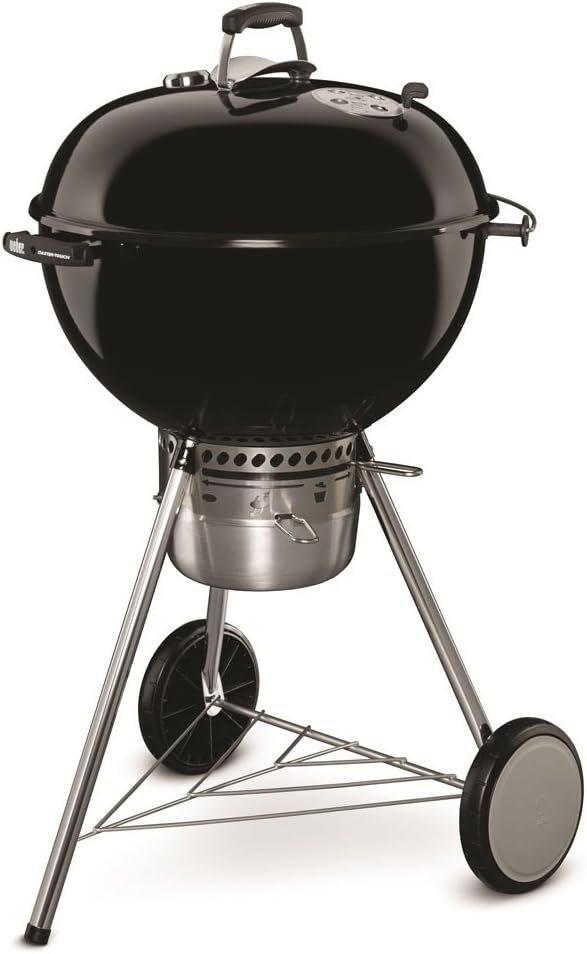
Choosing a Charcoal Kettle That Matches Cooking Goals
Selecting the right grill starts with matching cooking goals, fuel preferences, and performance expectations. The Weber Master-Touch 22-inch charcoal kettle targets cooks who prioritize charcoal flavor, simple temperature modulation with vents, and a compact but versatile cooking footprint. Kettle grills rely on charcoal as the primary heat source, which favors searing and direct high-heat grilling as well as indirect, low-and-slow smoking when charcoal placement and airflow are managed. Buyers should consider how much active ventilation control is preferred, whether compatibility with swap-in cooking inserts matters, and how often the grill will be moved or stored. For outdoor cooks seeking a balance of portability, durability, and adaptability for occasional smoking or frequent direct grilling, the Master-Touch’s specifications indicate a practical mid-size solution that aligns with common charcoal grilling workflows.
Quick Overview
| Feature | Details |
|---|---|
| Grill type | Kettle-style charcoal grill |
| Fuel type | Charcoal |
| Total cooking area | 443 square inches (primary + warming rack) |
| Temperature range | Variable by charcoal load and venting; supports low-and-slow to high sear temperatures |
| Materials & construction | Porcelain-enameled lid and bowl; alloy steel frame; stainless finish components |
| Control system | Manual vents (3 arched, swiveling damper blades); One-Touch ash cleanout; lid thermometer |
| Best suited cooking styles | Direct high-heat grilling, indirect roasting, occasional smoking; compatible with GBS inserts |
| Intended use cases | Backyard grilling, tailgating, portable weekend cooks |
| Warranty | Bowl and lid: 10 years; Plastic parts: 5 years; Other parts: 2 years |
The table condenses manufacturer-disclosed specifications into a snapshot of practical capability. The porcelain-enameled kettle and welded frame emphasize heat retention and weather resistance, while manual venting and a hinged Gourmet BBQ System cooking grate provide control and flexibility for direct searing and indirect smoking setups. The One-Touch ash system and Tuck-Away lid holder add convenience for routine use and transport.

Cooking Style Suitability and Meal Profiles
The Master-Touch is positioned primarily as a charcoal grilling platform that supports direct high-heat searing and indirect cooking for larger cuts. Its kettle design concentrates heat, enabling quick searing with a well-managed charcoal bed and airflow, while the hinged grate and removable charcoal area allow for two-zone setups used in indirect roasting or smoking. The warming rack extends capacity for keeping food warm or toasting, but the grill’s depth and ventilation system make multi-level or very long low-temperature smokes less autonomous than dedicated offset smokers or pellet systems. Compatibility with Gourmet BBQ System inserts increases versatility for stir-fry, griddle, and plancha-style dishes, expanding the cook’s repertoire beyond classic steak-and-burger profiles.

Direct Grilling and Searing Performance
Direct grilling on a 22-inch kettle relies on proximity to charcoal and the ability to concentrate heat zones. The Master-Touch’s hinged cooking grate facilitates adding or adjusting charcoal without removing food, which helps maintain sear temps. Porcelain-enameled surfaces retain radiant heat, supporting consistent crust formation during searing. Because the control system is manual, achieving and maintaining very high sear temperatures requires active vent adjustments and proper charcoal management. For cooks focused on quick sears, burgers, steaks, and weekday grilling, the kettle form and GBS grate create an efficient direct-heat environment that balances heat retention with the ability to respond to flare-ups and reposition coals.
Indirect Cooking and Smoking Capabilities
For indirect cooking and low-and-slow profiles, the Master-Touch supports two-zone setups with coals banked to one side and food on the opposite side under the lid. The lid thermometer offers a surface-level temperature reference useful for maintaining cooking ranges typical for roasting and shorter smokes. However, charcoal-only kettles demand more frequent attention to airflow and fuel management than insulated pellet or dedicated offset smokers. Longer smokes can be managed by using larger charcoal loads, adding wood chunks for smoke, and adjusting the bottom and top dampers to stabilize temperatures, but users seeking unattended multi-hour smokes may prefer dedicated smokers with built-in temperature stabilization systems.
Fuel Type and Flavor Impact
Charcoal remains the defining feature for flavor and thermal behavior in the Master-Touch. Lump charcoal or briquettes each bring distinct burn characteristics: lump ignites faster and runs hotter with more variable burn times, while briquettes burn more predictably and longer. The kettle’s fuel chamber and hinged grate simplify charcoal management and replenishment, which is valuable for balancing flavor intensity and cook duration. Because the grill lacks powered fuel systems, smoke generation depends on wood chunk additions and coal management, which grants direct control over smoke profile but requires more user input. The charcoal fuel choice is central to the Master-Touch’s appeal to cooks who prioritize smoky flavor and a responsive, manual interface between fuel and food.

Charcoal Selection and Expected Flavor Notes
Charcoal choice strongly influences flavor and temperature behavior. Lump charcoal contributes a cleaner, often more immediate smoky character and typically allows higher peak temperatures for searing. Briquettes provide extended, stable heat beneficial for longer cooks and consistent roast temperatures. Adding wood chunks or chips introduces aromatic smoke at controllable intervals, affecting flavor intensity without changing the grill’s mechanical setup. The Master-Touch’s manual vents let users modulate oxygen supply to alter burn rate, which in turn adjusts smoke production. For those prioritizing classic charcoal-smoke flavor and a hands-on cooking rhythm, this kettle delivers the expected sensory profile when fuel and wood are chosen deliberately.
How Charcoal Compares to Other Fuel Systems
Compared with gas, pellet, or electric systems, a charcoal kettle emphasizes flavor control at the cost of automated temperature regulation. Gas grills offer immediate ignition and simple temperature dialing, pellets provide regulated low-and-slow performance with consistent smoke, and electric units prioritize convenience. The Master-Touch trades these conveniences for more direct fuel-to-flavor interaction and a lower parts complexity that can reduce long-term mechanical maintenance. Buyers should weigh the desire for traditional charcoal flavor and direct heat responsiveness against the convenience of automated fuel systems; those who value hands-on control and the distinctive notes from charcoal and added wood will find the kettle approach aligns with those priorities.
Temperature Control and Heat Management
Temperature modulation on the Master-Touch relies on classic charcoal grill principles: fuel quantity and arrangement, bottom and top vent positions, and the insulating properties of the porcelain-enameled bowl and lid. The grill’s three arched, swiveling damper blades give discrete control points for airflow adjustment, enabling a range from low burn rates for 225–275°F-style smokes to higher sear temperatures when increased oxygen feed is provided. The built-in lid thermometer gives a quick reference for internal conditions but functions as a deck-mounted gauge rather than a precision probe; it helps track trends rather than exact setpoints. Effective temperature control depends on iterative vent adjustments and experience with the specific charcoal used, and the hinged grate simplifies fuel adjustments mid-cook to extend or increase heat.

Venting, One-Touch System, and Thermometer Role
The Master-Touch’s venting architecture combines a bottom-damper array with a top vent that together regulate oxygen flow and exhaust. The One-Touch cleaning system focuses on ash removal, not airflow—clean ash collection supports consistent air channels through the coals, indirectly aiding temperature stability. The lid-mounted thermometer indicates relative internal conditions but is subject to the typical limitations of single-point dial thermometers: placement near the lid center and response lag compared with probe thermometers at grate level. For cooks who need tighter temperature precision, supplementing the lid gauge with an instant-read or dual-probe thermometer provides a more accurate reading of grate-level or meat-core temperatures during temperature-critical cooks.
Managing Hot Spots and Indirect Zones
Kettle geometry concentrates radiant heat near the charcoal, producing hot spots suitable for searing. Creating indirect zones involves banking coals to one side or using a charcoal basket to isolate heat while placing food on the opposite side under the closed lid. The hinged grate enables mid-cook fuel addition to sustain long roasts without moving food, which helps preserve heat zones. Because heat distribution is governed by coal placement and lid closure, managing hot spots is an active process: shifting food, adding or removing coals, and vent adjustments change the internal heat map. Heat deflecting by adding a drip pan between coals and food can broaden indirect zones and reduce flare-ups for fattier cuts.
Capacity, Layout, and Versatility
The Master-Touch’s total cooking area of 443 square inches—counting the main grate and warming rack—accommodates mid-sized gatherings and standard backyard meals. The stated capacity for burgers (up to 13 using a specified burger press) reflects surface area and practical spacing for even cooking. The hinged Gourmet BBQ System (GBS) grate adds versatility through swap-in inserts such as a wok, griddle, or pizza stone, converting the kettle into a multi-function platform. While not as large as full-sized cart grills, the Master-Touch balances compact footprint with functional capacity for everyday use, occasional entertaining, and experimental techniques that benefit from GBS accessories.

How the GBS Grate and Warming Rack Expand Use Cases
The GBS hinged grate is a modular advantage: inserts broaden cooking methods without permanent conversion. A griddle or plancha insert enables breakfast and delicate-seared items, while a pizza stone or wok insert creates specialty dishes on a charcoal platform. The hinged feature simplifies fuel access without moving food, aiding two-zone cooking and fuel refreshes. The warming rack provides additional staging for buns or finished items, keeping them warm without overcrowding the main grate. Collectively, these layout elements shift the Master-Touch from a single-purpose kettle into a versatile island suitable for cooks who experiment with multiple cuisines and need accessories to match different techniques.
Portability, Assembly, and User Setup
At approximately 37 pounds and with two rubber-molded eight-inch wheels, the Master-Touch is designed for repositioning around a patio or loading for short-distance transport. Assembly is required, as with many grills in this class; the construction emphasizes durable fasteners and a compact chassis. Taller legs and tool hooks improve ergonomics during use, while the Tuck-Away lid holder reduces the need to find a surface to rest the lid. Portability favors household storage and occasional transport rather than frequent long-distance travel; users who prioritize ultra-lightweight or fold-flat designs should compare alternatives with more compact transport features.
Durability, Maintenance, and Expected Lifespan
Durability is anchored by the porcelain-enameled lid and bowl that resist rusting and retain heat. Porcelain enamel provides a corrosion-resistant barrier over steel, improving longevity when properly maintained, but it can chip if subjected to heavy impact. The alloy steel frame and stainless finish components support structural strength while minimizing corrosion points. Manufacturer warranty terms—10 years on the bowl and lid, five years on plastic components, and two years on remaining parts—reflect confidence in long-term material performance under normal use. Lifespan depends on maintenance practices, including ash removal, covered storage, and avoidance of thermal shock or impact to enameled surfaces.

Routine Maintenance, Ash Cleanup, and Corrosion Prevention
The One-Touch cleaning system channels ash into a removable catcher, simplifying routine cleanup that preserves airflow paths and reduces corrosive residue contact with the bowl. Regular removal of ash and leftover charcoal prevents moisture retention that accelerates corrosion. Painted and plastic components should be inspected for fading or cracking; these parts are covered by limited warranty timelines. Seasonal storage under a cover and occasional cleaning of vents and hinge points extends component life. Replacing wearable parts like grates and dampers as needed is straightforward due to the grill’s common-size components and manufacturer spare-part availability.
Warranty Coverage and Practical Lifespan Expectations
Weber’s tiered warranty provides longer coverage for the bowl and lid, reflecting the importance of porcelain enamel integrity to long-term performance. Plastic pieces and remaining parts have shorter warranty periods, which aligns with typical wear patterns for handles, wheels, and accessory attachments. Realistic lifespan expectations hinge on usage intensity and maintenance: regular backyard use with proper ash management and covered storage can translate to many years of service, while heavy commercial or unattended use will drive accelerated replacement of parts. Buyers should factor in warranty terms, availability of replacement parts, and common repair patterns when projecting total ownership duration.

Pros & Cons
Pros
- Solid charcoal flavor profile and direct-heat performance. The kettle shape and porcelain-enameled bowl concentrate radiant heat and support classic charcoal searing and smoke notes when wood is added. This design benefits cooks who value flavor complexity from charcoal.
- Versatile cooking options with the Gourmet BBQ System. The hinged GBS grate accepts inserts (griddle, wok, pizza stone), expanding the grill’s capabilities beyond basic grilling and enabling a wider range of dishes.
- Efficient ash management and user convenience. The One-Touch cleaning system funnels ash into a removable catcher, simplifying cleanup and helping maintain consistent airflow beneath the coals for repeatable cooking sessions.
- Durable enamel finish and manufacturer warranty. Porcelain-enameled bowl and lid resist rust and retain heat, backed by a 10-year warranty on the bowl and lid, indicating long-term material focus from the manufacturer.
- Compact footprint with meaningful cooking area. At 443 square inches total, the grill suits small gatherings and everyday family meals while remaining maneuverable and easier to store than full-sized carts.
- Accessories and storage features that aid workflow. Tool hooks, a Tuck-Away lid holder, rubber-molded wheels, and a warming rack support efficient grill-side organization and reduce clutter during cooks.
Cons
- Manual temperature control requires practice. The grill relies on vent manipulation and charcoal management rather than automated thermostatic systems, which can be a challenge for users seeking hands-off temperature precision for long smokes.
- Lid thermometer limitations. The single, lid-mounted gauge provides a general internal reading but may not reflect grate-level or food-core temperatures accurately; supplementary probes are advisable for precise cooks.
- Potential for enamel chipping under impact. Porcelain enamel improves corrosion resistance but can chip if the grill is struck or dropped, creating localized exposure of the underlying steel.
- Moderate assembly and upkeep. Initial assembly is required and periodic maintenance—such as ash removal, vent cleaning, and part replacement—remains necessary to preserve performance and warranty coverage.
- Not optimized for unattended multi-hour smoking. While two-zone setups are possible, the kettle design demands more user input than dedicated pellet smokers or larger, insulated offset smokers for extended, unattended low-and-slow sessions.
Final Verdict: Who This Grill or Smoker Is Best For (and Who Should Skip It)
The Weber Master-Touch 22-inch charcoal kettle is well suited to backyard cooks who prioritize charcoal flavor, searing capability, and modular cooking versatility via the Gourmet BBQ System. It serves buyers who enjoy hands-on temperature management and want a compact platform that supports both everyday grilling and experimental cooking with inserts. The porcelain-enameled construction and multi-year warranty make it a durable choice for domestic use where routine maintenance and covered storage are feasible. It is also appropriate for those seeking an entry point to charcoal cooking with a manufacturer ecosystem for replacement parts and accessories.
This grill is less appropriate for buyers who require automated temperature control, long unattended smoking sessions, or ultra-light, road-ready portability. Users who prefer push-button ignition, digital temperature management, or built-in pellet-fired smoke regulation should compare gas or pellet systems. Similarly, those concerned about potential enamel damage in high-traffic or commercial settings may prefer fully stainless or insulated steel alternatives. Overall, the Master-Touch remains a practical mid-size charcoal kettle that balances flavor, adaptability, and durable construction for home cooks in 2026.

Frequently Asked Questions (FAQs)
How well does the Weber Master-Touch hold temperature for low-and-slow smoking?
The Weber Master-Touch can maintain low-and-slow ranges when configured with a two-zone coal bank and careful vent management. Porcelain-enameled surfaces improve heat retention, but stable long-duration smoking requires active monitoring of vents and periodic fuel additions. For unattended multi-hour smoking, dedicated pellet smokers or larger insulated units provide easier temperature stability.
Is the Master-Touch suitable for searing steaks at high temperatures?
Yes. The kettle’s concentrated radiant heat and the ability to position food close to a hot charcoal bed make it effective for high-temperature searing. Achieving and sustaining peak sear temps depends on charcoal choice, vent settings, and managing proximity to coals; lump charcoal typically enables higher peak temperatures, while briquettes provide steadier heat.
Can Gourmet BBQ System inserts be added later, and what do they do?
Gourmet BBQ System (GBS) inserts are modular and can be purchased separately for later addition. They replace the center section of the cooking grate to allow specialized surfaces—such as a griddle, wok, or pizza stone—expanding the grill’s cooking techniques without permanent modification to the kettle.
How often should ash be removed from the Master-Touch?
Ash should be removed after each significant cooking session to maintain consistent airflow and prevent moisture retention that accelerates corrosion. The One-Touch cleaning system funnels ash into a removable catcher, making routine cleanup straightforward and supporting reliable combustion behavior during subsequent cooks.
What warranty coverage comes with the Weber Master-Touch?
Manufacturer warranty terms specify 10 years for the bowl and lid against rust-through or burn-through, five years for plastic components (excluding fading), and two years for remaining parts. Warranty conditions require adherence to normal use and maintenance; review the manufacturer manual for full terms and claim procedures.
Is the built-in lid thermometer accurate enough for precise cooking?
The lid thermometer provides a useful general indication of internal conditions but functions as a single-point gauge with inherent limitations in accuracy and response time. For precise temperature control—especially for meat-core targets—using a grate-level or probe thermometer is recommended to obtain more accurate readings.
How does the Master-Touch compare to gas or pellet grills in fuel efficiency?
Charcoal grills like the Master-Touch are less fuel-efficient in terms of fuel mass versus heat output compared with gas or pellet systems, because charcoal converts a portion of chemical energy to smoke and radiant heat. However, charcoal offers flavor advantages and flexible heat intensity. Fuel efficiency in charcoal setups depends heavily on charcoal type, airflow control, and cook management.
Who should avoid buying the Master-Touch?
Buyers who need automated temperature control, frequent unattended multi-hour smoking, or ultra-light transport may prefer gas, pellet, or purpose-built smoker alternatives. Users who prioritize hands-off cooking convenience and digital regulation should compare those systems with this charcoal kettle.