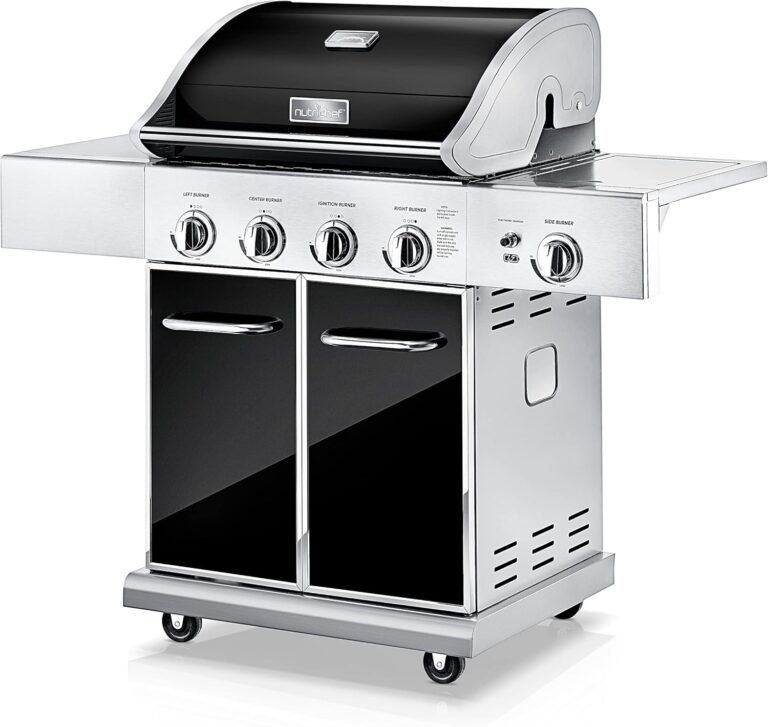
High-Temp Grill Gasket Tape for Smoker Seal Replacement
Why gasket selection matters for grills and smokers
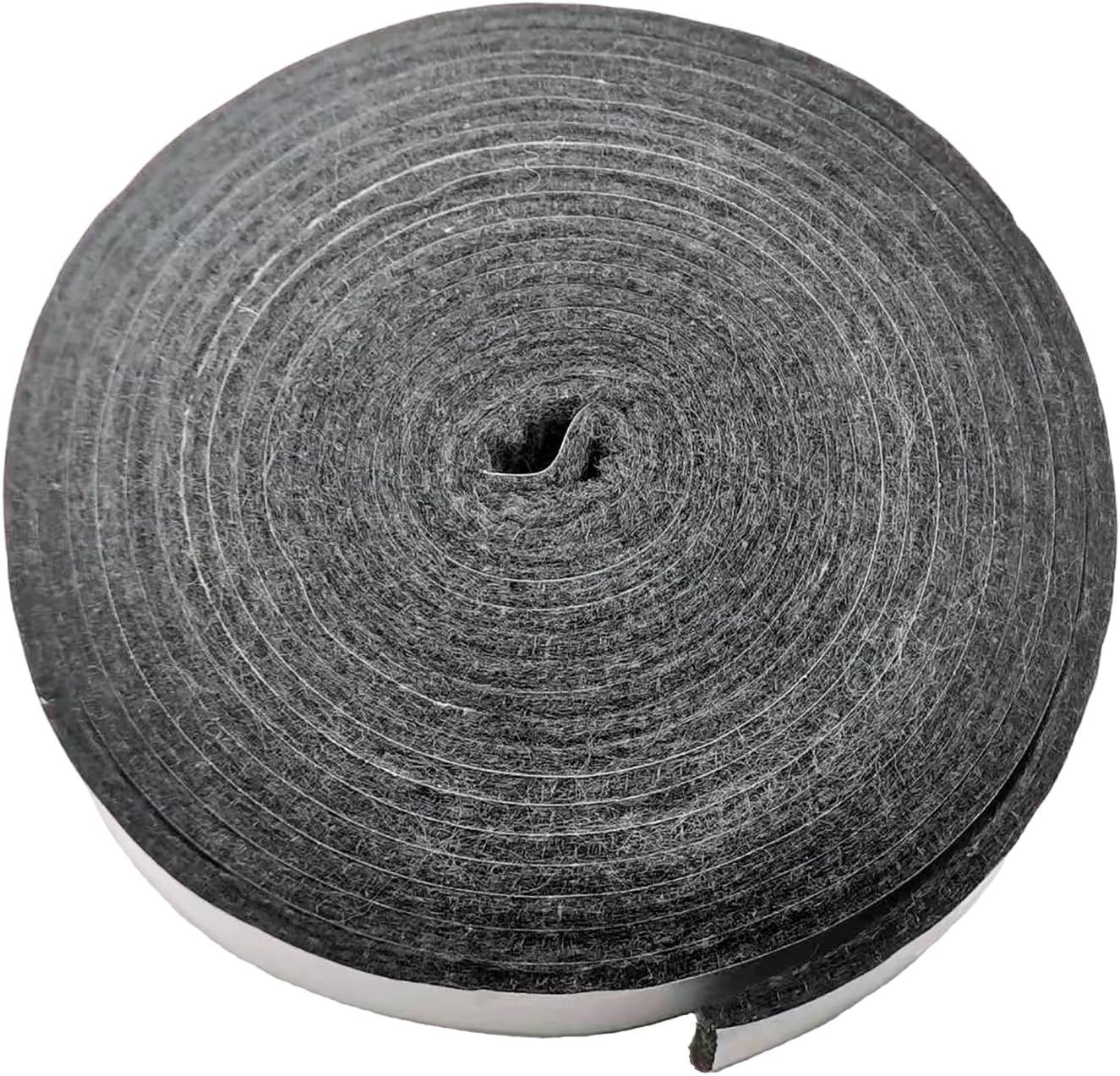
Choosing the right gasket for a grill or smoker influences temperature stability, smoke retention, and overall cooking consistency. For owners of kamado-style cookers, ceramic domes, or steel smoker lids, the gasket is the primary seal that reduces air leaks and helps the appliance maintain set temperatures with less fuel. This review focuses on a self-adhesive, felt-style replacement gasket constructed from synthetic, heat-resistant polyacrylonitrile, sized to 14.7 feet long, 7/8 inch wide, and 1/8 inch thick. The target user is an owner seeking a straightforward replacement to restore a tight seal on Big Green Egg, Char-Griller, Masterbuilt, Traeger, Weber, Camp Chef, and similar units. Attention centers on compatibility across fuel types, influence on heat-up and recovery time, adhesion and installation practices, and the expected durability of the material when exposed to repeated thermal cycling. Performance considerations are explained in terms of how a gasket affects airflow, convection, conduction, and the practical outcomes for grilling and low-and-slow smoking.
Quick Overview
| Feature | Details |
|---|---|
| Product type | Smoker/grill gasket replacement tape (self-adhesive felt) |
| Material | Synthetic heat-resistant fiber (polyacrylonitrile felt) |
| Dimensions | 14.7 ft long × 7/8 in wide × 1/8 in thick (package) |
| Applicable grill types | Kamado, offset smokers, charcoal grills, pellet grills, gas and electric smokers |
| Fuel type suitability | Charcoal, lump, pellets, gas, electric (per manufacturer compatibility claims) |
| Temperature rating | Heat-resistant per manufacturer; specific maximum not declared |
| Attachment method | Self-stick adhesive backing (peel-and-stick) |
| Best suited cooking styles | Smoking, grilling, searing, indirect low-and-slow cooking |
| Intended use cases | Dome/lid and base rim sealing, gasket replacement, improved temperature control |
| Warranty | Not specified by manufacturer |
This gasket package provides a universal felt seal designed to restore or replace lid-to-body seals on a range of grills and smokers. The felt profile and self-adhesive backing are intended to reduce draft and heat loss, improving temperature control and smoke retention for both direct high-heat grilling and indirect smoking scenarios.

Cooking style suitability
The gasket’s primary influence on buyer decisions is how it supports differing cooking styles—direct high-heat grilling, low-and-slow smoking, and hybrid methods where both are used in sequence. By creating a tighter seal between lid and body, the gasket reduces uncontrolled air ingress that can destabilize set temperatures, benefiting low-and-slow smoking where stable, low temperatures and consistent smoke density matter most. For high-heat searing, the gasket has a secondary role: maintaining recovery time after lifts and minimizing fuel waste during repeated lid openings. Compatibility with kamado domes and traditional steel smoker lids enables flexibility across grilling and smoking workflows, and the self-adhesive, felt construction is better suited to applications where a compressible, conforming seal is preferred over rigid rope or ceramic cord gaskets.

Grilling versus smoking performance
For high-heat grilling, a compressible felt gasket helps preserve heat during short lid openings and improves recovery time when temperatures spike above 600 degrees Fahrenheit on kamados or drop during lid lifts on traditional grills. In smoking applications, the gasket’s capacity to limit drafts supports steadier low-temperature profiles and more consistent smoke retention, which are important for flavor development and predictable cook times. The felt material conforms to imperfect surfaces, reducing localized leaks that can create hot or cold spots. However, felt-style gaskets are typically chosen for their sealing performance rather than for providing a rigid, long-term structural barrier; on very high-heat commercial setups, alternative high-temperature ceramic or braided fiberglass gaskets may be preferred for longevity.
Combination use and kamado compatibility
Kamado-style cookers benefit from a compressible gasket that seals the ceramic dome without introducing hard contact that could chip or stress the rim. The 7/8-inch width and 1/8-inch thickness of this gasket correspond with common kamado rim profiles, enabling a uniform contact area that helps maintain temperature stability and conserve charcoal during extended cooks. In combination-use scenarios—searing followed by low-and-slow smoking—the gasket supports quicker transitions by limiting heat loss during grate adjustments. Compatibility notes from vendors indicate fitment across many popular kamado and barrel-style cookers, but buyers should measure the lid-to-body gap and rim geometry to ensure the felt profile produces the intended compression and contact.
Impact on cooking capacity and surface-area considerations
A gasket does not change the physical cooking surface, but it influences effective usable capacity by affecting heat retention and the ability to stack racks or use indirect setups. Improved sealing enables the cooker to maintain lower set temperatures with minimal fuel, which can support longer cooks on multiple racks with less active fuel management. Conversely, a gasket that is over-compressed or too thick may alter lid clearance for accessories or second-tier racks, so clearance checks are recommended before full installation. For users who rely on multi-rack smoking or large roasts, the improved temperature stability afforded by a proper gasket can translate into more predictable internal temperatures and more even cooking across the available surface area.
Fuel type compatibility and heat impact
Gasket choice connects directly to fuel considerations because different fuel types modify internal temperatures, burn characteristics, and the frequency of lid interactions. Charcoal and lump coal produce high radiant heat and intense temperature swings that place thermal cycling stress on a gasket; the polyacrylonitrile felt construction is marketed for heat resistance but manufacturers typically do not publish specific maximums, so suitability is inferred from material chemistry and common use patterns. Pellet grills and electric smokers operate with more stable, blower-assisted airflow, where a secure seal primarily improves efficiency and reduces hopper and auger runtime. Gas-fired grills and smokers introduce flame patterns and higher continuous temperatures in some zones; the gasket’s role is to minimize drafts and help maintain the intended setpoint. Overall, the gasket is positioned as a broadly compatible replacement for owners using any common backyard fuel type, with attention to the fact that extreme, prolonged radiant exposures may accelerate wear.
Charcoal and lump-fuel applications
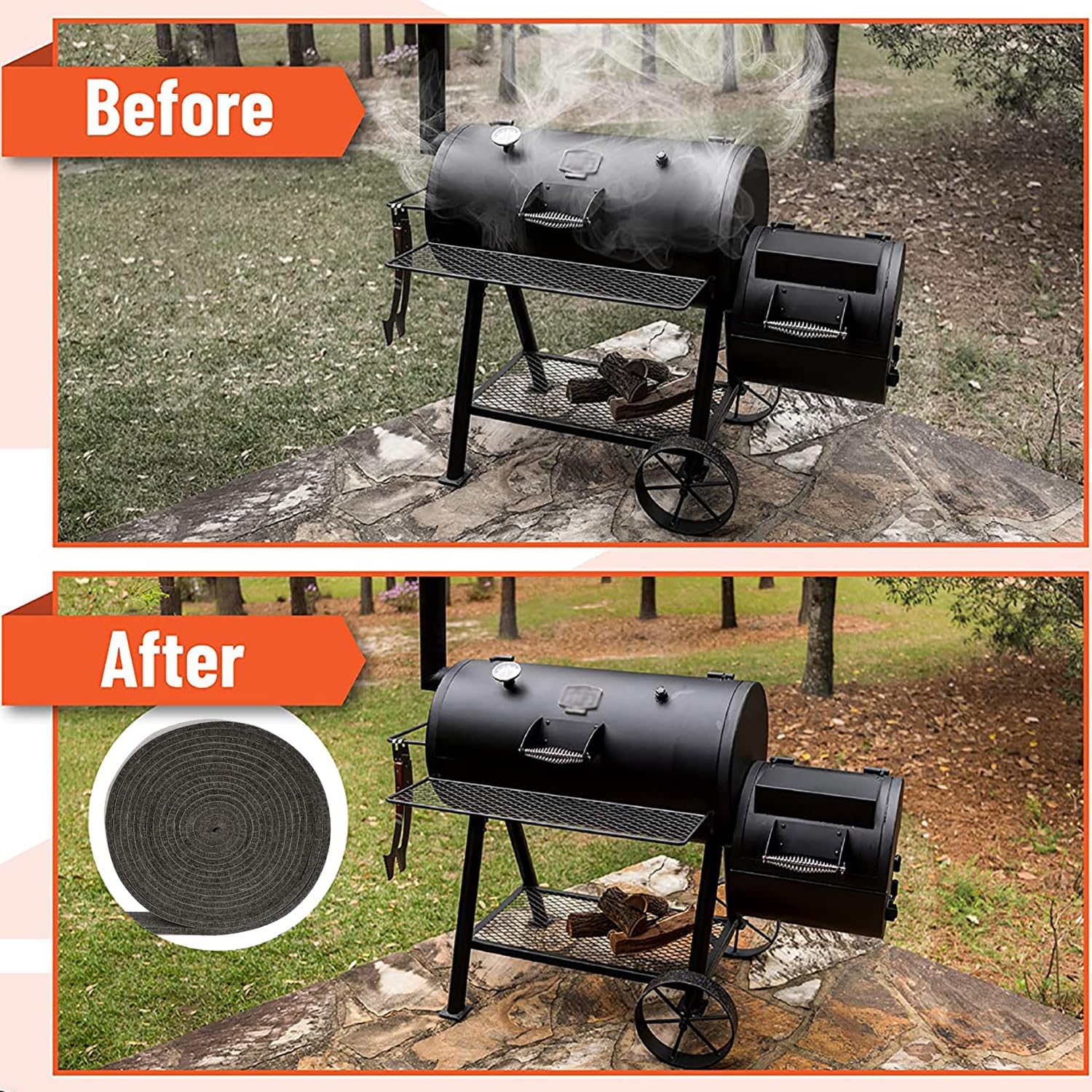
Charcoal and lump-burning grills benefit from a tight lid seal because these fuels require careful draft control for stable combustion and setpoint maintenance. Reduced leaks minimize oxygen spikes that can cause temperature surges, and improved sealing lowers charcoal consumption during long cooks. The synthetic felt design provides compressible contact that accommodates subtle rim imperfections common on ceramic kamados and sheet-steel charcoal grills. Review patterns commonly note improved recovery times and steadier low temperatures after gasket replacement on charcoal units, but heavy, repeated exposure to direct radiant flame or embers near the gasket area may cause faster degradation than in indirect zones, so placement and shielding should be considered.
Pellet, gas, and electric systems
In pellet grills and electric smokers, the blower or heating element supplies a controlled, continuous heat source; here, the gasket functions to retain heat and stabilize internal convection patterns rather than to control combustion draft. A good seal can improve fuel efficiency by reducing blower cycles or element duty cycles required to maintain temperature. For gas grills and smokers, which may employ both direct burners and indirect heat zones, a gasket helps prevent cold-air infiltration that can impact setpoints during long sears or multi-stage cooks. Manufacturer compatibility statements typically include these fuel types, and user reports often highlight measurable reductions in temperature variability after installing a new gasket on pellet and electric units.
High-heat versus low-and-slow scenarios
High-heat searing subjects a gasket to rapid temperature swings and potential exposure to radiant heat, which stresses adhesive bonds and fiber integrity over time. The felt’s heat-resistant polyacrylonitrile fibers offer improved thermal stability relative to basic synthetic blends, but repeated cycles to very high temperatures may shorten service life compared with lower-temperature uses. In low-and-slow smoking, the gasket operates under steadier thermal loads where the primary stressors are time and smoke exposure; under these conditions, the self-stick felt typically lasts longer because peak temperatures are lower and thermal cycling is more gradual. Buyers should match gasket type to typical cooking profiles—frequent high-heat searing favors materials with higher temperature ratings and possibly different fastening methods, while mainly smoking-focused use favors compressible felt styles.
Temperature control, heat distribution, and airflow management
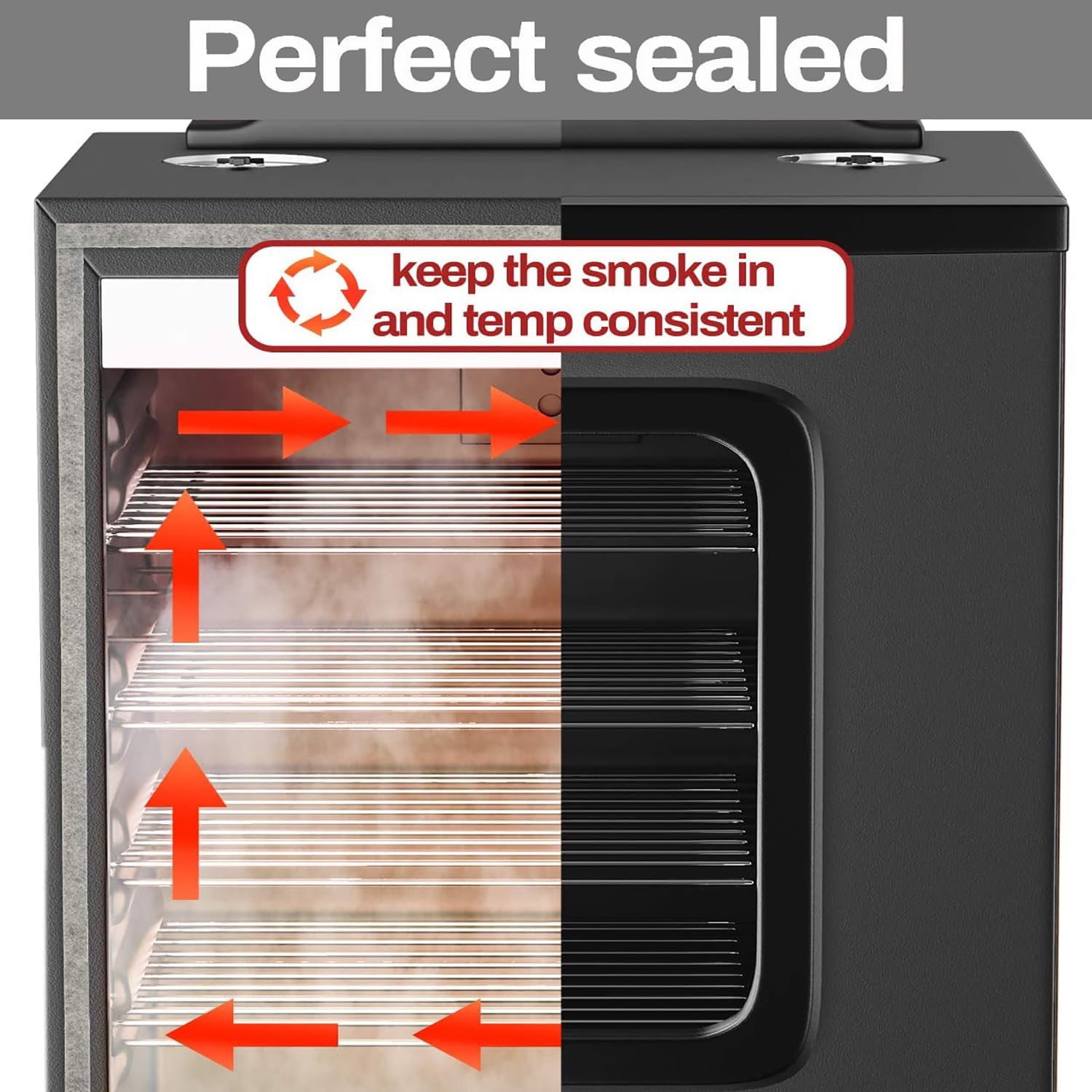
A replacement gasket directly affects three interrelated performance areas: temperature stability, heat distribution across the cooking chamber, and controlled airflow. By sealing lid-to-body interfaces, the gasket reduces uncontrolled drafts that cause temperature drift and uneven convective currents. A consistent seal aids precise temperature control, which is particularly valuable when using manual vents or when calibrating a digital controller. Heat distribution benefits indirectly: fewer leaks translate to more predictable internal convection patterns and reduced localized cold spots. Airflow management is improved because manufacturers rely on a single designed inlet and outlet for controlled draft; leaks bypassing these points undermine calibrated venting. The gasket’s compressibility, adhesive backing, and material resilience determine how well it maintains these properties through repeated cycles and cleaning events.

Temperature stability and control precision
Precision in temperature control depends on minimizing unplanned air exchange and ensuring vents function as the primary means to modulate combustion. A continuous felt seal reduces small leaks around the lid that can lead to 10 to 50-degree swings on many backyard cookers during active vent adjustments or lid openings. For grills using manual vents, the gasket allows smaller vent movements to produce finer control. On units governed by controllers or thermostats, the gasket reduces the controller’s workload by lowering the rate of heat loss during recovery phases. However, because specific numeric temperature limits are not declared by the manufacturer, buyers should prioritize gasket fit and compression rather than expecting quantifiable tolerance thresholds from the product description alone.
Airflow sealing and draft control
Airflow in a smoker or grill should be channeled through designated inlets and outlets; gaps around the lid act as uncontrolled inlets that destabilize combustion and alter smoke flow. A properly installed gasket confines draft to vents, improving the effectiveness of adjustments and reducing the potential for oxygen-driven temperature spikes. The self-adhesive felt form provides a continuous, conforming contact that fills minor surface irregularities, limiting micro-leaks that are hard to detect visually but can shift cooking behavior. For users who monitor vent positions or use digital controllers, the gasket improves predictability by ensuring exhaust flow follows the designed path rather than dissipating through unintended gaps.
Heat distribution across the cooking surface
Heat distribution relies on balanced convection and conduction within the chamber; leaks create localized cooling that can produce hot and cold pockets. The gasket’s sealing action helps maintain uniform convective currents and preserves the designed thermal stratification that enables predictable surface and internal food temperatures. While the gasket does not directly alter radiant heat from burners or coals, it supports steady states that allow heat spreaders, deflectors, and baffles to function as intended. For multi-rack configurations, improved uniformity reduces the need for repositioning food mid-cook and supports more consistent results across the entire cooking surface.
Installation, maintenance, and durability considerations
Practical buyer decisions hinge on how easy the gasket is to install, how it should be maintained, and how long it will reasonably last under normal use. The product uses a self-stick adhesive backing and instructions emphasize surface cleaning, dry application, and allowing the lid to rest closed for 24 hours to ensure adhesion. Maintenance considerations include avoiding excessive direct flame contact, periodic inspection for compression set or adhesive failure, and cleaning strategies that do not soak the adhesive. Durability is influenced by material selection—polyacrylonitrile felt is chosen for heat resistance and sealing performance—but manufacturers typically do not specify exact lifespan; aggregated user reports and material science suggest expected replacement intervals depend on cooking frequency, peak temperatures encountered, and exposure to grease and smoke.
Installation steps and best practices
Installation requires removal of the old gasket material, thorough surface cleaning to remove grease and residue, and dry, dust-free conditions for the adhesive to bond. The peel-and-stick backing should be applied without stretching the felt to avoid tension-based detachment, and gradual removal of the paper liner while pressing the gasket in place yields the most uniform adhesion. Allowing the lid to remain closed for a full day after installation helps the adhesive establish contact across the entire surface. Measurement of rim circumference and checking clearance for accessories and second-tier racks will prevent interference after installation. In cases of uneven rims, light trimming or the use of supplemental clips may be necessary to ensure continuous contact.
Maintenance, cleaning, and replacement intervals
Maintenance is largely proactive inspection and avoiding practices that saturate or overheat the gasket. Routine visual checks for adhesive failure, carbon build-up, or compression set should be performed after major cooks. Cleaning should be limited to dry brushing or gentle scraping of carbon and grease; aggressive solvents can degrade adhesive bonds. Replacement intervals vary widely: occasional weekend users may see multiple seasons of service, while frequent heavy users who run high-heat searing sessions may replace gaskets annually or sooner. Recognizing signs of failure—persistent drafts, inability to hold set temperatures, or visible separation—guides timely replacement to restore performance.
Durability expectations and who should skip this product
The polyacrylonitrile felt provides a compromise between sealing performance, heat resistance, and ease of installation. It is best for backyard users seeking improved temperature control without complex retrofitting. Users with commercial or very high-temperature needs, repeated direct radiant exposure, or who require a gasket with a published maximum temperature rating may prefer ceramic-fiber or braided fiberglass gaskets that explicitly cite higher thermal endurance. Additionally, units with irregular lids or significant rim damage may require mechanical fastening or a thicker profile gasket. Buyers should evaluate typical use patterns—frequent high-heat searing or exposure to open flames suggests considering alternative high-temp gasket materials designed for extreme environments.

Pros & Cons
Pros
- Universal fit and generous length: The 14.7-foot roll and 7/8-inch width cover a wide range of kamado domes and smoker rims, making it suitable for full-lid replacements without joining multiple pieces. This reduces gaps that can occur when multiple short sections are pieced together.
- Self-adhesive, easy installation: Peel-and-stick backing simplifies installation for most users and avoids the need for separate high-temperature adhesives or mechanical fasteners in typical backyard applications. Clear installation instructions reduce the likelihood of bond failure if surfaces are prepared properly.
- Heat-resistant polyacrylonitrile fiber: The synthetic felt construction resists higher temperatures than basic felt, improving durability under regular grilling and smoking cycles while maintaining compressibility for a snug seal. This material choice balances thermal performance with conformability to imperfect rims.
- Improves temperature control and fuel efficiency: By reducing lid-to-body leaks, the gasket helps stabilize set temperatures, often resulting in shorter recovery times and less fuel usage during extended cooks. This contributes to more consistent low-and-slow results and fewer temperature spikes during lid manipulation.
- Compatible with multiple grill types: Manufacturer compatibility claims and common sizing make the gasket applicable to kamados, offset smokers, pellet grills, and many steel-bodied units, providing a single replacement option across different brands.
- Reduces smoke loss and improves flavor retention: A tighter seal preserves smoke concentration inside the chamber, which can enhance smoke adherence to food during long cooks, supporting more consistent flavor development.
Cons
- No specific maximum temperature rating provided: The manufacturer does not publish a numeric temperature limit, leaving buyers to infer performance from material chemistry and aggregated user feedback. This absence can make it harder to assess suitability for extreme, repeated high-heat searing.
- Adhesive susceptibility to surface contamination: Proper adhesion depends on thorough cleaning and dry application; residual grease or carbon can lead to early peeling, which is a common user complaint when prep steps are omitted.
- Felt material wears under direct radiant exposure: Repeated exposure to embers or very high radiant heat near the gasket edge can accelerate degradation, making this gasket less ideal for setups where the seal is directly exposed to open flame.
- Thickness may affect lid clearance: At 1/8 inch thick, some accessories or second-tier racks with minimal headroom may require clearance checks prior to installation to avoid interference during lid closure.
Final Verdict: Who This Grill or Smoker Is Best For (and Who Should Skip It)
This self-stick polyacrylonitrile felt gasket is a practical, broadly compatible replacement for home users seeking improved temperature stability and smoke retention across kamado-style cookers, pellet grills, gas and electric smokers, and many steel-bodied charcoal grills. It caters to owners who value straightforward installation and a compressible seal that accommodates rim irregularities, helping produce more predictable low-and-slow results and faster recovery after lid openings. The gasket’s material selection balances heat resistance with conformability, making it well-suited to weekend pitmasters and regular backyard cooks who primarily use indirect smoking and occasional high-heat searing.
Those who should consider alternatives include commercial users or enthusiasts who routinely push extremely high radiant temperatures and require a gasket with a published maximum temperature rating or ceramic/rope-style options designed for industrial loads. Also, units with severely damaged rims or minimal accessory clearance may need mechanical fastening or different profile thickness. Compared to similar gasket options available in 2026, this felt-style, self-adhesive product is a cost-effective, easy-to-install choice for most domestic grilling and smoking profiles but may be outpaced in longevity by purpose-specified high-temperature materials in heavy-duty applications.
Frequently Asked Questions (FAQs)
How does a felt gasket improve temperature control on a smoker or kamado?
A felt gasket reduces uncontrolled air infiltration around the lid-to-body interface, meaning vents and intentional inlets govern combustion and convection. This helps maintain set temperatures by decreasing heat loss and smoothing temperature recovery after lid openings. The compressible felt conforms to rim irregularities to minimize micro-leaks that can cause fluctuations, resulting in steadier low-and-slow conditions and more predictable searing behavior.
Is a self-adhesive felt gasket compatible with charcoal, pellet, gas, and electric grills?
Yes, the felt gasket is broadly compatible with common backyard fuel types. For charcoal and lump fuels, it aids draft control and fuel efficiency. For pellet, gas, and electric systems, the gasket improves insulation and reduces controller or blower workload. However, extreme continuous radiant exposures or direct flame contact may accelerate wear, so installation location and typical cooking temperatures should guide suitability decisions.
What are best practices for installing a peel-and-stick grill gasket?
Best practices include removing the old gasket completely, scraping and cleaning the rim to remove grease and residue, ensuring the surface is dry, and applying the gasket without stretching. Peel back the paper liner gradually while pressing the felt in place to ensure uniform adhesion, and allow the lid to remain closed for 24 hours to promote bonding. Measuring rim circumference before starting prevents gaps and reduces the need for splicing.
How often should a felt smoker gasket be replaced?
Replacement intervals depend on usage patterns, peak temperatures, and exposure to direct flame or grease. Occasional home users may find one gasket lasts multiple seasons, while frequent heavy users or those who regularly perform high-heat searing might replace it annually or sooner. Signs indicating replacement include visible separation, persistent drafts, or diminished temperature stability despite vent adjustments.
Can a felt gasket tolerate high searing temperatures without degrading?
Felt gaskets made from heat-resistant polyacrylonitrile provide improved thermal tolerance relative to basic felt, but manufacturers typically do not publish a specific maximum temperature. Repeated exposure to very high radiant heat or embers placed directly against the gasket can accelerate degradation. For applications with consistently extreme searing temperatures, buyers may prefer gaskets with explicit high-temperature ratings or ceramic and braided fiber alternatives.
Will installing a new gasket affect cooking clearance for racks and accessories?
Yes, adding material to the lid rim alters the effective gap between lid and body slightly. At a thickness of 1/8 inch, some low-clearance accessories or second-tier racks could be affected. Measuring headroom and accessory clearance before installation is recommended to ensure no interference occurs when the lid is closed, and trimming or selecting a different profile may be necessary for tight setups.
How should the gasket be cleaned and maintained to prolong life?
Maintenance should focus on dry cleaning methods such as brushing or gentle scraping to remove carbon and grease. Avoid soaking the adhesive with water or using aggressive solvents that can weaken the bond. Routine inspection after heavy cooks and addressing small failures early—such as reapplying adhesive or replacing sections—helps extend service life and maintains sealing performance.
Is the adhesive backing reliable in outdoor, variable weather conditions?
Adhesive reliability depends on proper surface preparation and application conditions. For best bonding, apply the gasket to a clean, dry rim in moderate temperatures and allow 24 hours with the lid closed to set. While the adhesive performs well for typical backyard conditions, prolonged exposure to extreme humidity, persistent rain, or temperature extremes without proper curing can increase the risk of early peel; sheltered storage and correct installation mitigate these factors.