20-inch Ceramic Heat Deflector for K24 — Pizza & Smoking

20-inch Ceramic Heat Deflector — Overview
Selecting the right accessory for a kamado-style or ceramic charcoal cooker affects heat management, cooking versatility, and maintenance workload. A dedicated heat deflector or plate setter converts direct charcoal heat into an indirect radiant surface, enabling baking, pizza, and low-and-slow smoking while protecting food from flame flare-ups. Buyers focused on indirect cooking styles, pizza baking, or extended smoking sessions should weigh materials, fitment, and handling characteristics when evaluating replacement ceramic deflectors. Compatibility with specific grill models, the deflector’s physical dimensions, and the way it alters airflow and radiant heat are primary practical concerns for operators using Pit Boss K24, Louisiana K24, Kamado Joe Big Joe, and similar 20-inch cookers.
This review synthesizes manufacturer specifications, component materials, and aggregated customer feedback to explain how a 20-inch ceramic plate setter functions in different cooking setups. The analysis isolates trade-offs between baking capability and fragility, discusses suitability with common fuel types, and highlights routine maintenance expectations. The intent is to clarify whether this style of ceramic heat deflector aligns with a cook’s typical fuel choice, target temperatures, and desired cooking capacity without implying hands-on testing or personal use.
Quick Overview
| Feature | Details |
|---|---|
| Product type | 20-inch ceramic heat deflector / plate setter (round) |
| Compatible models | Pit Boss K24, Louisiana K24, Kamado Joe Big Joe, Char-Griller AKORN models listed; not compatible with Big Green Egg |
| Fuel type | Designed for charcoal and lump wood use in kamado-style grills |
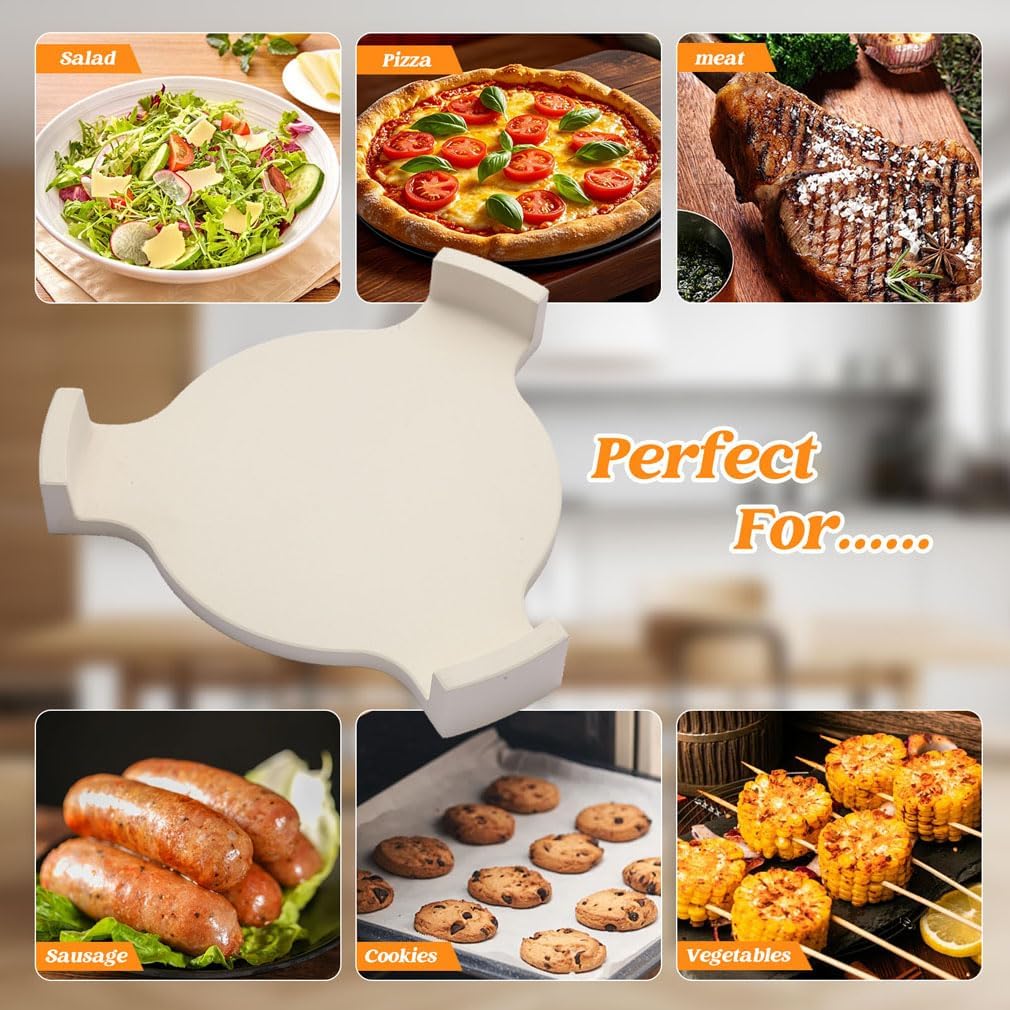
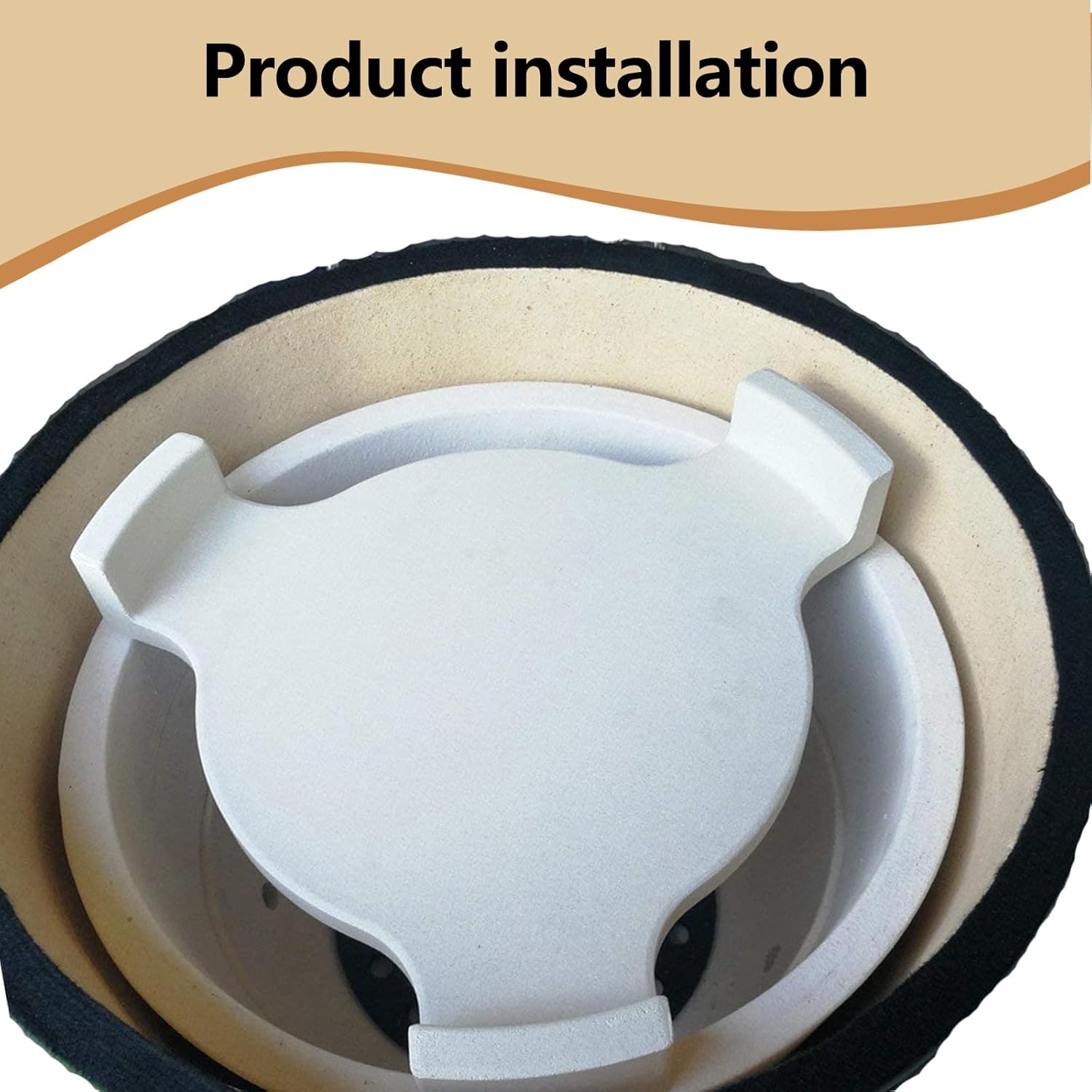
| Dimensions | Outer diameter: 20 inches; inner diameter: 14.5 inches; three ceramic legs |
| Material & construction | Ceramic plate setter with three integrated legs; metallic color finish noted by manufacturer |
| Control system | Passive, manual heat deflector (no electronics) |
| Best suited cooking styles | Indirect smoking, baking, pizza, low-and-slow roasts |
| Warranty | Not specified by manufacturer |
This accessory converts a kamado-style cooking chamber into an indirect cooking configuration by creating a ceramic barrier between the charcoal fire and the cooking grates. The 20-inch outer diameter and 14.5-inch inner opening fit designated K24-style cookers, providing a stable base for pizzas, breads, roasting, and indirect smoking while changing radiant heat patterns compared with direct grilling.
Cooking Style Suitability and Versatility
The ceramic plate setter is primarily intended to convert kamado-style grills into indirect ovens, enabling activities that range from baking artisan pizzas to low-and-slow smoking. Its design shifts the heat source below a ceramic barrier, emphasizing radiant and convective heat rather than direct conduction from coals. This makes the accessory particularly suited to foods that require even radiant heat and steady ambient temperatures, such as pizzas, breads, whole poultry, and brisket. It is less appropriate for high-temperature searing directly over coals without removing the deflector. Buyers who need both searing capability and an indirect baking surface will need to plan for easy insertion or removal depending on the cooking stage.

Baking and Pizza Performance
Ceramic plate setters are commonly used as pizza stones or baking surfaces because ceramic retains and radiates heat uniformly when preheated. The 20-inch outer diameter accommodates commonly sized pizzas and baking vessels for a K24 platform, while the 14.5-inch inner opening provides a defined hot zone above the coals. Uniform radiant heat and reduced convective drafts promote browning and even bake profiles on crusts and crust-top toppings. Baking performance depends on preheat duration, internal grill thermal mass, and the ceramic piece’s thermal conductivity; ceramic absorbs and re-radiates heat, smoothing short-term temperature swings but requiring adequate preheating time.
Low-and-Slow Smoking and Roasts
For extended smoking sessions, the plate setter creates a buffer that reduces direct flare-ups and moderates peak radiant heat, which helps maintain stable low temperatures suitable for smoking. Smoke circulation around the ceramic surface encourages indirect smoke contact while dampers control oxygen flow; the result is a gentler heat profile conducive to collagen breakdown in larger cuts like brisket or pork shoulder. The ceramic element’s thermal inertia aids in maintaining consistent temperatures over multi-hour cooks, though temperature stability still depends on fuel quality, damper adjustments, and ambient conditions.
Direct Grilling Limitations
The plate setter is not optimized for direct high-heat searing since it blocks direct radiant exposure to the charcoal bed and raises the cooking surface above direct flame contact. Searing techniques that rely on immediate high BTU delivery or direct contact with flames will be less effective when the deflector is in place. Users seeking frequent direct searing should factor in the need to remove the heat deflector or use a two-level approach where the plate setter is inverted to create more distance between heat and grates while still permitting some direct heat, recognizing trade-offs between convenience and performance.
Fuel Type Impact and Compatibility
This ceramic deflector is designed for kamado-style, charcoal-fired cookers and performs when paired with lump charcoal or natural briquettes and wood chunks for smoke. The accessory’s heat handling characteristics and thermal mass align with charcoal’s radiant heating pattern; the ceramic stores heat from the coal bed and re-radiates it across the cooking chamber. Gas, electric, and standard pellet grills operate with different heat delivery systems and venting geometries; therefore this plate setter is not intended for use in non-charcoal appliances unless explicitly noted by the grill manufacturer. Fuel choice still matters with charcoal: lump charcoal spikes faster and runs hotter, while briquettes burn more steadily, and both will influence how long the ceramic reaches stable cooking temperature periods.
Charcoal and Lump Wood Considerations
Lump charcoal typically produces higher peak temperatures and faster heat-up than briquettes because of its variable density and oxygen exposure. When used with a ceramic plate setter, lump charcoal can shorten preheat time but may also require more active damper adjustments to prevent overshooting target temperatures. Wood chunks or chips added sparingly produce smoke flavors without drastically altering heat capacity. The plate setter moderates flame contact, so smoke exposure becomes more convective and radiant than direct-flame-driven, which often produces a milder, more evenly distributed smoke character on long cooks.
Pellet, Gas, and Electric Fuel Compatibility
The plate setter is not engineered for direct use with gas burners, pellet smoker firepots, or electric heating elements because those systems distribute heat differently and typically include manufacturer-specific accessories. Pellet grills use controlled convection and auger-fed combustion that interact uniquely with a chamber’s airflow; inserting a large ceramic disc could alter those dynamics in unintended ways. Gas and electric units generally lack the charcoal heat source that the ceramic relies on for optimal thermal mass performance. For these fuels, buyers should consult the grill manufacturer to determine accessory compatibility rather than assuming interchangeability across fuel types.
Fuel Efficiency and Thermal Response
A ceramic plate setter increases the effective thermal mass inside a kamado by absorbing and re-radiating heat, which can improve fuel efficiency in extended cooks by reducing short-term temperature swings. The increased mass maintains more even heat with fewer adjustments to coal or damper settings, but it also increases preheat time and requires more fuel to reach high initial temperatures. Efficient long-duration smoking may therefore benefit from a modestly larger initial coal charge, with adjustments made via primary and top damper settings. Fuel strategy should balance desired cook length, temperature stability, and the ceramic element’s heat retention properties.
Temperature Control, Heat Distribution, and Airflow Mechanics
Temperature control in kamado-style systems depends on three interacting elements: fuel quantity and type, damper position (primary and top vents), and thermal mass inside the chamber. A ceramic plate setter alters radiant transfer by blocking direct convective and conductive paths from charcoal to food and creating a secondary radiant surface. Heat distribution becomes more uniform across the cooking area, and hot spots decline, but the set-up raises reliance on damper precision to modulate chamber oxygen and, therefore, combustion rate. Using the plate setter upside-down or inverted can increase vertical distance from the coals, offering a passive method for lowering peak surface temperatures while preserving indirect heating characteristics.

Temperature Range and Control Precision
The manufacturer does not publish a specific temperature rating for the plate setter, but ceramic construction supports the typical kamado temperature envelope from low smoker settings to pizza-baking heat ranges. Control precision relies on the grill’s damper calibration and the cook’s ability to fine-tune primary and top vents. Ceramic thermal inertia smooths rapid swings but reduces responsiveness; small damper adjustments yield gradual temperature shifts rather than abrupt changes. For cooks requiring rapid temperature cycling or precise short-term spikes, alternative heat management strategies or temporary removal of the deflector will be necessary.
Heat Distribution and Hot-Spot Management
The plate setter’s ceramic surface acts as a radiant plate, absorbing energy from the charcoal and redistributing it via radiation and convection throughout the dome. This reduces localized hot spots directly above the coals and promotes even browning across pizzas and roasts. The inner 14.5-inch opening defines a hotter core region, while the larger 20-inch outer disc increases usable secondary cooking area. Even distribution depends on correct placement and centered positioning; uneven seating or contact with grill walls can create unintended thermal bridges or insulation gaps that alter heat patterns.
Airflow Dynamics and Use of the Upside-Down Technique
Airflow management becomes more critical with a plate setter installed because the accessory changes how combustion gases circulate. Primary intake dampers control oxygen to the coal bed, while the top vent adjusts exhaust and dome temperature. Positioning the deflector “upside-down” (legs up) increases the gap between coals and cooking surface, lowering peak radiant transfer and providing more clearance for taller roasts or indirect cooking configurations. That technique also changes convective loops inside the dome and may require readjustment of both vents to maintain the same setpoint temperature as before modification.
Durability, Maintenance, Cooking Capacity, and Fitment
The product is constructed of ceramic with three legs and a metallic color finish. Ceramic provides excellent thermal mass and radiative qualities but is inherently more fragile than cast iron or stainless steel components. Expected lifecycle depends on handling, thermal cycling, and exposure to thermal shock; users should avoid rapid temperature changes that can initiate cracking. Maintenance is straightforward: wipe with a damp cloth as per manufacturer guidance, and allow full cooling before cleaning. Fitment to specific grill models is a critical purchasing criterion—this item lists compatibility with Pit Boss K24, Louisiana K24, Kamado Joe Big Joe, and several Char-Griller AKORN models but explicitly excludes Big Green Egg models.
Material Properties and Expected Lifespan
Ceramic excels at heat retention and even radiation, which benefits baking and extended smoking, but it is brittle relative to metal accessories. Repeated exposure to high-temperature cycles increases the risk of hairline fractures if the ceramic experiences rapid temperature differentials or mechanical shock during handling. When used within manufacturer-recommended operating practices—gradual preheating and controlled cooling—a ceramic plate setter typically provides many cooking cycles, though lifespan will vary with frequency of use, loading patterns, and care procedures.
Cleaning, Care, and Handling
Manufacturer care instructions recommend wiping with a damp cloth; abrasive cleaners or thermal shock from plunging a hot ceramic piece into cold water are to be avoided. Residual food particles and grease can often be burned off during a high-heat cycle and then brushed away once cooled. Because ceramic can fracture with impact, lifting and placing the plate setter should be done using appropriate protective gloves and on stable surfaces to reduce drop risk. Storage in a dry, temperate area will minimize moisture-related issues.
Cooking Capacity and Fitment Considerations
The 20-inch outer diameter expands the usable indirect cooking area in K24-style platforms while the 14.5-inch inner opening creates a central region of stronger radiant heat. The accessory suits medium-sized gatherings and multi-item cooks typical of a 24-series kamado configured with two-tier grates. Buyers should double-check grill interior dimensions before purchase, as incorrect fitment affects centering, stability, and the accessory’s ability to distribute heat evenly. Incompatible models or slight mismatches in diameter may tilt the deflector or impede smoke circulation.
Pros & Cons
Pros
- Ceramic thermal mass improves indirect cooking stability and fuel efficiency for extended cooks. The material absorbs and re-radiates heat, leading to steadier temperatures during low-and-slow sessions.
- Designed to fit a range of 20-inch K24-style cookers, allowing baking and pizza use on commonly sized kamado platforms. Fitment to Pit Boss K24, Louisiana K24, and compatible Char-Griller models expands accessory utility.
- The three-leg design creates a stable elevated surface and defines a central hot zone while increasing usable indirect cooking area. Legs also facilitate convective air circulation beneath the plate.
- Functions as a pizza stone replacement, providing a radiant baking surface that produces even browning and crust formation when preheated adequately.
- Enables indirect roasting and smoking by blocking direct flame contact, which reduces flare-ups and supports gentler heat exposure for large cuts.
- Passive, maintenance-light design with no electronics or moving parts; cleaning generally consists of light wiping and occasional burn-off cycles.
Cons
- Ceramic construction is brittle and susceptible to thermal shock and impact damage. Rapid temperature changes or drops during handling can result in cracking or chipping.
- Manufacturer does not specify temperature ratings or warranty information, leaving buyers to infer operational limits and aftercare responsibilities.
- Preheat times are longer compared with metal alternatives due to ceramic thermal mass, which may increase initial fuel consumption to reach high bake temperatures.
- Not compatible with all grill brands; explicit exclusion of certain popular kamado models requires careful dimension verification before purchase.
Final Verdict: Who This Grill or Smoker Is Best For (and Who Should Skip It)
This 20-inch ceramic heat deflector appeals to cooks who prioritize indirect cooking, baking, and pizza on kamado-style charcoal grills such as Pit Boss K24, Louisiana K24, and similarly sized units. It is most useful for operators who want improved heat distribution and the radiant qualities of ceramic for even crusts, consistent roasts, and stable low-and-slow smoking sessions. The accessory supports extended cooks by increasing thermal mass and moderating direct flame contact, producing an oven-like environment within a kamado dome that benefits briskets, whole poultry, and artisan baked goods.
It is not recommended for users who require frequent high-temperature direct searing without interruption, those who use gas, pellet, or electric grills without confirming compatibility, or buyers who are uncomfortable handling fragile ceramic components. Additionally, cooks using models explicitly excluded from the compatibility list should avoid relying on this product. For 2026 buyers seeking a balance between baking performance and indirect smoking capability on the specified K24-style platforms, this ceramic plate setter is a practical accessory provided careful fit verification and cautious handling are observed.
Frequently Asked Questions (FAQs)
Can a 20-inch ceramic heat deflector be used for pizza on a K24 kamado?
Yes. The ceramic plate setter functions as a radiant baking surface when preheated, producing even distribution of heat for pizza crusts. The 20-inch outer diameter accommodates common pizza sizes used on K24 platforms, while the ceramic thermal mass promotes uniform browning. Adequate preheat time and placement at the correct dome temperature are important to achieve desired crust texture.
Is this plate setter compatible with pellet, gas, or electric grills?
No. The product is designed for charcoal-fired kamado-style grills where a charcoal bed provides radiant heat that the ceramic absorbs and re-radiates. Pellet, gas, and electric heaters distribute heat differently and may not interact safely or effectively with a large ceramic disc unless the grill manufacturer explicitly approves such accessories.
How does using the deflector affect temperature control and heat distribution?
Installing the ceramic deflector increases thermal mass and shifts cooking from direct to indirect radiant heat, reducing hot spots and smoothing short-term temperature swings. This improves evenness for baking and smoking but reduces responsiveness; temperature changes occur more gradually, requiring finer damper adjustments for precise control.
What cleaning and maintenance are required for a ceramic plate setter?
Routine maintenance is minimal: allow the unit to cool, then wipe with a damp cloth per manufacturer guidance. Burn-off cycles at higher heat can loosen residues prior to brushing. Avoid thermal shock, rapid cooling, or impacts, as ceramic is brittle and can fracture if handled roughly.
Will this deflector fit all 20-inch kamado grills?
Not necessarily. Fitment depends on interior dimensions and grate configurations. The manufacturer lists compatibility with Pit Boss K24, Louisiana K24, Kamado Joe Big Joe, and certain Char-Griller AKORN models, and explicitly excludes some brands. Buyers should measure interior diameter and clearance before purchasing to ensure proper seating and stability.
Does the manufacturer state a maximum temperature rating or warranty for the ceramic deflector?
The manufacturer does not specify a maximum temperature rating or warranty in the provided product details. Ceramic materials typically tolerate typical kamado cooking temperatures, but buyers should follow standard ceramic handling and preheat procedures to avoid thermal shock and inspect for any warranty information from the seller or manufacturer prior to use.
Can the deflector be used upside-down and what is the effect?
Yes. Inverting the plate setter (legs up) increases the distance between the charcoal bed and the cooking surface, lowering peak radiant temperatures and creating more clearance for taller items. This approach modifies internal airflow and convection loops, so vent settings may need adjustment to maintain target temperatures.