
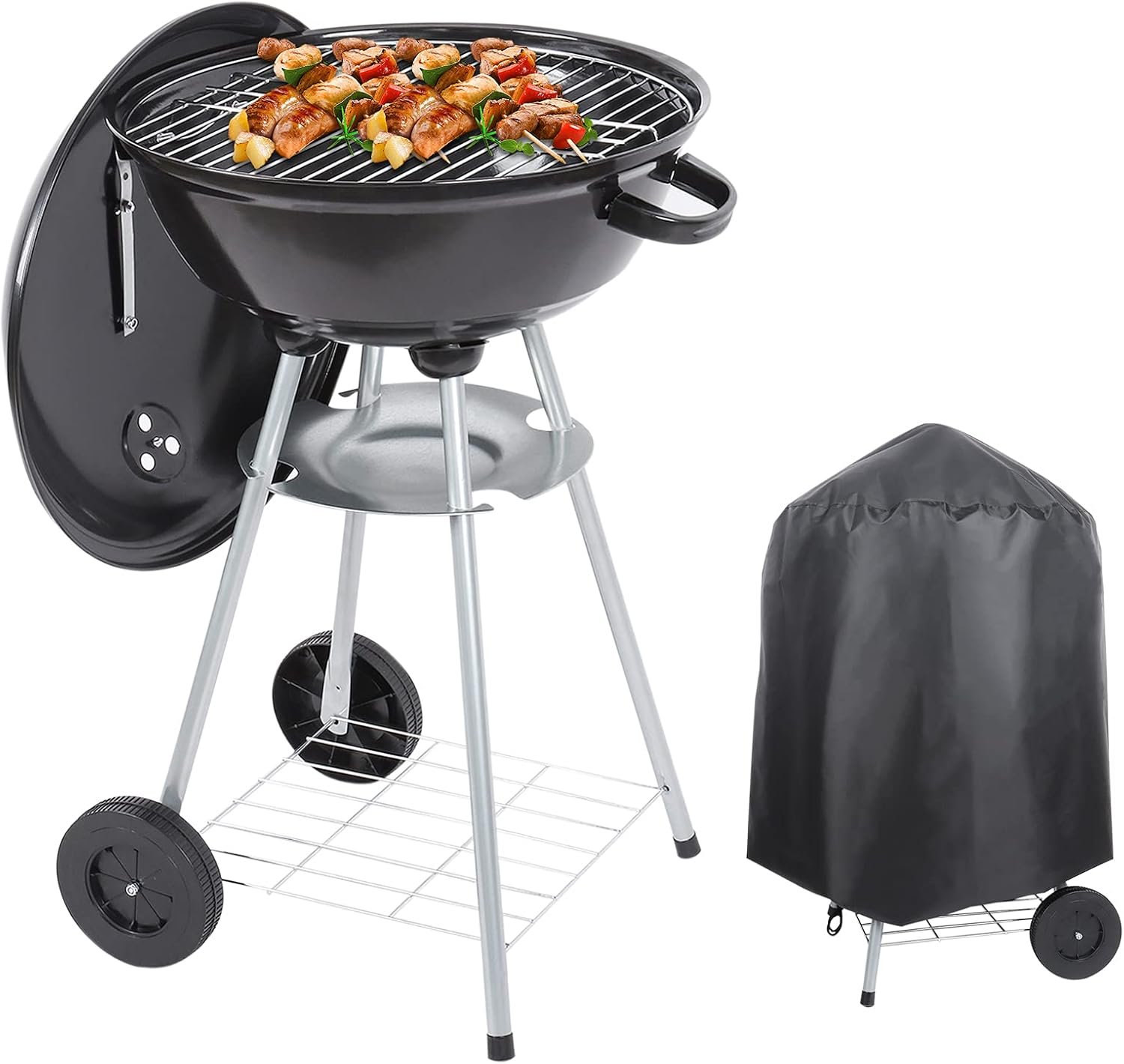
Essential selection notes for an 18-inch charcoal kettle
Choosing the right grill or smoker starts with matching equipment features to cooking goals and site constraints. For cooks prioritizing portability, compact footprint, and traditional charcoal flavor, an 18-inch kettle-style charcoal grill offers straightforward operation and basic temperature control via manual vents. This profile suits tailgaters, campers, and small households who value direct grilling and occasional covered smoking without the complexity of burners or electronic controllers. Attention to materials, assembly, and airflow design is important because these factors determine heat retention, distribution, and long-term corrosion resistance. Buyers should weigh the trade-offs between low weight and structural stability, and consider whether quick ash removal and a protective cover are adequate for local weather exposure. Performance expectations should be set according to charcoal fuel behavior: rapid searing capability, variable steady-state low-heat ranges, and the need for periodic vent adjustments to hold desired temperatures.
Quick Overview
| Feature | Details |
|---|---|
| Grill type | 18-inch kettle charcoal grill, free-standing configuration |
| Fuel type | Charcoal (manual heat control) |
| Total cooking area | 254.47 Square Inches |
| Temperature control | Adjustable air vent damper; manual lid and vent control; temperature range not specified by manufacturer |
| Materials and construction | Alloy steel frame, metal body, steel handle, detachable legs, two wheels; 210D silver-coated Oxford cloth cover |
| Control system | Manual vents; one-touch ash collection tray |
| Best suited cooking styles | Direct grilling, searing, basic covered smoking |
| Intended use cases | Tailgating, camping, backyard grilling for small to medium groups |
| Warranty | Not specified by manufacturer |
The kettle layout, 254 square inches of cooking area and an adjustable vent damper translate into a compact grill that emphasizes portability and simple charcoal cooking techniques. The manual vent and lid allow temperature modulation consistent with traditional charcoal operation, while the one-touch ash system and detachable legs support easier transport and post-use cleanup. The included 210D cover adds protection for outdoor storage but does not change the core limitations of a lightweight metal kettle in prolonged wet or coastal environments.

Cooking style suitability and practical outcomes
The kettle configuration favors direct-heat grilling and quick, high-heat sears while also enabling covered, indirect cooking for short smoking sessions when charcoal placement and vents are managed. For cooks focused on steaks, burgers, and vegetables, the grill’s compact grate and two-handle cooking surface allow reasonable access and rapid heat transfer. For long, low-and-slow barbecue, the absence of dedicated baffling, a large charcoal basket, or precise digital controls limits time-at-temperature stability, making extended smoking more maintenance-intensive. The included lid hanger hook and manual vent permit covered cooking, but sustaining tight low temperatures requires frequent vent adjustments and careful charcoal management, consistent with kettle-style physics.

Searing and direct grilling performance
Charcoal fuel in a closely domed kettle efficiently produces high surface temperatures suitable for searing; the compact 18-inch diameter concentrates heat under the cooking grate, enabling rapid Maillard reactions when hot fuel is positioned directly beneath food. The metal grate and two handles support flipping and repositioning, while the available grate area (about 254 square inches) accommodates several burgers or a few steaks simultaneously. Heat intensity is determined by charcoal volume and airflow through the bottom vent and lid damper; achieving consistent sear marks requires preheating for sufficient ember formation and maintaining clear vent paths for oxygen supply.
Short-term covered smoking capability
Using the kettle for low-and-slow smoking is possible for short durations when charcoal is banked to one side and wood chips are added for smoke; the lid and vent help trap smoke and regulate oxygen. The kettle’s relatively shallow charcoal capacity and limited insulation make extended low-range smoking more challenging because temperature drift occurs faster than on larger or insulated cookers. Success with light smoking relies on vigilant vent adjustments and occasional charcoal replenishment; this kettle can serve occasional smoking needs rather than replace dedicated smokers or larger multi-fuel units designed for long burns.
Versatility for mixed cooking styles
The grill’s simple mechanics support mixed cooking approaches—direct searing for primary proteins and indirect zones for finishing—by arranging coals and raising or lowering grate height through manual handling. Two grate handles facilitate adding or rearranging fuel mid-cook, and the lid hanger simplifies lid management without placing it on the ground. However, versatility is constrained by the kettle’s single cooking surface height and limited accessories; accessories such as heat deflectors, water pans, or specialized racks would need to be improvised or sourced separately to broaden functionality.
Fuel type impact, temperature range, and control precision
Charcoal as the sole fuel source defines the operational characteristics of this kettle grill: rapid achievable top-end heat for searing, variable steady-state ranges for medium-heat grilling, and limited continuous low heat for smoking without frequent fuel management. Temperature control relies entirely on manual venting—the bottom air inlet and lid damper—so control precision is moderate and responsive to small vent changes. The manufacturer supplies an adjustable air vent damper and a lid designed to retain heat, but no numeric temperature indicators or automated regulation. Fuel efficiency depends on charcoal type, chimney lighting technique, and how tightly vents are maintained; lump charcoal offers faster heat and easier temperature swings, while briquettes provide steadier, longer burns under similar vent settings.

Charcoal characteristics and fuel management
Charcoal selection and loading strategy determine burn profile and fuel economy. Lump charcoal lights quickly, reaches high temperatures for searing, and allows rapid responsiveness when vents are adjusted; however, it burns faster and can require more frequent replenishment. Briquettes provide steadier, longer-lasting heat, easing maintenance for mid-length cooks but taking longer to reach peak searing temperatures. Given the kettle’s modest fuel capacity and limited ash capacity, careful initial fuel loading and staged replenishment improve consistency. The one-touch ash tray helps clear spent ash that would otherwise restrict airflow and reduce combustion efficiency.
Venting mechanics and temperature precision
Manual vent dampers deliver intuitive, real-time control but require practice to hold target temperatures. The adjustable bottom vent supplies oxygen for combustion, and the lid damper controls exhaust and internal airflow—closing both reduces heat and oxygen availability while opening increases combustion rate. Because the kettle lacks built-in temperature gauges or seals typical of insulated smokers, small vent movements can produce noticeable temperature swings. Users seeking precise set-and-forget temperature stability should anticipate a learning curve and may supplement with aftermarket thermometers for better readouts.
Lid design and heat retention implications
The domed lid design aids convective heat flow, allowing warmer air to circulate over food when used in covered mode. The manufacturer notes the lid retains heat well for even grilling, which aligns with metal dome behavior: a closed dome reduces oxygen ingress and promotes even top-side cooking. However, thin metal construction typical of lightweight kettles provides limited insulation compared with thicker or double-walled designs, so heat loss is higher in cold or windy conditions. Effective retention therefore depends on maintaining appropriate charcoal mass and managing vents to compensate for environmental heat loss.
Heat distribution, airflow management, and cooking capacity
Kettle geometry and single-zone grate area create predictable heat gradients: hottest directly above fuel, cooler toward the outer edges. The 254.47-square-inch cooking area provides enough real estate for several entrees in one session but is smaller than full-size backyard grills, constraining batch cooking for larger groups. Airflow management—controlled by the bottom vent and lid damper—affects both combustion intensity and lateral heat spread; unobstructed ash disposal and correct positioning of charcoal relative to the grate are necessary to maximize even heat. Wheels and detachable legs improve site placement, but lightweight construction can allow lateral movement under uneven loads, which influences consistent heat distribution across the cooking surface.

Cooking surface layout and capacity considerations
With approximately 254 square inches of grate area, the kettle supports grilling for small to medium households—typically feeding two to four people per session with efficient space use. The compact circular grate promotes concentrated high-heat zones and smaller peripheral cooler zones useful for finishing or indirect cooking. For larger social events, cooking in batches or using tabletop warming rests will be necessary. Two handles on the grate make repositioning practical, but the single-rack design limits simultaneous multi-level cooking and accessory attachment compared with multi-rack or offset smoker configurations.
Heat distribution patterns inherent to kettle design
Heat concentration under the center of the dome yields strong direct-sear performance, while peripheral areas remain cooler, enabling basic two-zone cooking via charcoal placement. The relatively shallow charcoal depth and single bottom vent channel means lateral heat spread is less extensive than on larger kettles or those with multi-vent designs, producing steeper temperature gradients across the grate. Maximizing evenness involves managing charcoal distribution, employing indirect zones for delicate items, and routinely clearing ash to prevent blockage of airflow that would otherwise create cold spots.
Airflow, ash handling, and practical maintenance impact on cooking
The integrated one-touch ash collection tray streamlines ash removal, which is important because accumulated ash impedes airflow and reduces combustion efficiency. Clearing ash regularly maintains designed airflow through the bottom vent and supports consistent temperatures. The cover’s heat-dissipating claim helps protect the lid from excessive external heat exposure, but the grill’s lightweight metal construction still relies on frequent maintenance in wet environments to avoid corrosion. Wheels and a storage rack help staging and fueling during cooks but should be inspected for secure attachment to avoid wobble that can alter grate alignment and heat contact patterns.
Durability, assembly quality, and maintenance expectations
Materials and build decisions prioritize portability and cost-effectiveness, but reviews indicate variability in long-term robustness. The alloy steel frame and metal body keep weight low at roughly 11.18 pounds, which simplifies transport but reduces structural heft. Customer themes point to mixed assembly experiences, missing fasteners, and recurring concerns about leg wobble, denting, and rust developing on exposed surfaces. The 210D silver-coated Oxford cloth cover provides weather protection and UV resistance, yet prolonged outdoor exposure of the underlying metal without regular cleaning and drying will accelerate corrosion. Routine maintenance—tightening fasteners, applying high-temp paint touch-ups, and thorough drying—extends usable life for lightweight kettles.

Materials selection and corrosion resistance tendencies
Alloy steel and thin-gauge metal afford portability but are less corrosion-resistant than stainless or thicker-gauge steel. Reported rust and denting issues align with expectations for lightweight metal grills exposed to moisture and salt air; protective coatings and immediate drying after washing mitigate these effects but do not eliminate risk. Steel handles and frame components will benefit from periodic inspection and corrosion-inhibiting maintenance, especially at joints and fastener interfaces where water and ash accumulate. The supplied cover reduces direct weather exposure but is not a substitute for indoor storage in high-humidity climates.
Assembly quality, fit, and structural stability considerations
Several customer reports highlight mixed assembly experiences, including vague instructions and occasional missing screws. Detachable legs and wheels enhance portability but create potential points of instability if hardware is loose or misaligned. Tightening and verifying all fasteners after initial assembly and following up periodically can reduce wobble and ensure legs remain secure. Buyers should anticipate potential minor hardware replacement and prepare basic tools for assembly and ongoing adjustments to maintain a level, stable cooking platform.
Cleaning systems, maintenance workflow, and expected upkeep
The one-touch ash disposal tray simplifies routine cleanup, reducing the time ash blocks vents and diminishes airflow. All removable parts are washable, but thorough drying is recommended to slow corrosion. The cover’s nano-treated Oxford cloth aids in dust and UV protection; however, that cover does not protect moving parts or internal surfaces from residual moisture if the grill is stored wet. Regular ash removal, surface cleaning, fastener checks, and occasional protective coatings on exposed metal surfaces constitute a reasonable maintenance regimen for sustained performance.

Pros & Cons
Pros
- Compact, portable design with wheels and detachable legs allows easy transport and storage. The lightweight construction and bottom storage rack support tailgating and campsite use while keeping the footprint small.
- Traditional charcoal operation delivers authentic smoky flavor and high searing temperatures. Manual vents and a domed lid enable both direct grilling and short covered-cook techniques consistent with kettle physics.
- One-touch ash collection tray reduces ash disposal time and preserves bottom-vent airflow. Easier ash removal helps sustain combustion efficiency and simplifies post-cook cleanup.
- Included 210D silver-coated Oxford cloth cover offers waterproofing and UV protection. The cover reduces dust and sun exposure during outdoor storage, extending aesthetic lifespan of external finishes.
- Sufficient cooking area for small to medium groups with 254.47 square inches of grate space. The size supports common backyard meals without occupying excessive storage or transport space.
- Two handles on the cooking grate and a lid hanger hook improve operational convenience. These features facilitate safe lifting of the cooking grate and temporary lid placement during fuel adjustments.
Cons
- Lightweight alloy steel construction and thin metal components reduce long-term structural robustness. Customer reports of wobbly legs, denting, and early rust indicate that durability is a trade-off for portability and low weight.
- Assembly inconsistencies and occasional missing screws reported by customers complicate initial setup. Vague instructions raise the probability of extended assembly time or supplemental hardware purchases.
- Limited temperature stability for prolonged low-and-slow smoking due to small charcoal capacity and limited insulation. This kettle is best for short smoking sessions and direct grilling rather than extended barbecuing.
- Corrosion risk under frequent outdoor exposure despite the supplied cover. Routine drying and maintenance are necessary to prevent rust on exposed metal surfaces and joints.
Final Verdict: Who This Grill or Smoker Is Best For (and Who Should Skip It)
This 18-inch kettle-style charcoal grill suits buyers seeking a lightweight, portable charcoal cooker for tailgating, camping, and small backyard gatherings. It fits those who prioritize authentic charcoal flavor, quick searing ability, and simple, manual temperature control via vents. The compact 254-square-inch cooking area and detachable legs make it practical for users who need a small footprint and easy transport. The one-touch ash tray and included 210D protective cover add convenience and moderate weather protection for recreational use.
It is not the best choice for users wanting high-precision temperature control, extended low-and-slow smoking, or heavy-duty durability in harsh outdoor environments. Those who require multi-level cooking, digital controls, thicker-gauge stainless construction, or long unattended smoke sessions should consider larger, insulated grills or purpose-built smokers. Buyers should also be prepared to verify hardware during assembly and commit to routine maintenance to mitigate rust and stability concerns over time.

Frequently Asked Questions (FAQs)
Can this 18-inch kettle grill sear steaks effectively?
Yes. The charcoal-fueled kettle design can reach high surface temperatures needed for effective searing when fueled and vented correctly. Concentrating hot embers under the food and preheating the grate promotes strong Maillard browning, though consistent sear performance depends on charcoal type and proper vent management.
Is the grill suitable for long low-and-slow smoking sessions?
Not ideal. The compact charcoal capacity, thin metal body, and lack of insulation limit sustained low-temperature stability for extended smoking. It can handle short smoking tasks if vents are managed and charcoal is replenished, but dedicated smokers or larger insulated grills are better for long unattended cooks.
How precise is temperature control on this kettle grill?
Temperature control is manual via a bottom air vent and lid damper. This provides moderate precision and responsive adjustments but requires active monitoring. For improved accuracy, an aftermarket thermometer can provide numeric feedback while vent adjustments regulate the burn rate.
What maintenance does the grill require to avoid rust?
Routine steps include emptying ash after each use, washing and thoroughly drying removable parts, tightening fasteners periodically, and storing the grill under the included 210D cover or indoors. Touching up exposed metal with high-temp or rust-inhibiting coatings reduces corrosion risk over time.
Is assembly difficult and are replacement parts common?
Assembly complexity appears mixed based on customer feedback; instructions may be unclear and some units report missing hardware. Basic tools and minor replacement fasteners are commonly needed. Inspect parts for completeness and secure all connections during initial setup to ensure stability.
How many people can the cooking surface serve at once?
The approximately 254.47-square-inch cooking surface typically accommodates meals for two to four people per cooking session, depending on portion sizes and food types. Larger gatherings will generally require batch cooking or staggered cook cycles.
Does the included cover protect against rain and UV exposure?
The included 210D silver-coated Oxford cloth cover is designed to be waterproof, dustproof, and UV-resistant, offering good short-term protection from elements. However, prolonged outdoor storage in wet or coastal environments still requires periodic inspections and maintenance of the grill to prevent corrosion.
Can the grill be used on different surfaces during tailgating?
Yes. The free-standing kettle design with wheels is intended for portable use on flat, stable surfaces such as tailgate pads, camping areas, and backyard patios. Ensure the ground is level and clear of flammable materials, and verify that wheels and legs are secure before cooking to maintain stability.