

Introduction: Choosing the Right Pellet Grill for Backyard Cooking
Selecting a pellet grill involves balancing cooking versatility, temperature management, and long-term durability. For home cooks who want smoke flavor with consistency, pellet grills offer automated feeding and digital control that simplify low-and-slow smoking and indirect roasting while still supporting many grilling tasks. Buyer priorities typically include control precision, cooking area to match household or entertaining needs, material quality for weather exposure, and maintenance requirements that affect daily use. Fuel preference matters: wood pellets deliver distinctive smoke profiles but require electricity for auger and fan operation, unlike gas or charcoal. This review evaluates the Z GRILLS ZPG-700D (ZPG-700D) using manufacturer specifications, materials and construction details, PID control claims, typical pellet-fuel behavior, and common customer feedback themes to help match the product to specific cooking styles and user profiles.
Quick Overview
| Feature | Details |
|---|---|
| Grill type | Pellet grill / electric-augmented smoker |
| Fuel type | Wood pellet (requires corded electric power for auger and fan) |
| Total cooking area | 700 sq. in. (primary and upper racks combined) |
| Temperature range | PID-controlled, nominal operating range approximately 180–450°F |
| Materials & construction | Alloy steel body with high-temperature powder-coat finish; bottom storage cabinet |
| Control system | Digital PID temperature controller with set-and-hold capability |
| Best suited cooking styles | Smoking, indirect roasting, baking, low-and-slow barbecue; limited high-heat searing |
| Intended use cases | Backyard entertaining, family meals, tailgates, small gatherings |
| Warranty | Manufacturer-stated 3-year quality assurance |
The table consolidates core specifications that shape performance: a 700 sq. in. cooking envelope suits small to medium gatherings, PID control supports consistent temperature holding for smoking and baking, and steel construction with powder-coat finish targets outdoor durability. Wood pellets provide distinct flavors and convenience but depend on electric power for automated feeding and airflow, which affects site placement and operational considerations.

Cooking Versatility: Grilling, Smoking, and Combination Use
The ZPG-700D is designed as a multi-function pellet cooker that emphasizes smoking, indirect roasting, and low-and-slow barbecue while also offering options for grilling and baking via indirect heat and smoke infusion. The pellet feed system and PID controller allow stable low-temperature operation for long smokes, which favors brisket, ribs, and pulled-pork style preparations where time and consistent temperature are critical to collagen breakdown and smoke pickup. For higher-heat grilling and rapid searing, pellet systems generally reach a practical ceiling below many direct-flame gas or charcoal sear setups; the ZPG-700D’s design and airflow prioritize even convective heat and smoke distribution across its 700-square-inch footprint rather than producing aggressive, sustained radiant sear performance.

Smoking and Low-and-Slow Applications
For low-and-slow smoking, steady convective airflow and consistent pellet combustion are primary determinants of outcome. The ZPG-700D’s PID control and enclosed cooking chamber support stable temperatures that promote even collagen conversion and smoke deposition. With sufficient pellet hopper capacity and automated auger feed, the unit keeps fuel supply and smoke generation steady over extended periods, reducing temperature drift. Smoke intensity will depend on pellet type and burn rate; hardwood pellets deliver milder, sustained smoke compared with direct charcoal smoke bursts. Users aiming for classic barbecue smoke rings and bark development will find the ZPG-700D’s automated control conducive to long cooks, provided attention to water pan use and smoke source selection.
Grilling, Searing, and Direct-Heat Limits
Pellet grills, including the ZPG-700D, typically use indirect heat and forced convection, which affects direct-sear capability. While the unit can reach temperatures suitable for searing short periods and finishing steaks, it lacks the direct radiant heat and flare characteristic of open-flame grills. Searing on this platform benefits from pre-heating and a hot surface but may not produce the same maillard crust depth as high-intensity propane or lump-coal setups. For hybrid approaches, finishing cuts briefly on a separate high-heat sear device or using a cast-iron griddle on the grill surface can compensate. The trade-off is consistent smoke infusion and set-and-forget operation versus extreme direct-sear performance.
Temperature Control & PID Performance
PID (Proportional-Integral-Derivative) control is central to the ZPG-700D’s promise of steady set-and-hold cooking temperatures. PID algorithms modulate pellet-feed rates and fan activity to minimize temperature overshoot and steady-state error, improving temperature stability compared with simple on/off controllers. For temperature-sensitive tasks like baking or smoking, this translates to smaller fluctuations and more predictable cooking times, which helps with consistent protein doneness and predictable Maillard reactions. The digital controller also supports a range of setpoints so that both low smoking temps and moderate roasting temps are achievable. However, real-world stability depends on chamber insulation, vent design, pellet quality, wind conditions, and ambient temperature, all of which can affect the PID’s workload and the unit’s thermal response.

How PID Control Affects Cooking Accuracy
PID control reduces cyclical temperature swings by continuously adjusting fuel input based on the difference between setpoint and actual temperature. This smoothing of output supports delicate tasks like smoking fish or baking bread, where tight control is valuable. In a 700 sq. in. chamber, the controller works against thermal mass and heat loss, so well-sealed doors and consistent pellet feed can improve performance. User reports commonly note that PID-equipped pellet grills maintain set temperatures with less manual intervention, translating to fewer temperature excursions and steadier smoke density. Still, PID is not a substitute for good airflow management and chamber design; large openings, frequent lid lifts, or cold ambient conditions will compel more aggressive control action and may increase temperature variability.
Practical Temperature Range and Setpoint Behavior
The ZPG-700D’s manufacturer documentation indicates operation across the low-smoking to mid-roasting spectrum, commonly cited in the industry as roughly 180–450°F. Within that band, lower setpoints produce cooler combustion with denser smoke and slower cooking, while higher setpoints increase convective heat and reduce smoke density as pellets burn hotter and cleaner. Users targeting long cooks should expect longer fuel cycles and slower burn rates at lower setpoints, so hopper capacity and auger reliability become operational considerations. Conversely, approaching upper setpoints may tax the grill’s ventilation and heat dispersion design, producing flatter temperature gradients but reduced smoke intensity.
Heat Distribution, Airflow, and Fuel Efficiency
Heat distribution in the ZPG-700D is influenced by internal baffle geometry, rack placement, and forced-air circulation from a combustion fan. Even heat across a 700 sq. in. footprint depends on convective pathways that move hot air around food surfaces; well-designed baffles and diffuser plates reduce hotspots and cold zones by channeling heat horizontally. Pellet fuel combustion efficiency also plays a role: consistent pellet quality and proper auger calibration sustain predictable burn rates, reducing temperature cycling and pellet consumption. Customers commonly reference an expectation of reasonable pellet efficiency for long cooks, but actual fuel use will vary based on setpoint, ambient temperature, and frequency of door openings. Properly managing vents and avoiding unnecessary lid lifts improve thermal retention and lower pellet use during extended smokes.
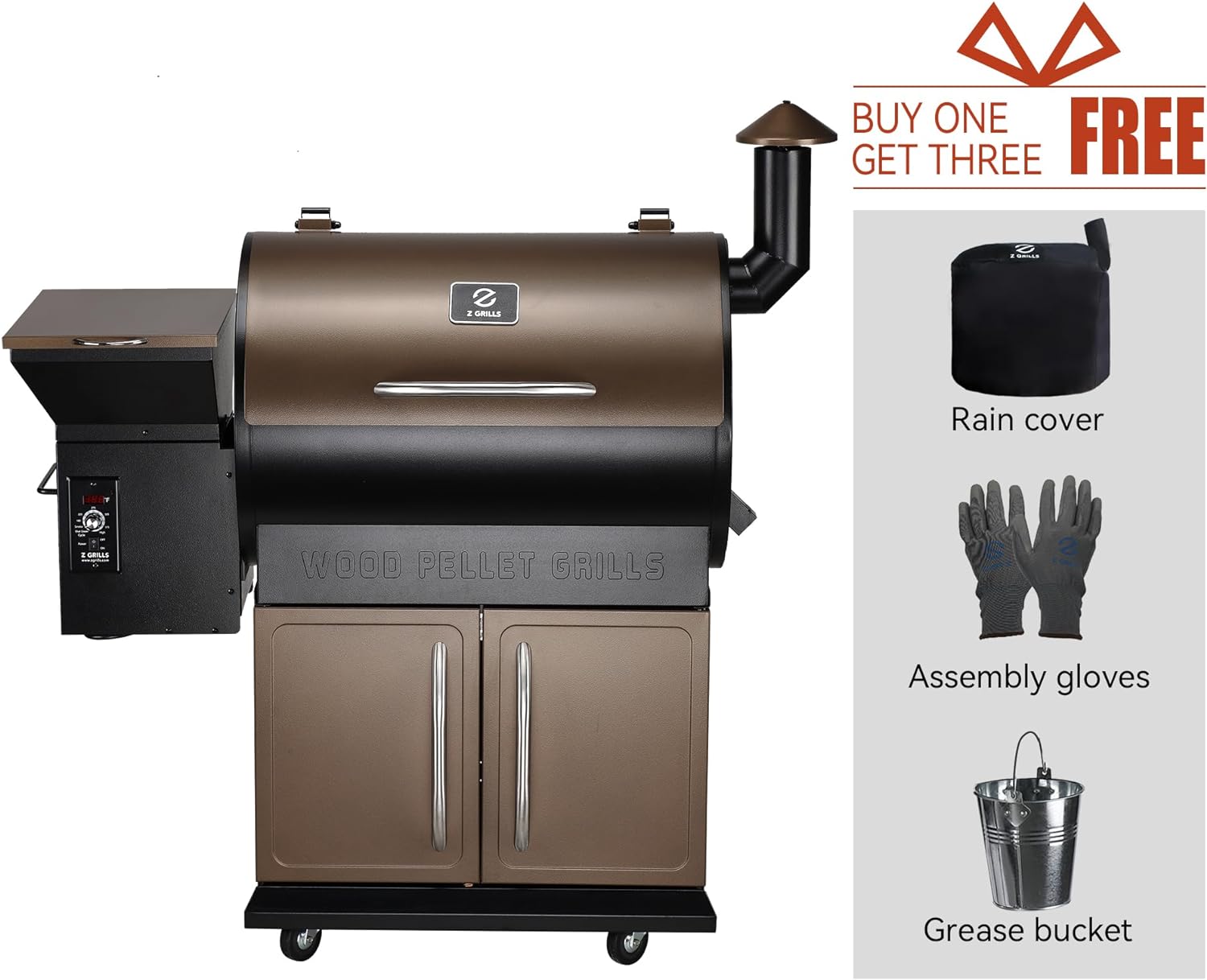
Internal Airflow and Rack-Level Temperature Variation
Airflow patterns determine rack-to-rack temperature differences; upper racks typically run cooler than directly exposed primary grates due to stratification. In a multi-rack layout, the ZPG-700D’s fan-driven circulation encourages horizontal mixing, but some variation is inevitable—foods placed closer to the heat source or nearer exhaust will experience slightly higher temperatures. Using a remote thermometer with multiple probes helps map temperature gradients and adjust rack placement and cook times accordingly. Additionally, diffuser plates or baffles reduce direct line-of-sight heat from the firebox, promoting steadier temperatures and more uniform smoke exposure across the cooking surface.
Pellet Burn Characteristics and Fuel Efficiency Considerations
Wood pellets combust cleanly when feed rates match airflow and chamber temperature. At low setpoints, pellets smolder longer and produce pronounced smoke; at higher setpoints, combustion becomes more complete with less visible smoke and more convective heat. Pellet consistency (density and moisture content) affects burn smoothness and auger feeding; high-quality hardwood pellets typically yield more stable burns and lower ash production. Pellet consumption estimates vary, but efficient PID regulation and minimized lid openings reduce fuel use. Users planning long smokers should account for hopper capacity and access to suitable hardwood pellets when estimating supply needs for extended events.
Capacity, Construction, and Durability
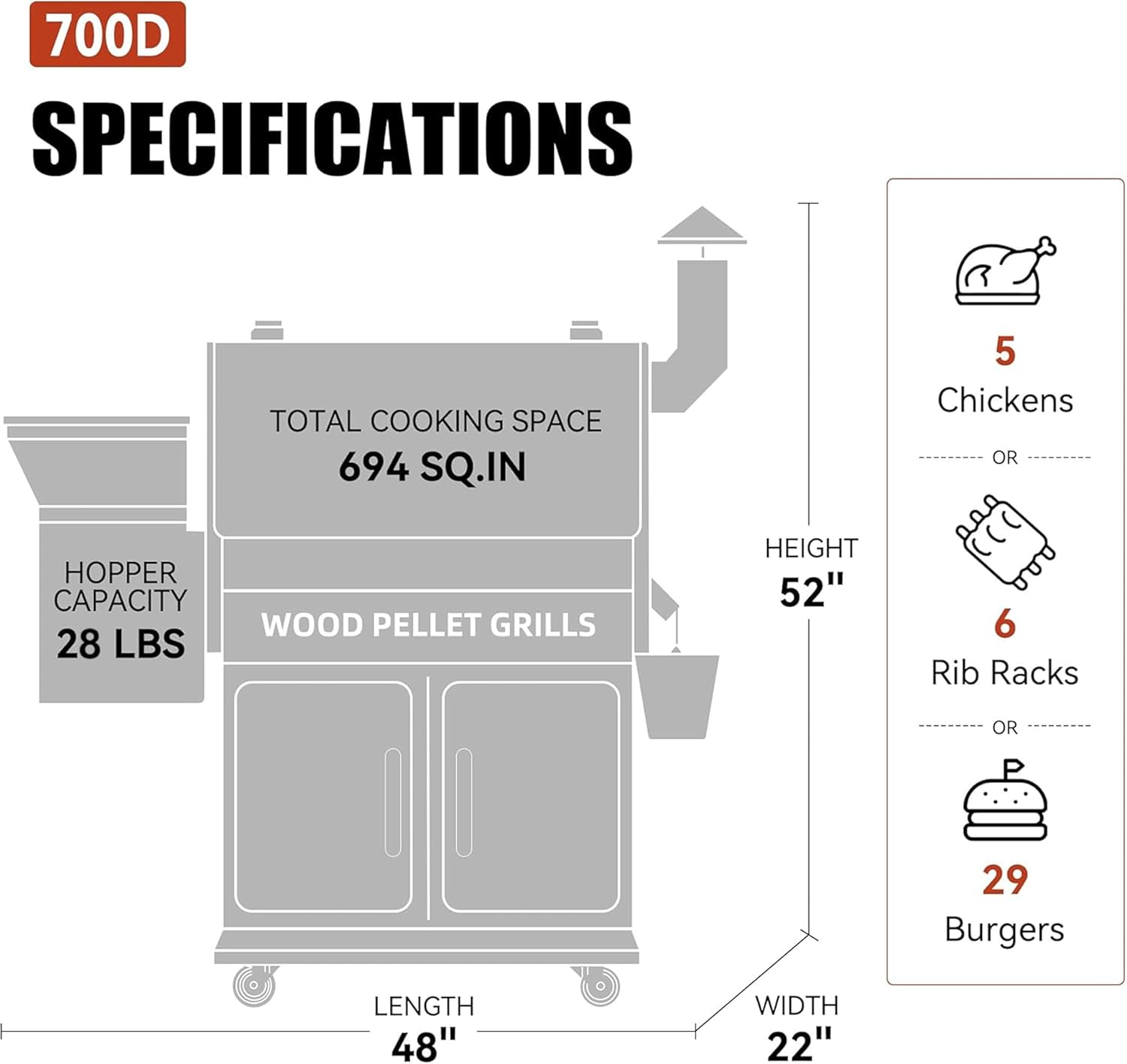
The ZPG-700D’s 700-square-inch cooking envelope is positioned for households and small gatherings, able to handle multiple rib racks, several chickens, or a mix of mains and sides in a single cook. The body is constructed from alloy steel with a high-temperature powder-coat finish for corrosion resistance and visual durability; a bottom storage cabinet adds practical space for pellets and accessories. Weight and dimensions indicate a substantial unit that balances portability with stability. Longevity depends on material thickness, weld quality, and protective coatings; powder coating reduces surface rust susceptibility, but internal components like firepots, grates, and electrical parts will determine maintenance intervals and long-term performance under heavy use and outdoor exposure.

Cooking Area Configuration and Practical Capacity
A 700 sq. in. footprint typically combines a primary grate and an upper warming rack; this layout supports staging items at different heat zones and can accommodate roughly 30 standard burger patties as the manufacturer suggests. For multi-course entertaining, the dual-rack setup allows simultaneous smoking and warming but requires awareness of rack-level temperature differences. The added bottom cabinet extends storage convenience but can trap moisture if not ventilated correctly. For users who routinely cook for larger groups, the capacity will be limiting relative to full-size commercial grills, but it fits well for weekend gatherings and shared neighborhood barbecues.
Materials, Finish, and Expected Longevity
Alloy steel with high-temperature powder coating protects the exterior from UV and moisture but does not eliminate the need for routine care. Internal components such as grates, drip pans, and the firepot experience direct thermal and food-scrap exposure; their materials and replaceability affect service life. The manufacturer’s 3-year quality assurance suggests confidence in construction, but typical longevity will hinge on maintenance practices, pellet quality, and environmental exposure. Regular cleaning of ash and grease, protection from the elements when idle, and timely replacement of wear items extend usable life and maintain performance characteristics over multiple seasons.
Cleaning, Maintenance, and Support
Ease of maintenance affects ownership satisfaction and long-term performance. The ZPG-700D’s design includes features aimed at simplified cleaning—an accessible grease collection area, removable grates, and a bottom cabinet for storage—but care remains essential. Routine tasks include emptying ash from the firepot, scraping grease from drip pans, cleaning cooking grates, and inspecting the auger and fan for residue buildup. Electrical components and the PID controller should be protected from moisture during cleaning. Manufacturer-provided telephone and online support plus a stated 3-year assurance contribute to post-purchase serviceability, but availability of replacement parts and local repair resources will influence total maintenance convenience.

Grease Management, Ash Removal, and Routine Cleaning
Effective grease management reduces flare-ups and simplifies cleaning. The grill’s drip system and grease tray location determine how easily residue can be removed without disassembling the chamber. Regular ash removal from the firepot prevents auger jams and inconsistent combustion; ash accumulation can insulate the firepot and alter burn characteristics if left unchecked. Grate cleaning after each session and periodic deeper cleans of the interior help maintain heat transfer efficiency and reduce buildup of creosote-like deposits that can affect flavor. Following manufacturer cleaning recommendations preserves finish and operating reliability.
Warranty, Parts Availability, and Manufacturer Support
A manufacturer-stated 3-year quality assurance is a tangible support feature that covers certain defects and provides a baseline for buyer confidence. Telephone and online support channels are listed as direct manufacturer services, which can assist with setup, troubleshooting, and replacement part ordering. Availability of common spare parts—such as thermostats, ignitors, augers, and grates—affects downtime for repairs. Buyer reports typically emphasize the importance of timely parts replacement and clear documentation; documented service pathways and accessible parts supply chains reduce interruptions and extend the product’s practical lifespan.
Pros & Cons
Pros
- Precise temperature control with PID technology provides tighter set-and-hold performance than simple on/off controllers. This reduces temperature drift during long smokes and supports consistent results for time-sensitive recipes.
- Versatile 8-in-1 cooking capability supports smoking, baking, roasting, and indirect grilling, accommodating a range of outdoor cooking techniques. The multi-function approach increases usable applications for backyard cooks.
- 700 square inches of cooking space suits small-to-medium gatherings and allows simultaneous cooking of multiple items on primary and upper racks. The capacity is practical for family meals and modest entertaining.
- Robust alloy steel construction with high-temperature powder coating improves weather resistance and exterior longevity. The bottom cabinet adds storage convenience for pellets and tools.
- Automated pellet feed and corded electric power allow set-and-forget smoking when combined with PID control, reducing the need for constant adjustment during long cooks.
- Manufacturer-provided 3-year quality assurance and accessible telephone and online support add confidence in post-purchase serviceability.
Cons
- Pellet-based systems inherently depend on electricity for the auger and fan, limiting off-grid use and making site selection subject to power availability. This constraint differs from purely charcoal or gas setups.
- Direct high-heat searing performance is limited relative to dedicated gas burners or charcoal grills that produce intense radiant heat; achieving deep crust formation may require secondary searing methods.
- Temperature range and stability can be influenced by ambient conditions, lid opening frequency, and pellet quality; extreme cold or wind may increase pellet consumption and controller workload.
- Internal components exposed to heat, grease, and ash—such as the firepot and drip pans—require regular maintenance and eventual replacement; long-term durability depends on owner upkeep and parts availability.
Final Verdict: Who This Grill or Smoker Is Best For (and Who Should Skip It)
The Z GRILLS ZPG-700D suits backyard cooks who prioritize consistent smoke-infused results and convenience over maximum direct sear intensity. Its PID-controlled pellet feed and 700-square-inch footprint make it well-suited to households and small gatherings that want reliable low-and-slow smoking, indirect roasting, and occasional baking with set-and-hold simplicity. Buyers who value built-in storage, a powder-coated steel exterior, and manufacturer-backed support will find this model aligned with those priorities. The grill’s dependence on corded electric power and pellet fuel means it performs best in established outdoor kitchen areas with reliable power access and planned pellet supply.
Conversely, this unit is not the ideal choice for cooks who need intense, sustained direct heat for frequent high-temperature searing or for users requiring fully off-grid operation. Those who regularly cook for very large crowds may find the 700-square-inch capacity restrictive compared to larger pit-style smokers or multi-burner gas grills. Overall, the ZPG-700D offers a balance of automated control, adequate capacity, and construction-focused durability that fits a broad segment of backyard barbecue enthusiasts seeking predictable smoking and versatile indirect cooking in 2026.

Frequently Asked Questions (FAQs)
What temperature range can the Z GRILLS ZPG-700D maintain?
The ZPG-700D uses a PID digital controller to regulate pellet feed and fan speed, enabling operation across a typical pellet-grill band commonly used for smoking and roasting. Manufacturer materials indicate practical setpoints roughly from low-smoking temperatures around 180°F up to higher roasting levels near 450°F. Actual stability depends on ambient conditions, pellet quality, and lid openings, so expected fluctuations will be smaller with proper chamber sealing and consistent fuel.
Is the ZPG-700D suitable for searing steaks at high heat?
Pellet grills like the ZPG-700D excel at indirect heat cooking and steady smoke infusion but are generally limited in sustained radiant high-heat searing compared with gas or charcoal units. Short sear bursts are possible when the unit reaches upper setpoints, but achieving intense crusts may require a secondary searing tool such as a cast-iron skillet, a dedicated sear station, or a brief finish on a high-output grill.
How much cooking space does the ZPG-700D provide and what can fit on it?
The ZPG-700D offers approximately 700 square inches of combined cooking area across the main grate and upper rack. Manufacturer guidance equates this to roughly 30 standard burger patties or multiple rib racks. This capacity is well-suited for family meals and small gatherings but may be limited for large-event cooking or feeding extended groups without staged cooks.
What maintenance is required to keep the grill performing well?
Routine maintenance includes emptying ash from the firepot to prevent auger interference, cleaning the grease collection areas and drip trays to reduce buildup, and scraping or brushing grates after each use. Periodic inspection of the hopper, auger, fan, and electrical connectors for pellet dust or residue is recommended. Replacing wear items such as drip pans or grates when corroded helps preserve thermal performance and food safety.
Can the ZPG-700D be used off-grid or without electricity?
No; the ZPG-700D requires corded electric power to operate the auger that feeds pellets and the fan that provides combustion air and airflow. This dependence on electricity means off-grid use is not practical without a generator or portable power supply capable of supporting the unit’s motor and controller.
What type of pellets should be used for best performance?
High-quality hardwood pellets with consistent density and low moisture content yield the most predictable burn characteristics and lower ash production. Hardwood blends such as oak, hickory, or fruitwoods offer distinct flavor profiles; choice depends on the desired smoke intensity and recipe. Avoid pellets with high softwood or filler content, as these can cause uneven combustion and increased residue.
Does the ZPG-700D come with warranty and manufacturer support?
The manufacturer lists a 3-year quality assurance for the ZPG-700D and provides telephone and online support channels. This warranty coverage and support infrastructure assist with parts, troubleshooting, and service inquiries, though availability of local repair options and replacement components should be confirmed for long-term maintenance planning.