
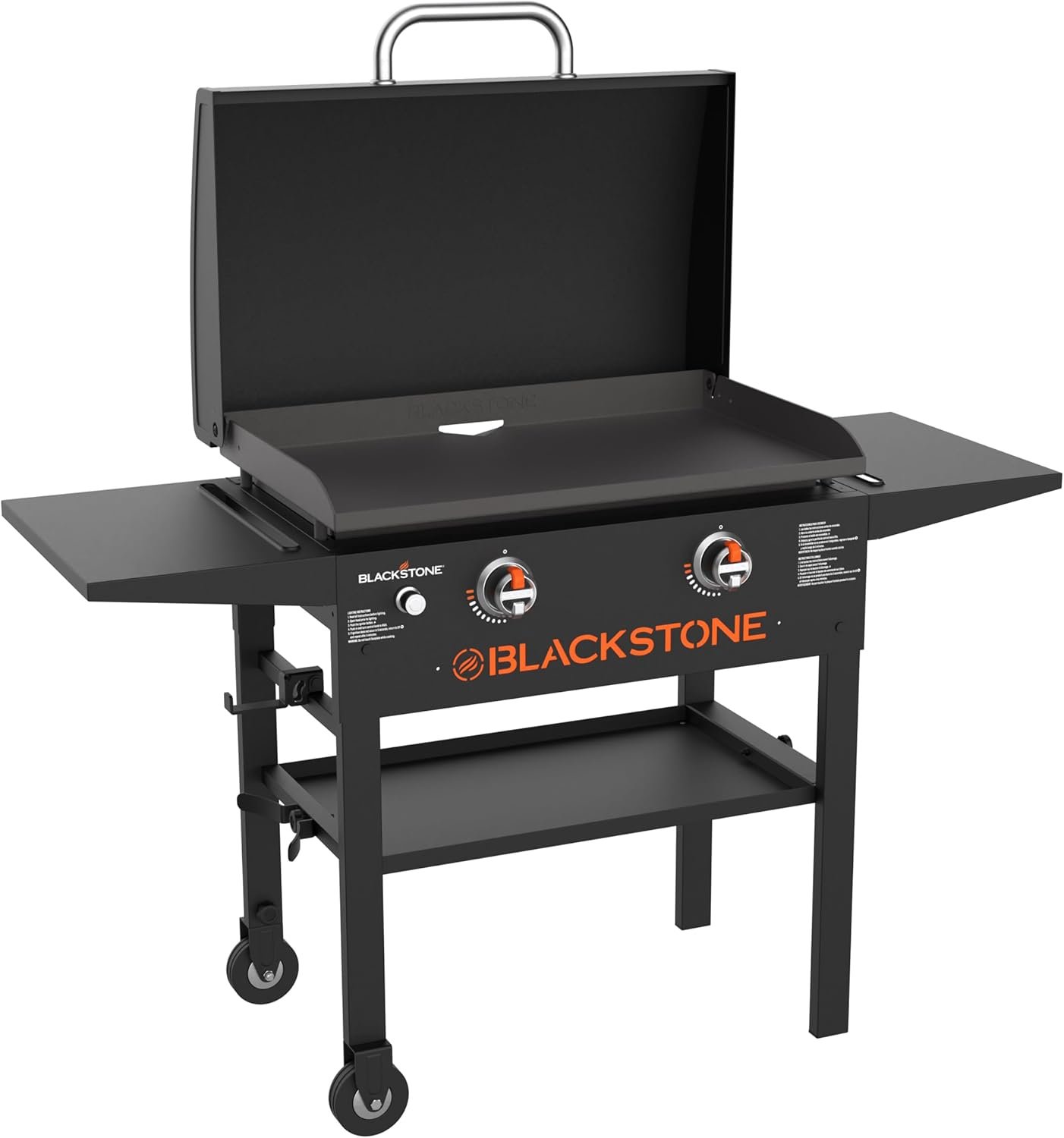
Why Grill and Smoker Selection Matters
Choosing the right grill or smoker is a decision that shapes the range of foods that can be prepared, the flavor profile achievable, and the operational ease of outdoor cooking. For buyers who prioritize rapid searing, breakfast versatility, and straightforward cleanup, flat-top griddles offer a different set of trade-offs compared with traditional open-flame grills or dedicated smokers. Fuel preference is central: propane-driven griddles deliver fast heat and on-demand adjustments, while charcoal and pellet systems emphasize smoke complexity and longer, steadier heat. Performance expectations should include the cooking surface area, burner layout, temperature zoning capability, grease management, and construction materials, all of which affect heat distribution, maintenance burden, and expected lifespan. Matching those features to typical menus — pancakes and eggs, burgers and stir-fry, or restaurant-style searing — determines whether a specific model is an efficient fit for household or light-commercial outdoor cooking needs.
Quick Overview
| Feature | Details |
|---|---|
| Type | Flat-top griddle (countertop, portable) |
| Fuel Type | Propane (gas) |
| Total Cooking Area | 524 square inches |
| Burners | Two independently controlled H-style burners, combined 34,000 BTU |
| Cooking Surface Material | Stainless steel (manufacturer-listed) |
| Frame / Finish | Powder-coated steel, painted finish |
| Temperature Control | Manual knobs; two-zone control via independent burners |
| Grease Management | Rear grease management system with rear grease cup |
| Portability | Two wheels; countertop installation possible; no assembly required per manufacturer |
| Additional Features | Integrated protective hood, counter-height side shelves, electric ignition |
| Warranty | 1-year manufacturer warranty |
The specifications above define a gas-powered flat-top intended for outdoor, two-zone cooking where rapid heat-up and broad, contiguous cooking space are priorities. The 524 square inches and dual H-style burners support simultaneous high-heat and low-heat tasks, while the rear grease management system and integrated hood reduce maintenance friction and protect the top when idle.

Cooking-Style Suitability: Grilling, Searing, and Light Smoking
The Blackstone 28-inch model is configured as a flat-top griddle designed primarily for direct-contact cooking rather than traditional indirect smoking. The continuous stainless-style griddle surface favors foods that benefit from full-surface contact and even radiant heat, such as pancakes, eggs, burgers, and sautéed vegetables. Two independently controlled burners create distinct temperature zones for searing on one side and gentle finishing on the other, supporting multi-item meal workflows. While the unit does not include a dedicated smoke generator or pellet feed, limited smoking can be achieved by using wood chips in a smoke box placed to the griddle rear while maintaining proper ventilation; this produces subtle smoke influence rather than deep smoke-ring profiles typical of offset smokers. Overall, the design targets versatile flat-top cooking more than prolonged low-and-slow barbecue.

Searing and High-Heat Performance
The dual H-style burners with a combined 34,000 BTU output are intended to bring the griddle surface to high cooking temperatures quickly and sustain searing heat across large areas. The H-style layout distributes heat along the width of the cooking surface, reducing cold spots that can occur with single-point burners. Because temperature control is manual, effective searing requires learning burner-to-top relationships and using the two-zone capability to move food between hotter and cooler sections. The griddle top material and mass influence heat retention and recovery, so heavier stainless-style surfaces will hold heat better during high-load cooking.
Using the Griddle for Light Smoking
The unit is not a specialized smoker; however, light smoking techniques are feasible when combined with a smoke source placed at the back or in a small smoke box. The integrated hood can help capture and circulate smoke briefly, but the predominantly open griddle design limits sustained smoke concentration. Expect a modest smoke presence rather than deep infusion; prolonged low-temperature smoking is outside the typical strengths of this design.
Fuel Type Impact and Temperature Control Precision
Propane as the power source provides quick ignition, rapid heat ramp-up, and straightforward flame adjustment via the control knobs. The two independent knobs enable a practical two-zone arrangement, offering coarse but effective temperature differentiation across the 524 square-inch surface. The electric ignition simplifies startup compared with manual lighting, and the combined 34,000 BTU rating describes the maximum fuel energy available, which correlates to faster heat recovery when the surface is loaded. However, the system lacks digital thermostatic control or PID feedback, so precision depends on operator technique, visual cues, and the thermal properties of the griddle top rather than automated temperature stabilization.

Propane Advantages and Limitations
Propane fuels rapid response and portability, making the unit appropriate for backyard use or transport to outdoor gatherings. Propane’s clean combustion reduces soot on the top compared with charcoal, and regulation via knobs yields immediate heat changes. Limitations include dependence on cylinder supply and local regulations governing propane use in certain multi-unit living situations. Unlike pellet or electric units with closed-loop temperature control, propane griddles require operator attention to maintain target surface conditions, especially for low-temperature tasks.
Manual Control versus Digital Precision
The manual knob controls provide reliable, intuitive operation for two-zone cooking but do not offer the fine-grained precision of thermostatic or digitally controlled smokers and ovens. For cooks who require exact low-temperature holding or extended smoking with minimal intervention, the absence of digital regulation means the unit performs best when used with visual temperature techniques (e.g., oil shimmer, food reaction) and heat zoning rather than numeric setpoint fidelity.
Heat Distribution and Airflow Management
Heat distribution is governed by the H-style burner layout and the thermal conductivity and thickness of the cooking surface. The H-style configuration places burner runs beneath broad sections of the griddle, promoting even lateral heat coverage and fewer concentrated hot or cold spots compared with single linear burners. The integrated protective hood can influence convective airflow and retention when closed briefly, but as a flat-top, the product is primarily designed for direct radiant and conductive cooking. Grease and food debris are managed rearward by the patented rear grease system, which simplifies surface maintenance and avoids accumulation under burners, preserving airflow pathways.

Burner Layout and Surface Conductivity
H-style burners distribute flame under multiple channels of the griddle top rather than a single central flame, which helps keep surface temperature uniform across the 524 square inches. The listed stainless-style cooking surface and overall mass determine how quickly heat spreads and how well the top resists localized temperature swings when food is introduced. A heavier, thicker top typically improves evenness and recovery at the cost of slower initial heat-up.
Airflow, Hood Use, and Smoke Control
The integrated hood protects the surface when idle and provides limited containment during short cooking phases, slightly increasing convective heat retention. For operations seeking more smoke capture, the hood can help hold aroma briefly but is not engineered for closed-chamber smoking like a cabinet smoker. Airflow around the burners and under the unit should remain unobstructed to maintain combustion efficiency; periodic inspection of vent paths and the grease channel will help avoid unintended airflow restrictions.
Cooking Capacity, Workflow, and Usability
With 524 square inches of continuous cooking area and the ability to hold multiple items at once, the griddle accommodates family meals and small gatherings. Manufacturer guidance about burger and pancake counts positions the surface for batch cooking and multi-item workflows: use the two-zone setup for sear-to-rest staging, leverage counter-height side shelves for prep and staging, and utilize the rear grease cup for continuous debris management. The electric ignition reduces startup complexity, and the two-wheel chassis element aids positioning; the countertop-installation option supports use on patios or outdoor kitchens where a compact but capable work surface is desired.

Batch Cooking and Zone Management
The broad flat surface facilitates batch preparation by enabling distinct temperature zones for cooking and holding. Foods that require rapid sear followed by lower-temperature finishing benefit from the independent burners. The contiguous surface also supports cooking multiple food types simultaneously without the need to swap grates or reposition heat sources, increasing throughput for breakfast spreads and high-volume casual meals.
Workstation Design and Mobility
Counter-height side shelves raise prep surfaces for ergonomic access during continuous cooking and serving. The integrated hood and rear grease cup lower maintenance steps between sessions. Two wheels provide limited mobility for repositioning, but the unit is designed more as a semi-permanent countertop or patio appliance than a fully trailer-ready cooker. The manufacturer lists no assembly required, which reduces setup friction in most outdoor contexts.
Durability, Materials, and Maintenance Expectations
Materials listed by the manufacturer include a stainless-style cooking surface and a powder-coated steel frame and finish. Stainless-style tops resist corrosion and are easier to clean after high-heat sessions, while powder-coated steel provides a durable exterior finish when protected from prolonged exposure to moisture and UV. The rear grease management system reduces pooling and extends the intervals between deep cleaning. A one-year warranty from the manufacturer offers baseline coverage, but long-term lifespan will depend on routine maintenance, storage practices, and local exposure to corrosive environments.
Corrosion Resistance and Finish Considerations
Stainless-style cooking surfaces and stainless framing offer superior corrosion resistance compared with plain carbon steel; however, painted and powder-coated finishes can chip or fade if exposed to abrasive cleaning, frequent wet storage, or prolonged sunlight. Regular cleaning of the grease channel, wiping down the painted surfaces, and storing the unit under cover when not in use will preserve finish integrity and component function.
Maintenance Routines and Component Access
The rear grease cup simplifies daily cleanup by collecting drips and debris away from burn areas, lowering the frequency of full-top scrapes and deep cleans. Electric ignition components and knobs should be checked periodically for grease infiltration, and burner orifices inspected if flame patterns become uneven. The relatively simple mechanical design and the manufacturer provision of a one-year warranty reduce complexity for replacement parts and routine service.
Pros & Cons
Pros
- Spacious cooking surface: 524 square inches supports batch cooking for families and small gatherings, enabling multiple items to be cooked simultaneously without overcrowding. This surface area is suitable for breakfast spreads, burgers, stir-fries, and sheet-style cooking.
- Two-zone flexible heat: Independent H-style burners with a combined 34,000 BTU enable distinct searing and finishing zones, allowing multi-step recipes to be managed on a single flat surface. The H-style layout improves lateral heat coverage.
- Rear grease management: The patented rear grease channel and cup streamline cleanup by directing drips away from burners and collecting debris in a removable container, reducing residue buildup and simplifying maintenance.
- Integrated hood and shelves: The protective hood guards the cooking top when not in use, while counter-height side shelves improve prep ergonomics and serving workflows during active use.
- Portable and ready-to-use: Electric ignition and factory-configured setup reduce startup time; two wheels assist repositioning, and the manufacturer lists no assembly required for quicker deployment.
- Durable materials: Manufacturer-listed stainless-style cooking surface and powder-coated steel frame combine ease of cleaning with exterior durability when maintained and stored properly.
Cons
- Limited smoking capability: The open flat-top design and lack of a dedicated smoke system mean deep, long-duration smoking and strong smoke-ring formation are not strengths compared with pellet or offset smokers.
- Manual temperature precision: Without digital thermostatic controls, maintaining exact low-temperature setpoints requires user technique and monitoring rather than automated stabilization.
- Propane dependence: Propane cylinders provide portability but require fuel swaps and may be restricted in some multi-family or municipal settings; there is no built-in alternative fuel option.
- Warranty and long-term exposure: A one-year warranty provides basic protection, but extended outdoor exposure, abrasive cleaning practices, or neglect of grease management can shorten component lifespan and finish quality.
Final Verdict: Who This Grill or Smoker Is Best For (and Who Should Skip It)
This Blackstone 28-inch flat-top griddle is well-suited to buyers seeking a versatile, propane-powered outdoor cooking platform for high-volume direct-contact cooking. The 524 square-inch stainless-style surface combined with two independently controlled H-style burners offers practical two-zone capability for searing, sautéing, and large breakfast or dinner batches. The rear grease management system and integrated hood reduce routine maintenance, while counter-height shelves improve prep ergonomics for family cookouts, tailgates, or casual outdoor entertaining.
This model is less appropriate for cooks whose priority is extended low-and-slow smoking with heavy smoke flavor, or for those requiring digital temperature precision for long unattended cooks. It is also not the optimal choice for settings where propane use is restricted or where a weather-exposed installation would compromise painted finishes. For users focused on rapid searing, multi-item throughput, and straightforward cleanup, the unit provides a balanced combination of surface area, fuel responsiveness, and practical features relative to similar propane flat-top griddles available in outdoor cooking categories.
Frequently Asked Questions (FAQs)
How is temperature controlled on the Blackstone 28-inch griddle?
Temperature is controlled manually via two independent burner knobs that allow creation of distinct heat zones across the 524 square-inch surface. The combined 34,000 BTU output provides rapid heat-up and recovery, but there is no digital thermostatic feedback, so temperature stability depends on operator technique, burner settings, and the thermal mass of the griddle top.
Can this griddle be used for smoking foods?
The unit is designed primarily for direct-contact flat-top cooking rather than dedicated smoking. Light smoke infusion is possible using a small smoke box or wood chips at the rear while the hood is briefly closed, but prolonged low-and-slow smoking and deep smoke penetration typical of pellet or offset smokers are not core strengths of this configuration.
What maintenance is required to keep the griddle durable?
Routine maintenance includes scraping and wiping the cooking surface after each use, emptying the rear grease cup, and cleaning burner orifices and knobs periodically. Protecting the powder-coated finish from prolonged moisture and storing the unit under cover when idle will help preserve appearance and prevent corrosion over time.
How portable is the Blackstone 28-inch griddle for gatherings?
The griddle includes two wheels and a compact footprint that allow repositioning on flat surfaces, making it suitable for backyard use and transport over short distances. It is more of a semi-portable countertop or patio appliance than a trailer-mounted unit; fuel is propane, which requires cylinder management for off-site use.
Is wiring or assembly required to use the griddle?
Manufacturer specifications list the unit as requiring no assembly and featuring electric ignition for startup. No external electrical wiring is required beyond the onboard ignition system; propane connection and standard safety checks are necessary before operation.
What kinds of foods are best suited for this griddle?
The flat-top surface excels with foods benefiting from full-surface contact and even heat, such as pancakes, eggs, burgers, stir-fried vegetables, grilled sandwiches, and large-batch searing. The two-zone capability supports sear-and-hold techniques, making the griddle well-suited to multi-item breakfast spreads and casual outdoor entertaining.