
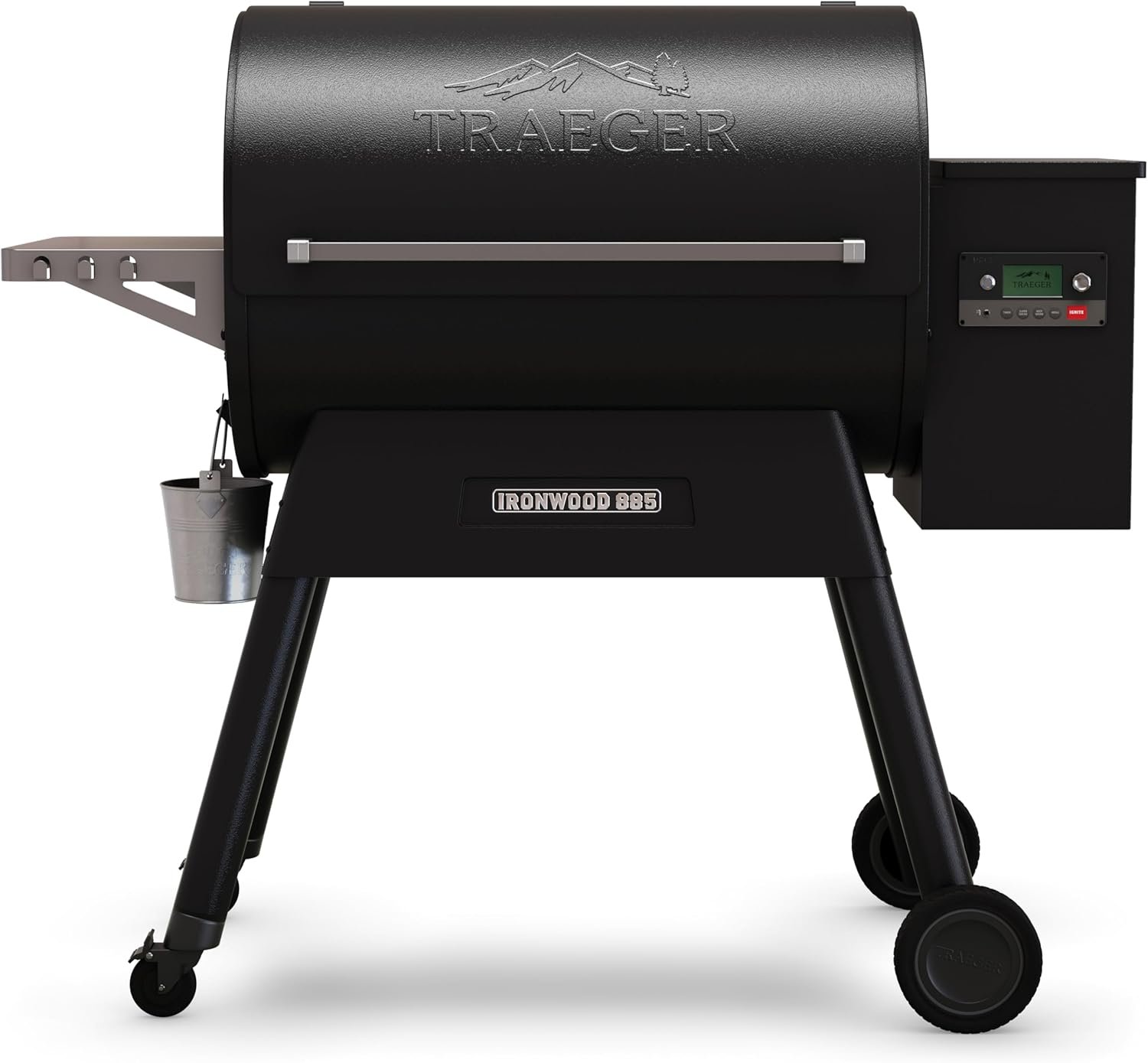
Why the Right Grill or Smoker Choice Matters
Selecting the appropriate grill or smoker shapes cooking results, flavor profiles, and long-term ownership satisfaction. For buyers deciding between direct-heat grilling, low-and-slow smoking, or an all-in-one backyard cooking system, fuel type, temperature control, cooking area, and construction materials are primary considerations. Pellet grills blend automated temperature control with hardwood smoke flavor, while conventional gas and charcoal options emphasize rapid heat or traditional smoke techniques. Matching a grill’s capabilities to meal frequency, party size, and desired recipes helps avoid common compromises such as insufficient surface area, inadequate smoke production, or complex maintenance. Performance expectations should include consistent temperature control, predictable heat distribution, sufficient searing capability for steaks, and the ability to sustain multi-hour smokes without constant intervention. Durability, corrosion resistance, and ease of cleaning determine ownership cost and convenience over time. The Traeger Ironwood 885 targets owners who prioritize wood-fired flavor with smart controls and larger cooking capacity, making an informed evaluation of its specifications essential for buyer decisions.
Quick Overview
| Feature | Details |
|---|---|
| Grill Type | Wood pellet electric pellet grill and smoker |
| Fuel Type | All-natural hardwood pellets |
| Total Cooking Area | 885 sq. in. (two-tier configuration) |
| Temperature Range | 165–500°F (D2 controller) |
| Materials & Construction | Alloy steel outer body, double-wall insulation |
| Control System | D2 Direct Drive controller with WiFIRE app connectivity |
| Special Modes | Super Smoke Mode for increased smoke production |
| Best Suited Cooking Styles | Smoking, grilling, baking, roasting, braising, BBQ (6-in-1) |
| Hopper Capacity & Features | 20 lb. hopper with pellet sensor and clean-out door |
| Dimensions & Weight | 27″D x 53″W x 47″H; 170.2 pounds |
| Manufacturer | Traeger |
The Quick Overview table translates technical features into practical suitability: the 885 sq. in. two-tier layout accommodates large parties and meal prep, while the D2 controller and WiFIRE enable remote temperature management. Double-wall insulation and a 20 lb. hopper support longer cooks in varying weather, and Super Smoke Mode increases smoke production for more pronounced wood flavor during low-temperature smoking.

Temperature Range and Control Precision
The Ironwood 885 lists a stated operating range of 165–500°F, governed by Traeger’s D2 Direct Drive controller and WiFIRE connectivity. For buyers prioritizing consistent low-and-slow smoking, the lower end enables sustained smoke and temperature stability required for brisket and pork shoulder. At higher settings, the 500°F upper limit allows most grilling and finishing tasks but sits below the peak surface temperatures of many dedicated searing-focused grills. Digital control combined with app monitoring reduces active intervention during long cooks and provides set-point stability influenced by auger feed rate and fan airflow. Temperature precision depends on controller algorithms, insulation, pellet feed consistency, and environmental conditions; double-wall insulation and the D2 system are engineered to minimize swings. Buyers who require repeatable set-and-forget performance for overnight smokes will find automated control mechanisms and probe monitoring relevant when evaluating suitability.

Remote Monitoring and Probe Accuracy
Remote monitoring via WiFIRE and app control offers convenience for long-duration cooks where occasional adjustments are expected. The system reports set temperature, current chamber temperatures, and probe readings when probes are connected, which supports informed adjustments without direct proximity to the unit. Probe accuracy and responsiveness are important for maintaining target doneness; typical setups pair the grill controller with an internal probe to monitor food temperature while the controller manages airflow and pellet feed. Network reliability and app responsiveness influence the practical value of remote access, and buyers should account for Wi-Fi coverage at the grill location. For cooks relying on precise target temperatures, the integrated probe reporting and controller loop reduce manual oversight compared with non-automated grills.
Implications for Searing and High-Heat Tasks
The 500°F maximum sets expectations for searing-intensive cooking. While the temperature range accommodates strong caramelization and crust development on many proteins, it is lower than some direct-flame or dedicated sear-focused appliances that exceed 600°F. For buyers seeking authentic high-heat restaurant-style sears, a supplemental cast-iron searing plate or a separate high-temperature tool may be considered. The Ironwood 885’s strength lies in controlled, consistent heat and smoke integration rather than absolute peak surface temperatures. For combination use—searing, then finishing low-and-slow—the grill’s temperature range covers finishing and most reverse-sear workflows, with the caveat that extreme direct searing performance is limited by the listed maximum temperature.
Heat Distribution and Airflow Management
Heat distribution and airflow architecture define how evenly food cooks across multiple racks and how effectively smoke circulates. The Ironwood 885 employs Traeger’s D2-driven auger and fan system to feed pellets and control combustion air, with double-wall insulation helping retain heat. Even cooking relies on an internal heat baffle and the position of drip trays or deflectors to convert direct flame into indirect radiant heat; such geometry reduces hotspots and spreads warmth across two tiers. Airflow is a balance between the fan-driven draft required to combust pellets and vents that exhaust smoke; Super Smoke Mode alters this balance to generate more visible smoke at lower temperatures. Buyers evaluating multi-rack roasts or simultaneous different foods should consider how internal airflow and rack spacing influence consistent doneness from front to back and top to bottom. Weather, ambient temperature, and how often the lid is opened will also affect temperature uniformity during extended cooks.

Two-Tier Cooking and Rack Layout Considerations
The two-tier 885 sq. in. configuration expands usable surface area but creates vertical thermal gradients that must be managed. Foods on the top tier will typically be exposed to slightly warmer convected air and more direct radiant heat from the upper space, while the lower tier sees heat closer to the baffle and drip area. Rack spacing, placement of larger cuts, and rotation schedules can mitigate unevenness across zones. The grill’s capacity to handle multiple chickens, racks of ribs, or several pork butts at once is enabled by rack area, yet the practical evenness depends on load distribution and the controller’s ability to maintain steady chamber temperature despite high thermal mass.
Super Smoke Mode and Low-Temperature Smoke Dynamics
Super Smoke Mode is designed to increase smoke production at lower set temperatures, which enhances wood flavor during long smokes. At reduced combustion temperatures the auger and fan interplay can be tuned to create more visible smoke and denser smoke exposure: this favors bark development and more pronounced smoke penetration for briskets and shoulders. However, increased smoke production can also deposit heavier soot or tars if combustion is incomplete, particularly if pellets are of inconsistent quality. Buyers should consider pellet quality and the trade-off between intensified smoke flavor and potential residue accumulation on food and interior surfaces when frequently using high-smoke settings.
Cooking Capacity and Versatility for Different Styles
Cooking capacity and versatility are decisive for buyers who host groups or prepare multiple dishes simultaneously. The Ironwood 885’s 885 sq. in. two-tier area is positioned for large gatherings, with manufacturer statements noting the ability to fit multiple whole chickens, racks of ribs, or several pork butts. Versatility is amplified by the grill’s 6-in-1 cooking claim—grilling, smoking, baking, roasting, braising, and BBQ—enabled by automated temperature control, consistent air movement, and pellet-driven wood flavor. The sizeable hopper and D2 controller support extended bakes and low-and-slow sessions without frequent pellet refilling. However, versatility does not equate to specialization: while the Ironwood handles many cooking modes, buyers focused on compact portability or extreme sear-only performance should weigh whether an all-in-one pellet grill fits their predominant cooking style.

Multi-Rack Meal Planning and Capacity Management
Large-capacity pellet grills facilitate batch cooking and staged menus for events or weekly meal prep. Managing capacity requires planning for thermal mass effects when loading the chamber with many cold items: the controller and pellet feed must compensate to recover set temperature quickly. The 20 lb. hopper reduces refill frequency, and the pellet sensor helps avoid unexpected interruptions, yet heavy loading will extend recovery times after lid openings. For complex menus involving simultaneous searing and low smoking, staging tasks and using indirect heat zones can optimize outcomes. Buyers expecting to regularly feed large numbers should account for accessory needs such as additional grates, rib racks, or multi-tier inserts to maximize usable space.
Bake, Roast, and Braise Capabilities
Pellet grills provide more oven-like heat stability compared with open-flame devices, making baking and roasting viable. The Ironwood 885’s enclosed chamber and digital temperature control are suited to breads, pizzas, and slow roasts when consistent ambient temperatures and even heat distribution are required. Braising and wet-cooking techniques are supported by the stable temperature environment, though moisture management and drip handling are considerations; appropriate drip trays or pans are recommended to collect juices and prevent flare-ups or smoke-generating burns. Buyers who plan to use the grill as a backyard outdoor oven will find the combination of predictable control and wood flavor beneficial for multi-course outdoor menus.
Fuel Type, Pellet Management, and Flavor Impact
Pellet fuel selection and management directly influence flavor, convenience, and cost of operation. The Ironwood 885 relies on all-natural hardwood pellets; pellet species—hickory, mesquite, apple, cherry, oak—offer distinct smoke profiles. Pellet grills provide cleaner smoke signatures and automated feed versus manual fueling in charcoal smokers, with less ash to remove and steadier burn profiles. The 20 lb. hopper and pellet sensor facilitate long cooks but require dry storage and occasional auger maintenance to prevent bridging or jamming. Switching pellet flavors is simplified by the hopper clean-out door, yet cross-contamination of flavors is common unless the hopper and firepot are fully emptied and cleaned between flavors. Buyers should weigh pellet availability, storage needs, and ongoing pellet costs compared with propane or lump charcoal alternatives when selecting a system.

Pellet Feed Mechanics and Auger Reliability
The auger-driven pellet feed under D2 control is central to timing fuel delivery and sustaining combustion. Consistent pellet size and dryness ensure predictable feed rates, which underpin temperature stability. Auger and motor quality influence long-term reliability; the D2 Direct Drive system is engineered to reduce motor load and improve responsiveness. Buyers should consider access to replacement parts, the ease of clearing jams through the clean-out door, and the presence of a pellet sensor to preempt outages during extended cooks. Regular inspection of the hopper, auger, and firepot for dust accumulation and pellet dust is part of recommended maintenance to preserve feed reliability.
Flavor Trade-offs Versus Gas and Charcoal
Compared with gas, pellet grills inject actual wood-derived smoke compounds for more authentic flavor development, though charcoal offers a distinct high-temperature smoke and flavor character some cooks prefer. Pellet grills are more automated than charcoal smokers, reducing active tending but also limiting manual manipulation of smoke density and flame-to-food contact. Gas grills provide rapid heat and straightforward control but lack direct wood smoke unless adapters are used. Buyers who prioritize consistent wood-fired taste with low active labor will find pellet fuel advantageous, while purists seeking intense charcoal smoke or extremely high sear temperatures may consider hybrid or separate dedicated equipment.
Durability, Maintenance, and Long-Term Ownership
Durability and ease of maintenance determine long-term satisfaction and cost-of-ownership. The Ironwood 885’s alloy steel exterior and double-wall insulation contribute to structural resilience and thermal retention, and the 170.2-pound mass suggests robust construction. Routine maintenance includes cleaning the firepot and interior to prevent ash buildup, emptying and inspecting the hopper and auger for debris, draining and replacing grease collection trays, and monitoring seals and fasteners for corrosion. Removable access points such as the hopper clean-out door and pellet sensor reduce downtime by simplifying pellet management. Environmental exposure—salt air, heavy rain, or freezing conditions—affects lifespan; using a cover and situating the grill under shelter will reduce weathering. Buyers evaluating total cost should include maintenance tasks and availability of replacement parts in their decision process.
Corrosion Resistance and Weather Exposure Considerations
Alloy steel outer material offers a balance of strength and affordability, but corrosion resistance varies with coating, finish, and environmental exposure. Double-wall insulation helps protect internal components from rapid temperature cycling, but exterior panels and hardware can still be susceptible to rust over time if not protected. Buyers in coastal or high-humidity regions should prioritize protective covers and regular cleaning schedules to remove salt or grime deposits. Fastener and hinge maintenance, including lubrication and corrosion inspection, extends service life; replacement part accessibility from the manufacturer supports longer-term repairs.
Ease of Cleaning and Consumable Replacement
Maintenance tasks that most influence daily usability include ash and grease removal, pellet hopper upkeep, and probe cleaning. The presence of a hopper clean-out door and pellet sensor simplifies fuel swaps and reduces the chance of jam-related interventions. Grease management depends on drip tray design and accessibility for removal and replacement; regular emptying prevents overflow and reduces smoke from burnt drippings. Consumables such as probes, drip pan liners, and pellets are routine purchases; buyers should evaluate availability of Traeger-branded and third-party alternatives when assessing ongoing operating costs and convenience.
Pros & Cons
Pros
- Automated temperature control with WiFIRE and D2 Direct Drive: Offers remote monitoring and generally consistent setpoint regulation, reducing the need for constant manual adjustments during extended cooks.
- Large 885 sq. in. two-tier cooking area: Supports multi-batch cooking, meal prep, or feeding large gatherings without constant rotation, increasing versatility for home entertaining.
- Super Smoke Mode and wood-pellet fuel: Increases low-temp smoke production to enhance classic BBQ flavor profiles and bark development for long smokes.
- 20 lb. pellet hopper with sensor and clean-out door: Enables extended unattended runs and simplifies pellet swaps and flavor changes, improving convenience for long cooks.
- Double-wall insulation and alloy steel construction: Helps maintain internal temperatures in variable weather and reflects a sturdier build compared with lightweight portable units.
- 6-in-1 cooking capability: Functions as a grill, smoker, oven, and more, allowing a broad range of techniques from baking to braising under controlled temperatures.
Cons
- Maximum listed temperature of 500°F: Limits extreme high-heat searing compared with grills designed to reach 600°F plus, which may affect buyers prioritizing restaurant-style sear marks.
- Size and weight reduce portability: At roughly 170 pounds and large footprint, the unit is intended for permanent backyard placement rather than frequent transport or tailgating.
- Dependence on pellet availability and storage: Requires proper pellet storage to maintain dryness; pellet quality variability can influence combustion behavior and smoke character.
- Potential for heavier residue with increased smoke mode: Using high-smoke settings frequently can produce more soot or creosote-like deposits, increasing cleaning frequency of interior surfaces and accessories.
Final Verdict: Who This Grill or Smoker Is Best For (and Who Should Skip It)
The Traeger Ironwood 885 suits backyard cooks who prioritize wood-fired flavor with large cooking capacity and smart, automated control. Its 885 sq. in. two-tier layout, 20 lb. hopper, Super Smoke Mode, and WiFIRE-enabled D2 controller align with users who host regular gatherings, perform long low-and-slow cooks, or want a multi-function appliance capable of smoking, roasting, and baking. Durability features such as alloy steel construction and double-wall insulation make it a choice for year-round outdoor kitchens when paired with proper maintenance and weather protection. The grill’s design and control systems favor cooks who prefer predictable temperature control and reduced hands-on tending.
Buyers who should consider other options include those who require extreme high-heat searing beyond 500°F, need a highly portable solution for frequent travel, or favor the specific flavor dynamics of charcoal-only systems. For 2026 comparisons within the pellet-grill category, the Ironwood 885 offers a balance of capacity, automation, and wood smoke performance that suits households seeking a single, versatile centerpiece for backyard barbecue and wood-fired cooking.
Frequently Asked Questions (FAQs)
How precise is the temperature control on the Traeger Ironwood 885?
The Ironwood 885 uses Traeger’s D2 Direct Drive controller to automate pellet feed and fan speed, supporting stable setpoint maintenance across its 165–500°F range. Precision depends on controller algorithms, pellet consistency, and environmental conditions; combined with double-wall insulation the system is engineered to reduce temperature swings common in outdoor cooks. Remote WiFIRE monitoring lets users adjust targets without direct interaction, further aiding consistent control during long smokes.
Can the Ironwood 885 produce strong smoke flavor for brisket and pork shoulder?
Super Smoke Mode increases smoke production at lower temperatures to enhance smoke exposure during long cooks, which supports bark formation and deeper smoke penetration for cuts like brisket and pork shoulder. Pellet species and pellet quality also influence smoke character; wet or low-quality pellets can produce undesirable residues. Periodic interior cleaning is recommended when using heavier smoke settings to manage soot and creosote buildup.
Is the 885 square inches of cooking area enough for large gatherings?
An 885 sq. in. two-tier configuration provides ample surface area for feeding multiple guests, enabling simultaneous cooking of several whole chickens, racks of ribs, or pork butts as noted in manufacturer guidance. Practical throughput depends on load distribution, recovery time after lid openings, and staging of cooking tasks. Accessory racks and efficient planning can maximize usable space for larger events.
How does pellet fuel compare to gas and charcoal for flavor and convenience?
Wood pellets deliver consistent, wood-derived smoke and simplify fuel management through automated feeding, offering more predictable flavor than gas and less daily tending than charcoal. Gas excels at rapid heat-up and high BTU output but lacks inherent wood smoke without adapters, while charcoal provides a distinct smoke and higher peak surface temperatures. Pellet grills are a compromise favoring automated control and wood flavor but require dry pellet storage and periodic hopper maintenance.
What maintenance tasks are necessary to keep the Ironwood 885 operating reliably?
Routine maintenance includes emptying ash from the firepot, cleaning the hopper and auger area to prevent dust buildup, inspecting and emptying drip trays, and checking seals and fasteners for corrosion. The hopper clean-out door and pellet sensor simplify pellet swaps and help prevent jams, but regular inspection of the auger and firepot is recommended. Environmental protection with a cover and sheltered placement helps minimize weather-related corrosion.
Is the Ironwood 885 suitable for high-heat searing?
The unit’s maximum listed temperature is 500°F, which enables good browning and crust development for many proteins but is lower than specialized sear-focused grills that exceed 600°F. Buyers seeking aggressive restaurant-style sears may require supplemental tools—such as a dedicated searing plate or separate high-temperature grill—or a different primary appliance designed for extreme surface temperatures.
How does the hopper sensor and clean-out door improve cooking reliability?
The pellet sensor alerts the operator to low pellet levels, reducing the risk of unexpected outages during long cooks, while the hopper clean-out door allows rapid emptying or flavor switches without disassembling the entire hopper. These features streamline pellet management, minimize downtime caused by refills, and help maintain continuous combustion and temperature stability during extended smoking sessions.