
Why the right fuel matters for grill and smoker performance
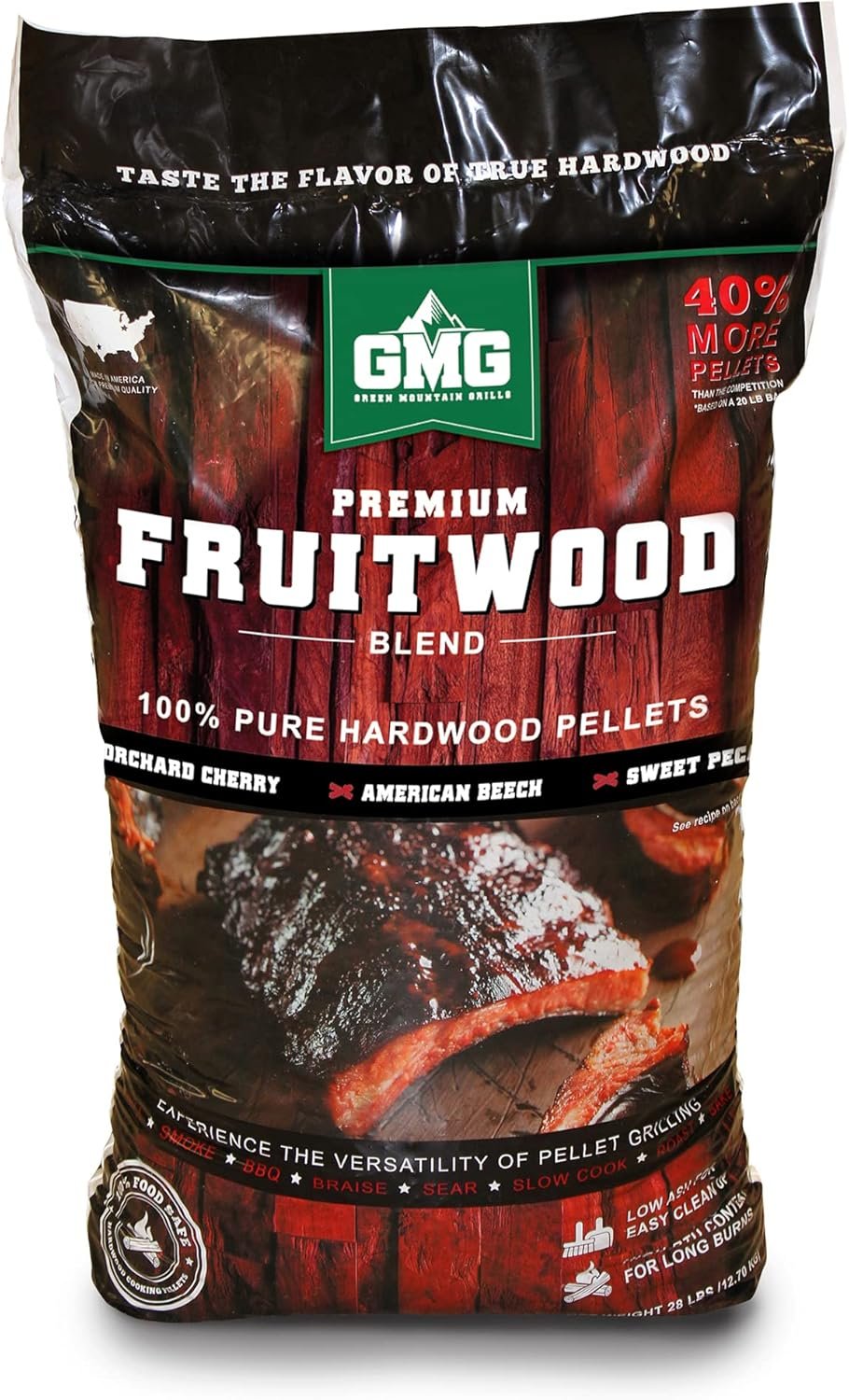
Selecting the correct cooking fuel is a core decision that shapes flavor, temperature control, and long-term grill performance. For pellet-grill users and those considering a switch to wood-fired smoking, pellet composition, moisture content, and ash production influence how reliably a grill holds set temperatures and how consistently flavor transfers to food. This review focuses on a blended hardwood pellet product formulated from orchard cherry, American beech, and sweet pecan, sold in a 28-pound resealable bag. The intended reader is a pellet-grill owner or buyer seeking a fruitwood-forward flavor profile that supports both low-and-slow smoking and higher-heat grilling. Key evaluation points include burn efficiency, dust and ash behavior, packaging and storage, and compatibility with common pellet grill systems. The discussion relies on manufacturer disclosures, materials and construction details, aggregated customer themes about performance, and standard thermal and combustion principles that govern pellet-fired cooking.
Quick Overview
| Feature | Details |
|---|---|
| Product type | Hardwood cooking pellets for pellet grills and smokers |
| Fuel type | 100% hardwood blend: Orchard Cherry, American Beech, Sweet Pecan |
| Bag weight | 28 lb (resealable stand-up bag) |
| Pellet material & form | Compressed, uniform-diameter wood pellets (pellet form) |
| Moisture & burn notes | Marketed as lower moisture, more efficient burn, reduced ash |
| Dust content | Mixed customer reports; some dust presence reported |
| Packaging | Stand-up resealable bag; space-saving design for travel |
| Compatible equipment | Pellet grills, pellet smokers, compatible wood-burning appliances |
| Best suited cooking styles | Smoking, low-and-slow, medium-heat indirect grilling, fruitwood finishing |
| Control system | Not applicable to fuel; compatibility with manual or digital pellet grill controllers |
| Temperature range | Dependent on grill; pellets support low 180°F smoking to high 400–500°F grilling |
| Warranty | Not specified by manufacturer in product listing |
The table summarizes how the pellets function as a fuel source: a fruitwood blend in a large resealable bag intended for pellet grills and smokers that require a consistent compressed wood fuel. Lower moisture and consistent pellet geometry translate into steadier combustion, while mixed dust reports and ash characteristics affect hopper and auger maintenance considerations.

Flavor profile and food compatibility
The blend of orchard cherry, American beech, and sweet pecan is designed to produce a sweet-fruited smoke with moderate nuttiness, making it suitable for a broad range of proteins and vegetables. Cherry typically contributes a mild fruit aroma and a reddish color note to meats; beech provides a clean, slightly smoky backbone that pairs well with other hardwoods without overpowering; pecan introduces a mild nutty sweetness similar to hickory but less intense. This combination is often chosen for poultry, pork, fish, and vegetable applications where delicate smoky fruit notes are preferred over aggressive hardwood intensity. For users prioritizing subtle aroma and color enhancement without masking rubs or marinades, a fruitwood blend can provide balanced results across low-and-slow and shorter, higher-heat cooks.

Flavor transfer and pairing recommendations
Fruitwood blends transfer volatile aromatic compounds differently across temperature ranges: lower temperatures (180–250°F) emphasize delicate, fruity phenols while higher temperatures (300–400°F) produce bolder smoke compounds and quicker surface coating of flavor. When using this cherry/beech/pecan mix, pair with rubs and sauces that complement sweet fruit notes—mild BBQ rubs, citrus finishes, and lighter glazes. For beef, lighter cuts and finishing smokes work best to avoid overwhelming natural beef flavors. For delicate proteins such as fish and chicken, the blend adds complexity without excessive bitterness, provided smoke exposure times are controlled to prevent over-smoke.
Consistency and quality control of blend
Consistent pellet diameter, density, and lower moisture content contribute to predictable burn rates and flavor release across cooks. Manufacturer claims of reduced moisture and efficient burn support steady smoldering behavior in automated pellet grills where the auger and controller provide metered feed. Aggregated customer feedback indicates generally positive impressions of flavor consistency and pellet quality; however, sporadic reports of dust in some bags suggest occasional variability in pellet handling or packaging. Dust can influence ignition behavior in some hopper systems and may require attention to hopper filtration and auger cleanliness to maintain consistent feed and combustion.
Burn performance, temperature control, and thermal behavior
Pellet burn performance depends on pellet density, moisture, and uniformity as much as the grill’s feed and air systems. Lower-moisture pellets ignite more easily and sustain combustion with less smoldering, which supports steadier temperatures in pellet grills that regulate airflow and auger speed automatically. The manufacturer notes improved efficiency and less ash production, which aligns with compressed hardwood pellets of consistent density. In practice, burn stability helps pellet grills maintain setpoints across low smoking temperatures and higher searing ranges, but actual control precision remains a function of the grill’s controller algorithm, auger calibration, and airflow management. Buyers should evaluate both the pellet specifications and the grill controller when assessing temperature stability expectations.

Heat output, stability, and controller interaction
Heat output from pellets is proportional to feed rate and pellet energy density; denser, drier pellets usually yield higher effective heat per pellet mass. Pellets intended for pellet grills will support typical setpoints from around 180°F for low-and-slow up to 400–500°F on grills capable of higher output. Temperature stability results from a closed-loop controller adjusting auger speed and fan output. A consistent pellet composition reduces oscillation in ignition and burn phases, decreasing cycles of over- and under-firing that can cause temperature swings. Users should note that finer dust content in some bags may temporarily disrupt auger metering and require occasional hopper cleaning to prevent feed interruptions.
Fuel efficiency and ash production implications
Lower moisture content and efficient combustion typically translate into improved fuel efficiency—more heat delivered per pound of pellets—and reduced ash volume. Reduced ash decreases the frequency of cleaning the burn pot and ash pan and minimizes buildup in the firebox that can affect airflow. Manufacturer descriptions highlight efficient burn and less ash; customer reports generally support this but include mixed dust feedback. For long multi-day smoking sessions or frequent heavy-duty grilling, lower ash production reduces maintenance downtime and preserves auger and fan performance by limiting particulate accumulation.
Ash, dust, and maintenance considerations
Dust and ash characteristics directly affect maintenance cycles and component wear in pellet grills. Pellets that generate less ash reduce the need for frequent ash removal from the burn pot and ashtray, preserving airflow pathways and minimizing the risk of ash-related sensor interference. However, mixed customer reports indicate occasional higher dust content in some bags; fine dust can accumulate in hoppers and augers, potentially leading to bridging or inconsistent feed if not managed. Buyers should factor in routine hopper inspection, use of pellet traps or filters if their grill offers them, and scheduled maintenance to clean augers, fans, and burn pots to maintain consistent combustion and prolong grill component lifespan.
Hopper and auger wear, and particulate management
Particulate matter and dust can increase mechanical wear on auger drives and bearings by introducing abrasive material into moving parts over time. Pellet blends with variable dust levels may necessitate more frequent inspection of the hopper and auger path and cleaning of screens or filters supplied by the grill manufacturer. Implementing best practices—storing pellets in a dry environment, using a hopper clean-out procedure, and avoiding overfilling—limits particulate migration. Where grills provide removable hopper liners or pellet-gauge screens, periodic checks and cleaning reduce the potential for feed irregularities and preserve consistent ignition cycles.
Cleaning frequency and recommended routines
Maintenance frequency scales with use intensity: casual weekend cooks require less intervention than daily commercial-style use. For typical residential use, emptying ash from the burn pot after several cooks and visually inspecting the hopper monthly should suffice; heavy users should inspect and clean weekly. The resealable bag helps limit moisture ingress and reduces pellet breakdown into fines, but storage in dry bins and using oxygen-absorbing containers can further decrease dust formation. Following the grill manufacturer’s cleaning schedule for ash removal and component checks ensures both consistent performance and extended grill life.
Packaging, storage, and portability for active users
Packaging and storage directly affect pellet lifespan and performance. The product is sold in a 28-pound stand-up resealable bag marketed for space-saving transport for camping, RV use, tailgating, and backyard storage. A resealable bag offers short-term protection against humidity but does not replace airtight, moisture-controlled storage for long-term shelf life. Pellets exposed to high relative humidity will absorb moisture, break down into fines, and produce more dust and ash while burning less efficiently. For buyers who need portability—campers and tailgaters—the stand-up bag provides convenience; for users storing multiple bags long-term, supplemental moisture-proof containers or indoor, climate-controlled storage are advisable.
Shelf life, moisture control, and long-term storage
Shelf life for compressed hardwood pellets is conditional on storage environment. In dry, temperature-stable indoor conditions, pellets can retain performance for many months; in humid or variable environments, moisture uptake accelerates pellet degradation and dust formation. Using airtight plastic bins or metal barrels with desiccant packs and storing away from ground-level dampness improves longevity. For those purchasing larger quantities, rotating stock (first-in, first-out) and inspecting bags for fines before adding to the hopper reduces issues related to dust and auger wear.
Portability trade-offs for travel and outdoor use
The 28-pound resealable bag balances capacity and portability: it supplies multiple cooks without overburdening transport but may be heavy for long-distance hiking. For RV, tailgate, or campsite scenarios where vehicle access is available, the bag is practical and space-efficient. Users planning to move pellets frequently should consider smaller pre-measured bags or transferring portions into reusable, sealable containers to simplify handling and protect against moisture during transit.
Suitability across cooking styles and who should avoid these pellets
Pellet blends designed for fruitwood flavor are versatile across smoking and indirect grilling approaches, offering aromatic enhancement for poultry, pork, fish, and vegetables and mild finishing for beef. They work well with automated pellet grills where controlled auger feed and fan-assisted airflow translate pellet characteristics into repeatable cooks. However, users seeking very aggressive hardwood smoke for brisket bark or intense smoke penetration might prefer stronger hardwoods like hickory or mesquite. Additionally, those using pure charcoal or gas-only grills without a pellet adapter will not be able to utilize these pellets directly; conversion accessories or hybrid setups are needed for non-pellet grills.
Compatibility with pellet grills and hybrid systems
Pellets are inherently compatible with pellet grills and pellet smokers that use an auger-fed hopper and forced-air system. For gas or charcoal grill owners, compatibility requires pellet-burning attachments or smoke boxes, and results will vary based on airflow and heat source differences. When used in hybrid setups, pellets contribute flavor but cannot replicate the closed-loop temperature precision of dedicated pellet grills, so temperature management becomes more manual and dependent on the host grill’s vents and fuel mixing.
Who should avoid this pellet blend
Buyers seeking an extremely bold, penetrating smoke profile for heavy red meats may find the fruitwood blend too mild. Users with grills that lack robust hopper filtration or that are prone to hopper bridging may want pellets with consistently low dust ratings. Those who require strictly certified food-grade single-species pellets for competition-level cooking should verify pellet testing credentials and uniformity specifications before purchase, as blended ornamental varietals can vary batch-to-batch.
Pros & Cons
Pros
- Fruitwood flavor complexity: The blend of orchard cherry, American beech, and pecan provides layered sweet, fruity, and nutty smoke notes that suit poultry, pork, fish, and vegetables. This broad compatibility helps cooks seeking a mild to moderate smoke profile without overpowering foods.
- Lower moisture, efficient burn: Manufacturer claims of reduced moisture and improved burn efficiency align with industry principles that drier, denser pellets deliver steadier combustion and more usable heat per pound, supporting consistent temperature control in pellet grills.
- Reduced ash production: An efficient burn profile generally produces less ash, decreasing the frequency of burn-pot and ash-pan cleaning and aiding airflow maintenance in pellet cookers.
- Large resealable bag: The 28-pound stand-up resealable bag offers capacity for multiple cooks and is designed for space-saving storage and portability for RV, tailgate, and camping scenarios.
- Positive customer reviews on taste and quality: Aggregated feedback cites favorable flavor transfer and pellet quality, indicating reliable aroma contribution across common smoking applications.
- Versatility across cooking styles: The pellet blend supports low-and-slow smoking and medium-to-high indirect grilling, giving users flexible usage options with compatible pellet grills.
Cons
- Mixed dust reports: Some customer comments indicate variable dust content, which can impact hopper and auger behavior and increase cleaning frequency. Dust may necessitate additional filtration or more frequent maintenance.
- Not a standalone cooking system: As a fuel-only product, performance depends on the grill’s controller, auger, and airflow; pellets cannot compensate for poorly regulated or low-output grills.
- Limited warranty information: Manufacturer warranty details are not specified in the listing, requiring buyers to verify support and return policies through the manufacturer or retailer.
- May be too mild for heavy-smoke preferences: Users seeking intense hardwood smoke for brisket-style applications may prefer stronger single-species hardwoods like mesquite or hickory.
Final Verdict: Who This Grill or Smoker Is Best For (and Who Should Skip It)
The Green Mountain Fruitwood pellet blend is appropriate for pellet-grill owners and operators who prioritize sweet, fruity smoke and balanced nuttiness across a wide range of proteins and vegetables. Its lower-moisture profile and manufacturer emphasis on efficient burn and reduced ash suit users who value steady temperature behavior and reduced cleanup frequency, assuming their pellet grill includes a competent digital controller and auger system. The 28-pound resealable bag serves backyard cooks, RV and tailgate users, and those who prefer bulk purchase while maintaining reasonable portability.
This product is less suitable for cooks who require an aggressive hardwood punch for deep smoke penetration on large briskets, those using grills without pellet capability, or buyers who demand certified single-source pellets for competitive cooking. In comparison to other pellet options available in 2026, this fruitwood blend offers a balanced, user-friendly flavor profile and generally favorable burn characteristics, but attention to dust management and storage will help preserve long-term performance and minimize maintenance demands.
Frequently Asked Questions (FAQs)
What foods work best with a cherry, beech, and pecan pellet blend?
A cherry, beech, and pecan blend pairs well with poultry, pork, fish, and vegetables due to its balanced sweet, fruity, and mild nutty smoke. Cherry adds fruit notes and color, beech provides a clean smoky backbone, and pecan introduces subtle nuttiness. For beef, use the blend sparingly or as a finishing smoke to avoid masking the meat’s natural flavors.
How does lower moisture in pellets affect grill performance?
Lower moisture content improves ignition reliability and combustion efficiency, producing steadier heat and less smoldering. Drier pellets usually yield more heat per pound and reduce ash volume, which supports consistent temperature control in pellet grills. Proper storage is still necessary to prevent moisture uptake that would negate these benefits.
Do these pellets require special storage to maintain quality?
Yes. Storing pellets in a dry, temperature-stable environment preserves density and reduces breakdown into fines. For long-term storage, airtight containers or bins with desiccants are recommended. The resealable bag offers short-term moisture protection but is not a substitute for climate-controlled storage over many months.
Will dust content damage a pellet grill’s auger or hopper?
Fine dust can increase wear and contribute to auger or hopper issues such as bridging or inconsistent feed. Regular hopper inspection, use of screens or filters where available, and occasional cleaning of the auger path reduce risk. Selecting pellets with lower dust levels and managing storage practices also helps minimize particulate-related wear.
Can these pellets be used in gas or charcoal grills?
Direct use in gas or charcoal grills is not typical. Pellets can be used in gas or charcoal setups if a pellet-burning attachment, smoke box, or hybrid accessory is installed, but results depend on the host grill’s airflow and heat source. Dedicated pellet grills offer the most consistent temperature regulation and flavor extraction from pellets.
How often should ash and burn-pot cleaning be performed with these pellets?
Cleaning frequency depends on usage intensity. For moderate residential use, inspecting and emptying ash after several cooks and a monthly hopper check is common. Heavy or daily use may require weekly cleanings. Reduced ash production from efficient pellets lessens cleaning frequency, but periodic checks prevent ash buildup from affecting airflow and combustion.
Are these pellets suitable for competition-level smoking?
Competition cooks often require certified, single-species pellets with documented consistency and testing. While a fruitwood blend offers desirable flavor for many applications, competitors should verify pellet uniformity, dust levels, and any testing credentials before selecting a blended product for formal contests.
How do these pellets compare to single-species hardwood pellets for heavy smoke needs?
Blended fruitwood pellets provide balanced, milder smoke compared with robust single-species hardwoods like hickory or mesquite. For heavy-smoke requirements—such as creating a deep bark on large briskets—single-species hardwoods typically deliver stronger, more penetrating smoke profiles. Blends are better suited for nuanced flavor and versatility across different proteins.