Char-Broil Classic 3-Burner Grill Review: Performance & Fit
Why grill choice matters for backyard cooks
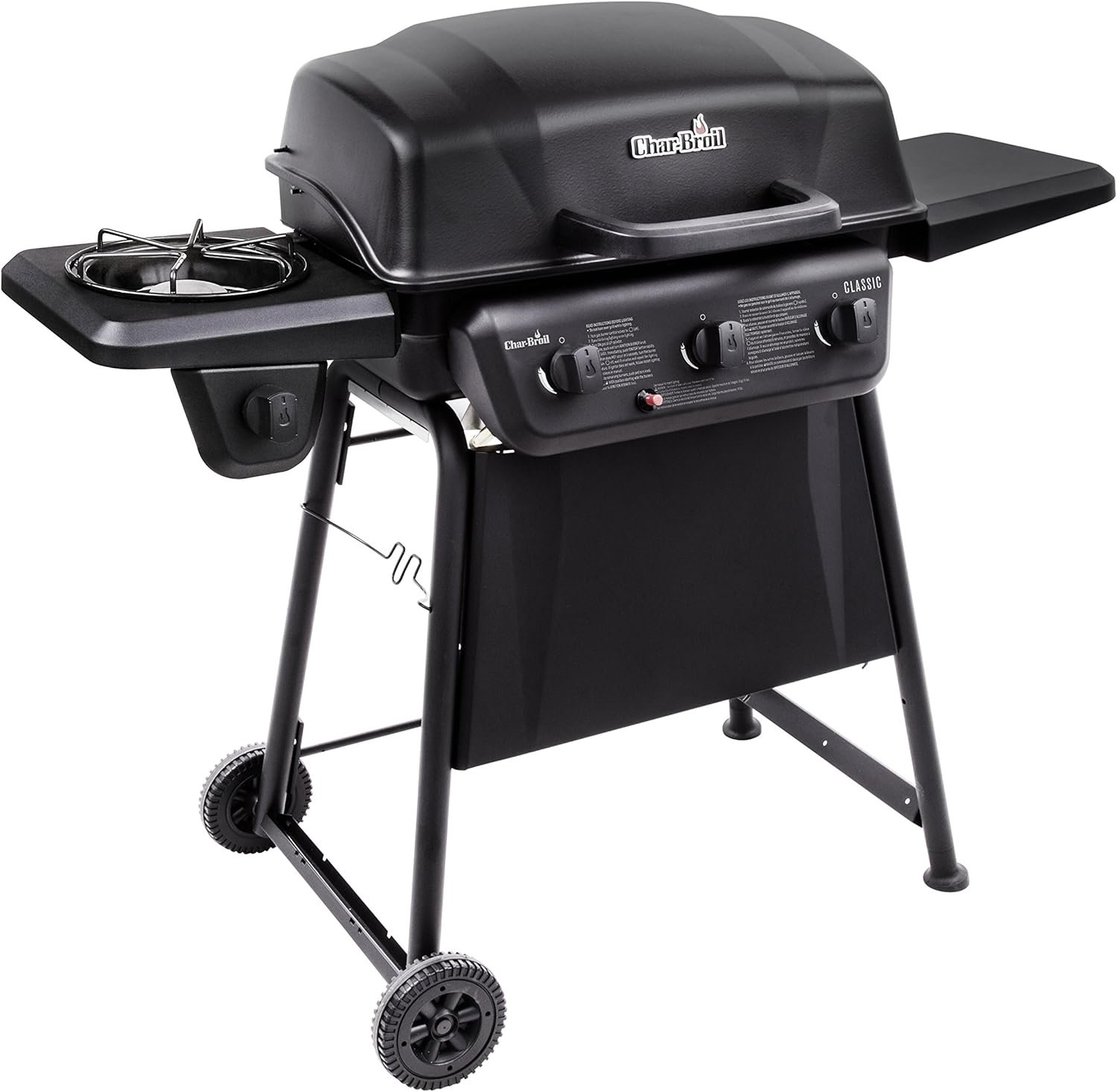
Selecting the right grill shapes everyday cooking outcomes, backyard traffic patterns, and the range of techniques available to the cook. For many consumers, the decision balances fuel type preference, desired temperature control, cooking capacity, and ease of upkeep. A three-burner propane grill such as the Char-Broil Classic Series targets users who prioritize quick heat-up, predictable control with rotary knobs, and a straightforward layout for weeknight grilling and occasional indirect cooking. Fuel choice affects searing capability and convenience: propane offers fast response and high surface temperatures but requires attention for extended low-and-slow smoking. Performance expectations for capacity and durability depend on materials—stainless steel frame, painted finish, and porcelain-coated grates—which influence heat retention, corrosion resistance, and maintenance frequency. Understanding how these characteristics align with typical meal sizes, one- or two-person handling, and repairability helps buyers match the grill to their cooking style and service-life needs.
Quick Overview
| Feature | Details |
|---|---|
| Grill type | Three-burner freestanding propane gas grill with side burner |
| Fuel type | Liquid propane (20-pound tank), gas supply not included |
| Total cooking area | 360 sq in primary grates + 170 sq in warming rack (530 sq in total) |
| Heat output / power | 30,000 BTU rating (heating power 8.79 kW) |
| Materials & construction | Stainless steel frame and handle; painted finish; porcelain-coated wire grates |
| Control system | Manual rotary control knobs (three main burners) |
| Best suited cooking styles | Direct grilling, searing, indirect roasting/warming; limited low-and-slow smoking |
| Intended use cases | Residential outdoor grilling for families and small gatherings |
| Warranty | 5-year burners, 2-year firebox, 1-year other parts |
The feature set combines a moderate primary cooking area with a warming rack and an 8,000 BTU side burner to support multi-dish cooking. Stainless steel frame components with porcelain-coated grates aim to balance corrosion resistance and heat response, while the three-burner layout and 30,000 BTU rating prioritize quick heat-up and straightforward zone control for direct grilling and indirect tasks.

Cooking style suitability: grilling, searing, and low-and-slow options
The Classic Series three-burner propane configuration primarily supports direct grilling and searing, where concentrated burner output and rapid recovery are valuable. The 30,000 BTU main rating distributes energy across three burners to create hot surface temperatures for burgers, steaks, and quick-cook vegetables, while the included 170-square-inch warming rack provides space for indirect heat tasks and holding finished items. Low-and-slow smoking is possible in a limited, controlled way by using indirect burner setups and adding smoke boxes or wood chip trays, but the grill lacks the extended thermal mass and controlled draft systems of dedicated smokers or pellet units. Buyers seeking consistent multi-hour smoke profiles should understand that propane grills offer convenience and temperature responsiveness but will require frequent monitoring and workaround accessories to approximate smoker-style performance.

Grilling and high-heat searing performance
The 30,000 BTU rating across three burners supports rapid surface heating and reasonable sear potential when burners are set to higher settings. Porcelain-coated wire grates heat quickly and recover temperature fast after food contact, which helps maintain sear when cooking multiple items. However, porcelain-coated wire grates have less thermal mass than cast iron, so while they provide quick response and easier cleaning, they do not hold heat as long as heavier grates—this means achieving and sustaining an intense, even sear on thicker cuts may require preheating longer or briefly concentrating heat on a single burner zone. The grill’s three-burner layout allows common high-heat zone setups, such as two-burner direct searing with one burner off for indirect finishing.
Suitability for indirect grilling and roasting
The warming rack and three independent burners enable an indirect cooking zone by turning off or lowering burners beneath the food while running adjacent burners at lower settings. The 170-square-inch warming rack is suited to finishing or holding items at lower temperatures and creating a second-level indirect zone for small roasts or vegetables. Because the grill’s body and grates are painted stainless steel with limited thermal mass, temperature stability for long roasts depends on monitoring and occasional burner adjustments. For indirect roasting, a two-zone configuration and modest lid management can produce even results for poultry or pork chops, but extended low-temperature roasts will require attention to maintain steady conditions.
Smoking and low-and-slow workarounds (gas grill limitations)
Propane grills are not purpose-built smokers, but smoking adapters—such as small smoke boxes, foil pouches of soaked chips, or dedicated pellet-style smoke trays—can introduce wood smoke for shorter periods. The Classic Series supports these low-cost methods, but propane’s open-burner airflow design and the grill’s painted finish and lower thermal mass limit multi-hour smoke consistency. Achieving stable, low temperatures for true barbecue smoke requires frequent vent and burner adjustments and may stress the regulator and tank if run for extended time. Buyers desiring frequent multi-hour smoking should consider a dedicated offset smoker, kamado, or pellet grill that provides built-in smoke control and greater heat retention.
Temperature control, heat distribution, and airflow management
Temperature management on the Classic Series relies on manual rotary knobs controlling the three tubular burners and the side burner. The knob-to-burner mapping permits basic zone control—high, medium, and low settings across each burner—allowing two-zone cooking strategies for searing and indirect tasks. The grill’s 30,000 BTU rating indicates available energy but does not equate to a specific temperature dial; actual lid temperatures depend on ambient conditions, lid fit, and total thermal mass. Porcelain-coated grates promote fast recovery but modest retention, so heat distribution across the cooking surface can show hot and cooler spots near burner seams unless burners and heat baffles are well aligned. Airflow is governed by the lid and any vents built into the hood; the manufacturer materials suggest a standard residential airflow profile rather than precision draft control seen on smokers.

Burner design, BTU rating, and control precision
The three-tube-burner arrangement and a combined 30,000 BTU output define the grill’s raw capacity to reach and recover high temperatures. Tube burners typically provide focused heat columns directly beneath the grates, enabling quick warm-up and responsive power adjustments when the knobs are turned. Control precision is manual and not feedback-driven, so maintaining a narrow temperature band requires intermittent checks with a lid thermometer or separate thermometer probe. The grill’s warranty covers burners for five years, which suggests manufacturer confidence in burner longevity, but routine inspection of flame patterns and ignition reliability is recommended to sustain even heat and reliable control.
Grate material, heat retention, and sear consistency
Porcelain-coated wire grates deliver fast heat transfer and simplified cleaning, but their lower thermal mass compared with cast-iron grates produces quicker temperature drops when cold food is introduced. This results in faster recovery times but slightly less sustained searing capability for thick steaks. Porcelain coatings protect against rust provided the coating remains intact; chips or cracks accelerate corrosion. Replacement of wire grates is straightforward and typically lower-cost, which helps maintain performance over time, but buyers prioritizing deep, restaurant-style sear marks and prolonged heat-holding may prefer cast-iron grate options or aftermarket replacements.
Airflow, venting, and side-burner influence
The grill’s airflow behavior follows typical closed-hood gas grill patterns: lid position, body seams, and any hood vents control internal oxygen levels and heat circulation. The side burner operates independently and serves as a separate gas appliance for sauces and side dishes; it does not directly affect internal oven airflow but adds versatility to meal workflow. Limited thermal mass in the firebox and painted finishes mean the grill will lose heat faster when the lid is opened compared with thicker-walled or insulated units, which places more emphasis on minimizing lid lifts and arranging food to reduce recovery cycles.
Cooking capacity, rack layout, and workspace
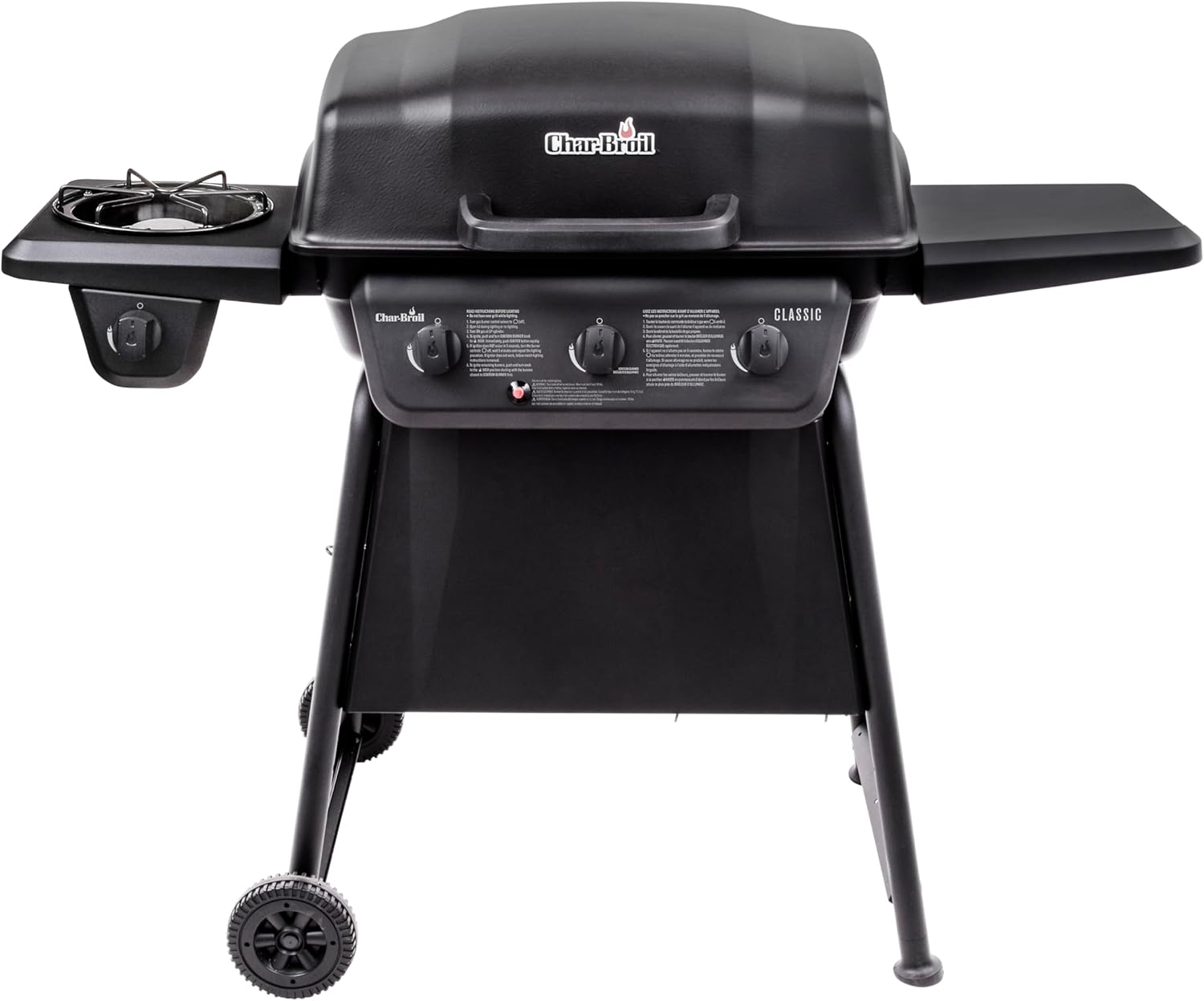
The Char-Broil Classic Series design balances a compact footprint with family-friendly capacity: 360 square inches of primary grilling plus a 170-square-inch warming rack provide usable surface for typical family meals, roughly estimated to hold up to a dozen burgers or several steaks in a single batch. The side shelf and Gear Trax compatibility extend prep and organization capacity, allowing accessories to mount for sauces and tools. The included side burner expands workflow by enabling simultaneous stovetop tasks. For buyers with frequent large social gatherings or those planning to smoke multiple briskets, the cooking area and thermal characteristics represent a mid-range solution; for regular large-group cooking, larger multi-burner grills or dedicated smokers/pellet systems deliver more contiguous cooking area and heat stability.
Primary cooking area and warming rack use
The 360-square-inch primary grate is typical for three-burner residential grills and suits meals for families or small groups. The 170-square-inch warming rack is useful for indirect finishing, reheating, or staging food while other items cook below. Combining both surfaces provides flexibility for mixed cooking tasks—searing on the main grates and moving cooked items to the warming rack to avoid overcooking. Practical placement of larger items should consider burner mapping to prevent flare-ups and to use indirect zones for thicker cuts.
Side shelf, GearTrax compatibility, and prep space
A large side shelf offers a place to set plates and tools within reach, and GearTrax-ready compatibility allows users to add hooks, condiment baskets, and cup holders to organize the cooking area. These organization options improve workflow and can reduce trips between the grill and kitchen. The included side burner expands the station’s utility for sauces, side dishes, or boiling, which is valuable when multiple cooking tasks run concurrently. Buyers valuing an organized, compact cooking station will find these features practical for typical backyard meal preparation.
Portability, footprint, and placement considerations
With dimensions of approximately 24.1 inches deep by 51.2 inches wide and 43.5 inches tall, and a listed weight of 50 pounds, the grill is designed as a freestanding backyard unit rather than a portable tailgating appliance. The footprint requires a stable, level outdoor surface and clearance for the propane tank and side burner use. Wheels or caster details are not specified in the provided materials; buyers should confirm mobility features at point of purchase. Placement near sheltered but well-ventilated areas and away from combustible materials is consistent with manufacturer installation guidance for outdoor propane grills.
Materials, durability, maintenance, and warranty
Construction combines stainless steel components—frame and handle—with a painted finish for the body and porcelain-coated wire grates. Stainless steel offers corrosion resistance for structural parts, but painted surfaces are more susceptible to blistering and wear over time compared with fully stainless or powder-coated finishes. Porcelain-coated grates reduce corrosion when the coating remains intact, but chips shorten useful life. The manufacturer provides a multi-tiered warranty: five years on burners, two years on the firebox, and one year on other parts, which aligns with entry-to-mid-level product positioning and indicates expected service intervals. Routine maintenance—cleaning grease traps, checking burners for blockages, and protecting the grill from weather—will extend functional life and maintain cooking performance.

Stainless steel construction and painted finish implications
Stainless steel frame and handle components resist rust better than painted steel under normal outdoor conditions, improving longevity around joints and latches. The painted finish on the firebox and external panels is more vulnerable to fading, peeling, or blistering from high heat exposure and weathering; over time, this may necessitate touch-up or replacement panels to maintain aesthetics. Buyers in coastal or high-humidity regions should consider additional protective steps or a cover rated for outdoor grills to limit corrosion risks and preserve finish quality.
Maintenance, cleaning, and replacement parts
Porcelain-coated wire grates are easier to lift and clean than heavier grate types, and they are economical to replace when worn. Regular cleaning of heat deflectors, burners, and the grease tray prevents buildup that can alter heat distribution and increase flare-up risk. The lack of battery or electronic ignition details in manufacturer disclosures suggests assembly- and parts-focused maintenance is straightforward. Availability of replacement components and GearTrax accessories enhances long-term serviceability, but buyers should verify local parts access or online ordering options for quick replacements.
Warranty coverage and expected service life
The specified warranty—five years for burners, two years for the firebox, and one year for other parts—reflects a common manufacturer approach for entry- to mid-tier residential gas grills. Burners are often designed for longer service lives than cosmetic components, hence the extended burner coverage. Expected service life depends on environmental exposure and maintenance; with routine cleaning and sheltered storage, structural components and burners can last multiple seasons, while painted surfaces and porcelain coatings may show cosmetic degradation sooner. Prospective owners should balance warranty coverage with local service availability and the expected usage profile.

Pros & Cons
Pros
- Balanced cooking area and warming rack: The combination of 360 square inches of primary cooking surface plus a 170-square-inch warming rack provides practical capacity for family meals and mixed direct/indirect cooking scenarios. This layout supports common two-zone setups and staging of finished food.
- Responsive propane fuel and BTU rating: A 30,000 BTU total rating and three-burner layout offer fast preheat and reasonable recovery for sequential batches of food, making it suitable for weeknight grilling and searing tasks.
- Side burner for multitasking: The integrated 8,000 BTU side burner expands meal preparation capability by allowing simultaneous sauce preparation, boiling, or sautéing without needing a secondary appliance.
- Porcelain-coated grates for quick warm-up and cleaning: Wire grates heat fast and are lightweight for easy removal and maintenance, offering a practical trade-off between searing potential and convenience.
- GearTrax-ready side shelf: Compatibility with GearTrax accessories increases workstation customization, improving organization and reducing clutter during cooking sessions.
- Manufacturer warranty on burners: A five-year burner warranty indicates manufacturer confidence in core heat-producing components, offering some assurance against early failures with normal use.
Cons
- Limited smoking performance: The grill is not a dedicated smoker and lacks thermal mass and draft control for consistent multi-hour low-and-slow smoking; smoke workarounds require accessories and frequent monitoring.
- Painted finish susceptibility: The painted exterior may show wear sooner than higher-end fully stainless or powder-coated models, especially in harsh outdoor environments, potentially affecting long-term aesthetics.
- Porcelain-coated wire grate heat retention: While quick to heat and clean, porcelain-coated wire grates have lower heat-holding capacity than cast iron, which can reduce sustained sear performance on thick cuts.
- Moderate total cooking area for large groups: The available cooking surface is adequate for families and small gatherings but may be restrictive for users who frequently cook for large crowds or multiple large cuts simultaneously.
- Assembly required and potential mobility limits: The unit ships requiring assembly, and wheel or caster details should be confirmed, as the listed weight and footprint make it less convenient for frequent relocation.
Final Verdict: Who This Grill or Smoker Is Best For (and Who Should Skip It)
The Char-Broil Classic Series three-burner propane grill suits buyers seeking a straightforward, family-oriented outdoor cooking station with responsive propane performance, practical cooking area, and useful accessory compatibility. Its 30,000 BTU burner capacity, side burner, and warming rack make it well suited for weeknight searing, family cookouts, and multi-dish preparation where quick heat-up and organized workspace are priorities. The stainless steel frame and porcelain-coated grates offer a compromise between corrosion resistance, cost, and ease of maintenance, appealing to value-minded buyers who want a functional, reliable grill for residential use.
This model is less appropriate for those who plan regular, extended low-and-slow smoking or frequent large-group cooking without additional equipment. Buyers needing precision digital temperature control, high thermal mass for long roasts, or premium finishes should consider dedicated smokers, pellet grills, or higher-tier stainless units. For backyard cooks who prioritize propane convenience, accessible maintenance, and a configurable prep area, the Classic 3-burner represents a practical mid-range choice with expected durability when maintained according to manufacturer guidelines.

Frequently Asked Questions (FAQs)
Can the Char-Broil Classic 3-Burner be used for low-and-slow smoking?
The grill is designed primarily for direct grilling and indirect roasting rather than dedicated smoking. Low-and-slow smoking is possible using workarounds such as a smoke box, soaked wood chip pouches, or indirect two-zone setups, but the unit lacks the thermal mass and precise draft control of purpose-built smokers. Achieving stable multi-hour smoking will require frequent monitoring and may yield less consistent results compared with dedicated smokers or pellet grills.
How does the propane fuel type affect cooking and temperature control?
Propane provides rapid heat-up and responsive adjustments via manual control knobs, making it effective for searing and quick temperature changes. However, propane grills typically have less thermal mass than charcoal or wood-fired units, so they can lose heat faster when the lid is opened and require more active burner management for steady low-temperature cooking. Propane’s convenience and cleanliness make it a common choice for everyday grilling.
Are the porcelain-coated wire grates durable and easy to maintain?
Porcelain-coated wire grates heat quickly and are relatively easy to clean, and they are economical to replace when the coating degrades. The porcelain coating resists rust while intact, but chips or cracks expose the base metal and accelerate corrosion. Owners should avoid harsh scrubbing tools that damage coatings and perform routine cleaning to maximize grate life.
What cooking capacity does the grill provide for family meals?
The grill offers 360 square inches of primary cooking surface plus a 170-square-inch warming rack, totaling 530 square inches of usable area. This configuration typically accommodates several steaks, a dozen burgers, or a mix of protein and vegetables for family-size meals or small gatherings. For frequent large-group cooking, a larger multi-burner grill or an additional unit may be preferable.
How weather-resistant and durable is the grill’s construction?
Stainless steel components such as the frame and handle offer good corrosion resistance, while the painted finish on the body is more vulnerable to wear from heat and weather. Routine protection—such as using a proper cover and sheltered storage—plus regular cleaning will extend life. The manufacturer’s warranties (five years on burners, two years on the firebox, one year on other parts) reflect expected service intervals for residential use.
Does the grill support accessory organization for improved workflow?
Yes. The included side shelf provides prep space and the grill is GearTrax-ready, allowing buyers to add accessory baskets, cup holders, and hooks to better organize tools and condiments. A side burner further enhances workflow by enabling simultaneous stovetop-style tasks. These features can reduce trips to the kitchen and streamline multi-dish cooking.
What should be inspected during routine maintenance to preserve performance?
Routine checks should include cleaning the grease tray and burn pot area, inspecting burners for blockages or uneven flame patterns, verifying porcelain coating integrity on grates, and confirming secure propane connections and regulator function. Regular cleaning of heat deflectors and the underside of grates helps maintain even heat distribution and reduces flare-up risks. Addressing small issues early preserves cooking consistency and extends component lifespan.