Coleman RoadTrip 285 Review: Portable Gas Grill Performance
Introduction
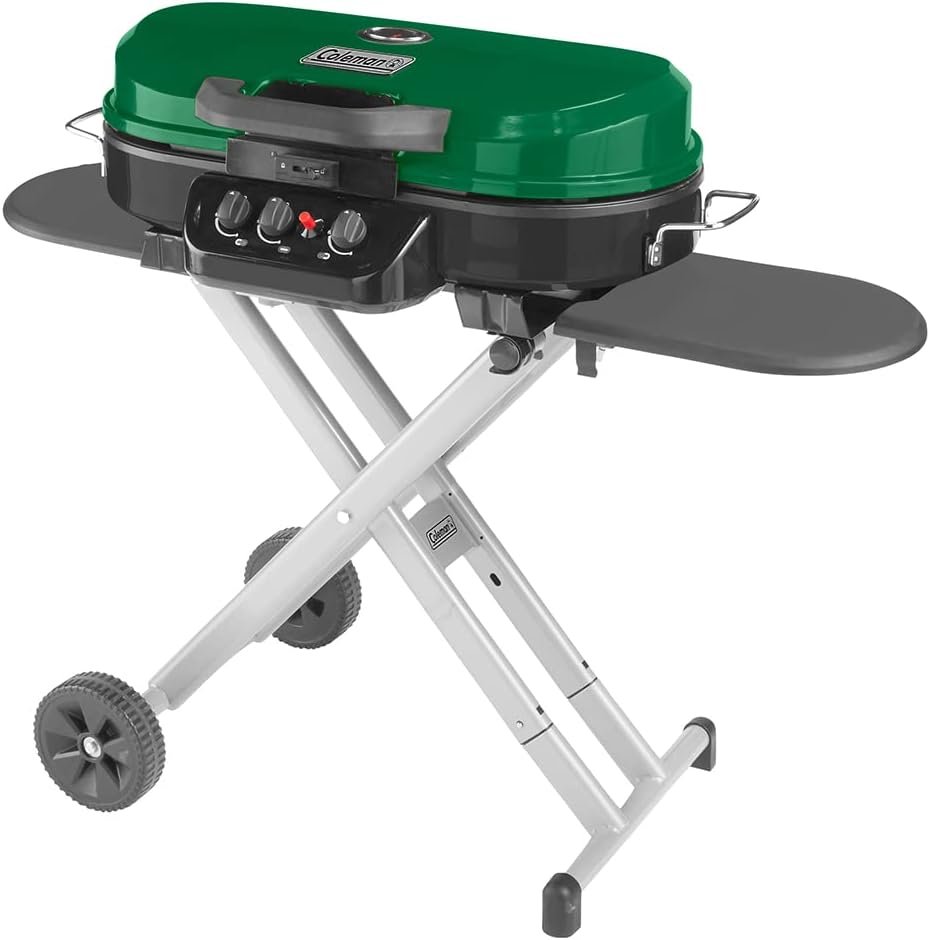
Choosing the right grill or smoker begins with matching equipment capabilities to intended cooking styles, fuel preferences, and portability needs. For recreational outdoor cooks who prioritize convenience, a portable propane stand-up grill can bridge the gap between compact transport and meaningful cooking performance. The Coleman RoadTrip 285 positions itself as a mobile solution with three adjustable burners, an integrated thermometer, a foldable stand, and a modest 285 square inches of cooking area. These specifications suggest a product focused on quick-start grilling for camping, tailgating, and small outdoor gatherings rather than extended low-and-slow smoking sessions or feeding large crowds. Buyer decisions should weigh burner layout and control precision, fuel container type and runtime, heat retention from construction materials, and cleanup features that affect turnaround between uses. Understanding how the RoadTrip 285’s design choices influence heat distribution, fuel efficiency, and cooking versatility provides a clearer assessment of whether it aligns with specific outdoor cooking routines and expectations.
Quick Overview
| Feature | Details |
|---|---|
| Grill type | Portable stand-up propane grill |
| Fuel type | Propane (one 16.4 oz. cylinder, sold separately) |
| Total cooking area | 285 sq. in. |
| Burners | 3 adjustable burners; up to 20,000 total BTUs |
| Ignition & controls | Push-button Instastart ignition; manual burner knobs |
| Materials & construction | Cast iron components; blend materials for housing and handles |
| Temperature monitoring | Integrated thermometer in lid |
| Portability features | Quick-fold legs, wheels for transport |
| Cleanup features | Removable water pan that catches grease |
| Best suited cooking styles | Direct grilling, searing, limited indirect grilling |
| Intended use cases | Camping, tailgating, small outdoor gatherings |
| Warranty/Service note | Manufacturer information and spare-part availability listed by seller |
The table summarizes core specifications that translate into real-world suitability: a compact, multi-burner propane layout enabling rapid heat-up and direct grilling across 285 square inches, coupled with portable hardware for easy transport. The trimmed fuel format and removable water pan point to short- to medium-duration outings and simplified cleaning, while the three-burner design supports basic indirect techniques but limits extended low-and-slow smoking or high-capacity events.

Performance & Temperature Control
The RoadTrip 285’s three-burner configuration and manufacturer-stated improved burner technology aim to provide more precise temperature control than single-plate portable grills. With independently adjustable knobs and a push-button Instastart ignition, operators can establish direct high-heat zones and cooler side zones for indirect cooking by modulating individual burner output. The integrated lid thermometer offers a general reference for internal chamber temperature, though lid-mounted gauges typically report ambient oven-like temperatures rather than precise grate-level heat. Heat response will be influenced by the cast iron cooking surfaces, which store and radiate heat, and by the compact cooking chamber, which tends to stabilize after initial warm-up. For cooks prioritizing repeatable searing and short-session grilling, the combination of burner zoning and heat-retentive grates enables effective surface browning and controlled cook times within the limits of a portable propane system.

Burner layout and zoning for direct grilling
The three-burner layout permits conventional direct-grill setups with full-bore center heat for searing or staggered output for multi-zone cooking. Independent control knobs allow establishing a high-heat center and lower-flame sides to finish thicker cuts via indirect heat. In practice, separation between burners matters for heat overlap and hot spots; a compact 285 sq. in. grid concentrates heat, so spacing and burner shielding influence whether food receives uniform sear lines. Cast iron grates enhance contact searing by retaining heat and promoting even grill marks, but they also require time to heat through to achieve consistent surface temperatures across the entire cooking area.
Thermometer accuracy and temperature management
The integrated lid thermometer gives a convenient overall reading of the grill cavity but does not replace infrared or grate-level probes for precision work. Lid thermometers commonly lag slightly behind grate temperatures and can be affected by lid opening frequency. For cooks aiming for specific target temperatures, using a separate grate-probe provides direct feedback for internal food temperatures and precise low-and-slow control. The combination of burner modulation, thermometer reference, and cast iron heat retention allows reasonably predictable adjustments for typical grilling tasks.
Heat-up speed and response characteristics
Propane burners with up to 20,000 total BTUs provide brisk heat-up compared to many charcoal setups, and push-button ignition reduces start sequence time. The RoadTrip’s compact chamber and cast iron grates facilitate fast temperature ramp-up and steady-state heat. However, the small 16.4 oz. cylinder format commonly used with portable units limits continuous high-output runtime relative to larger stationary tanks. Consequently, maintaining prolonged high-heat sessions or extended searing cycles may require managing burner output or carrying replacement fuel canisters.
Cooking Capacity & Versatility
A 285-square-inch cooking surface positions the RoadTrip 285 as a medium-compact option: large enough to grill several burger patties or a few steaks simultaneously, but limited when compared with full-size backyard grills. The three-burner design enables separation of heat zones for multi-item cooking, which aids mixed menus that combine searing and finishing. Material choices such as cast iron grates add thermal mass, improving searing capability and temperature stability when the lid remains closed. The presence of a removable water pan supports moisture retention during longer cooks and simplifies grease control, albeit within the spatial constraints that limit large cuts or multi-rack smoking. Overall versatility centers on direct grilling and short indirect cooks rather than full-time smoking or catering-sized production.

Capacity for group cooking and meal staging
The stated 285 sq. in. area suits small group meals—typically enough for six to eight smaller items at once depending on spacing and food size. For buyers who plan simultaneous multi-course grilling or larger cuts, staggered cooking and multi-zone techniques can maximize throughput, but larger crowds will require multiple burners on high or repeated batches. The number of racks listed suggests some staging flexibility, but compact dimensions will necessitate planning for timing and carryover heat when cooking for more than four to six people.
Suitability for different cooking styles (grill vs. smoke)
Direct grilling, searing, and short finish-over indirect heat are core strengths given the propane-fired three-burner layout and cast iron grates. Low-and-slow smoking is possible in a limited fashion by extinguishing one or more burners and placing food on the cooler side or using a small smoke box, but the design does not replicate the sustained low-temperature control and large smoker capacity of dedicated offset or pellet smokers. Users seeking extended low-and-slow barbecue should consider that propane portability trades off runtime and chamber volume for convenience.
Adaptability for mixed menus and accessories
The RoadTrip 285’s flat cooking area and independent burners make it amenable to accessory use—such as griddles, cast iron pans, or small smoker boxes—provided accessories match the grate footprint. The water pan can also function as a humidity source for delicate items. While the unit supports menu flexibility, accessory choices should account for the grill’s transportable nature and the finite cooking surface, and may require prioritizing which tasks occur on-grate versus off-grate to maintain efficient workflow.
Portability, Setup, and Fuel Considerations
Portability is central to the RoadTrip 285’s design: quick-fold legs and integrated wheels simplify transport and storage, and a compact free-standing installation reduces campsite footprint. The specified fuel format—one 16.4 oz. propane cylinder—favors light travel and common camp-stove canister availability but limits continuous runtime at higher settings compared with larger 20-pound tanks. Push-button Instastart ignition reduces starting friction in outdoor scenarios, and the relatively light listed weight supports car-camping or tailgate portability. Considerations for buyers include cylinder availability for multi-day outings, safe storage and swapping procedures for pressurized fuel, and the convenience trade-offs of a smaller fuel source versus the longer runtime and refill options of full-size tanks.

Logistics of transport and setup
Quick-fold legs and wheel-assisted movement cut down setup and teardown time, aligning the unit with frequent relocation scenarios like tailgates and campsites. The grill’s dimensions and listed weight make it manageable for two-person handling for most users, and the free-standing design reduces the need for a permanent installation surface. Storage impact and component protection during transit should be planned—protective covers or cases can minimize wear on cast iron surfaces and painted or blended materials.
Fuel type trade-offs and runtime implications
Using a 16.4 oz. cylinder streamlines portability and makes replacement canisters widely available at outdoor retailers, but buyer expectations should reflect that small cylinders deplete faster under continuous high output. Compared with 20-pound tanks, short-run fuels require spare canisters for longer events or continuous high-heat grilling. The three-burner architecture enables fuel-saving strategies like using partial burner output or heat zoning to economize propane consumption during extended menus.
Ignition, safety, and operational convenience
Push-button Instastart ignition offers matchless lighting for convenience; ignition reliability is subject to conditions like moisture and maintenance, and standard user precautions for propane systems apply as per manufacturer guidance. Manual burner control knobs enable intuitive flame modulation, and the integrated thermometer offers quick status checks. For travel and storage, securing the regulator and ensuring valve closures are part of routine safe handling.
Durability, Materials, and Maintenance
Construction details list cast iron components and blended materials for handles and frame elements; cast iron grates bring excellent heat retention and searing performance, but they require regular cleaning and seasoning to prevent rust and maintain nonstick properties. The removable water pan that captures grease simplifies cleaning cycles and reduces drip-related flare-ups, while the foldable mechanical parts and wheels introduce moving components that should be inspected for corrosion or wear after exposure to weather. Overall product longevity will depend on routine maintenance—such as protecting cast iron from moisture, inspecting seals and knobs, and addressing surface corrosion early—especially when the grill is used in coastal or high-humidity environments.

Cast iron care and longevity
Cast iron parts provide thermal benefits and surface durability when maintained; seasoning with oil and drying grates after cleaning helps prevent rust. Abrasive cleaning can remove protective seasoning layers, so gentle scrubbing and periodic re-seasoning are recommended. With appropriate care, cast iron can outlast many thin-gauge alternatives, but unattended exposure to moisture accelerates corrosion that undermines performance and appearance.
Moving parts, frame, and corrosion risk
Quick-fold legs and wheels increase utility but add mechanical connections that require periodic inspection for loose fasteners and corrosion, particularly if the unit is transported frequently or exposed to open-air environments. Blend materials used in handles and housing may reduce weight but can respond differently to UV exposure and temperature cycling than metal parts; protective storage and covers help extend component life.
Grease management and cleaning routines
A removable water pan that catches cooking grease centralizes cleanup and reduces flare-up risk when used properly. Emptying and cleaning the pan after each heavy use session prevents buildup and odor. Wiping burner housings and exterior surfaces, inspecting burner ports for clogging, and protecting ignition components from moisture complete a practical maintenance checklist that supports long-term reliability.

Pros & Cons
Pros
- Portable multi-burner design supports flexible cooking layouts and rapid heat-up: The three adjustable burners enable direct searing and multi-zone strategies useful for mixed menus while maintaining portability with quick-fold legs and wheels.
- Cast iron cooking surfaces improve searing and heat retention: Cast iron grates store thermal energy for better contact searing and contribute to consistent browning when preheated properly.
- Simplified startup and monitoring: Push-button Instastart ignition reduces starting complexity and the integrated lid thermometer offers convenient temperature reference for general grill management.
- Compact footprint with staged cooking options: A 285 sq. in. surface is sufficient for small-group grilling, and multiple racks and burner zones support basic staging and finishing workflows.
- Designed for easy cleanup: The removable water pan collects grease and simplifies post-use cleanup, reducing smoke buildup from accumulated drippings.
- Travel-friendly fuel and setup: The 16.4 oz. propane cylinder format and foldable hardware make the grill straightforward to transport for camping and tailgating.
Cons
- Limited runtime and fueling for extended events: The small propane cylinder format provides shorter continuous high-output operation compared with large 20-pound tanks, requiring spare canisters for longer sessions.
- Not optimized for dedicated low-and-slow smoking: The compact chamber and propane-based design limit prolonged low-temperature stability and smoke capacity compared with dedicated smokers and pellet systems.
- Cast iron maintenance requirement: Cast iron grates require routine seasoning and careful drying to prevent rust, increasing upkeep compared with porcelain-coated grates.
- Potential for concentrated hot spots in a compact chamber: The close burner spacing and concentrated surface area can create temperature variance across the grid, necessitating burner modulation and careful placement of food.
Final Verdict: Who This Grill or Smoker Is Best For (and Who Should Skip It)
The Coleman RoadTrip 285 is best suited for outdoor cooks prioritizing portability, quick startup, and reasonable grilling capability in transient settings such as car camping, tailgating, or short backyard sessions. Its three-burner configuration and 285 square-inch surface support multi-zone cooking for small groups, and cast iron grates elevate searing performance compared with many single-burner portable alternatives. The integrated thermometer, removable water pan, and push-button ignition add user-friendly elements that reduce setup friction and cleanup time.
Buyers seeking long-duration low-and-slow smoking, high-capacity catering, or extended high-heat sessions without frequent fuel swaps should consider larger stationary grills or dedicated smokers instead. Those who prefer minimal maintenance materials may find the cast iron grate upkeep a trade-off against searing benefits. Compared to similar portable propane grills available in 2026, the RoadTrip 285 strikes a balanced compromise between cooking performance and transportability, delivering a practical option for small-scale recreational grilling while requiring thoughtful fuel and maintenance planning for heavier usage.

Frequently Asked Questions (FAQs)
How suitable is the Coleman RoadTrip 285 for low-and-slow smoking?
The RoadTrip 285 is primarily a propane-powered portable grill optimized for direct grilling and short indirect cooks. Its compact chamber and three-burner layout allow limited low-and-slow techniques using heat zoning or a small smoker box, but it lacks the large volume and long-run temperature stability of dedicated offset or pellet smokers. Buyers seeking reliable extended smoking should consider purpose-built smokers for sustained low-temperature control.
What does the 20,000 BTU rating mean for cooking performance?
A 20,000 total BTU rating indicates the grill’s combined maximum heat output across all burners under manufacturer specifications. In practical terms, this supports rapid heat-up and the ability to generate searing temperatures on the cast iron grates. Actual heat at the grate depends on burner zoning, lid position, and prevailing conditions; conservative burner modulation preserves fuel when grilling for longer periods.
How long will a 16.4 oz propane cylinder last on this grill?
Cylinder runtime varies widely based on burner output and cooking method. A 16.4 oz portable cylinder provides convenient mobility but will deplete faster during continuous high-heat searing than a larger tank. For longer outings, carrying spare canisters is recommended. Exact runtime depends on variable user factors such as flame settings, ambient temperature, and frequency of lid openings.
Are the grates easy to maintain and resistant to rust?
Grates listed as cast iron offer strong heat retention and excellent searing capability but require routine maintenance to prevent rust. Regular cleaning after use, thorough drying, and periodic seasoning with oil help maintain the protective surface. Unlike porcelain-coated grates, cast iron needs active care to preserve longevity and nonstick performance.
Can the RoadTrip 285 support indirect cooking and multi-zone setups?
Yes. The three independently controlled burners enable multi-zone setups by running some burners at high heat and others at low or off, permitting indirect cooking techniques suitable for thicker cuts or finishing. The compact cooking area necessitates careful placement to avoid overcrowding, but burner modulation allows versatile single-plate multi-stage cooking.
What cleaning features help reduce post-cook maintenance?
The grill includes a removable water pan designed to catch grease and drippings, which simplifies post-cook cleanup and reduces concentrated flare-up risk. Regular removal and washing of the pan, along with wiping burner housings and inspecting ports for blockage, form a practical maintenance routine that helps maintain consistent performance.