Crafthouse by Fortessa Smoking Box Review: Performance Guide

Why smoker selection matters for cocktail service and small-plate smoking
Choosing the right smoker or smoking enclosure matters because design and materials directly affect flavor extraction, smoke retention, ease of use, and long-term durability for tabletop and bar applications. For hosts, bartenders, and small-kitchen operators who want controlled smoke infusion without a full outdoor smoker, an enclosed glass smoker box offers visual presentation and short-duration smoke delivery suited to cocktails and delicate foods rather than traditional grilling or long-form smoking. Fuel preference matters: wood chips provide aromatic compounds at low temperature, while pellet, charcoal, gas or electric systems suit larger-scale cooking and temperature control needs. Performance expectations should center on smoke density, containment, and cleanup rather than searing or sustained cooking temperatures. The Crafthouse by Fortessa Glass Cocktail Smoking Box is positioned as a tabletop smoking system composed of walnut, stainless steel, and glass, intended for short smoke sessions and presentation-style service where visibility and controlled aroma release are priorities.
Quick Overview
| Feature | Details |
|---|---|
| Smoker type | Tabletop glass smoking box (presentation / cocktail smoker) |
| Fuel type | Wood chips (included 4 oz) used with handheld smoker device |
| Interior footprint | Glass smoker interior approximately 9.5 in x 10.8 in |
| Temperature range | Not designed for high-temperature cooking; intended for cold or low-heat smoke infusion and short exposure smoke sessions |
| Materials and construction | Walnut wood base, stainless steel frame, clear glass sides |
| Control system | Manual smoke generation via included handheld smoker; no integrated digital controls |
| Best suited cooking styles | Cold smoking, aroma infusion, cocktail presentation, light food finishing |
| Intended use cases | Bar service, tasting flights, canapés, small charcuterie plates, cocktail finishing |
| Warranty | Manufacturer warranty not specified |
The technical makeup — glass sides, a stainless frame, and a walnut base — translates into a smoking device built for visible, short-duration smoke infusion rather than sustained temperature cooking. The included handheld smoker and wood chips support quick aroma delivery and dramatic service presentations while limiting the unit to small items and brief smoke exposure.

Build quality, materials, and durability considerations
The smoker box uses a combination of tempered clear glass, a stainless steel frame, and a walnut wood base, which creates a balance between visual presentation and structural support. Glass sides provide smoke visibility and a non-porous interior for easy wiping, while stainless steel framing resists corrosion and adds rigidity. The walnut base introduces natural aesthetics but requires occasional maintenance to avoid drying, staining, or surface damage from moisture and smoke oils. Weight and reported item mass indicate a stable tabletop footprint suitable for bars and dining tables, but the absence of heavy-duty insulation or thick metal components limits the product’s suitability to low-heat smoke sessions as opposed to rugged outdoor use.

Construction details and material performance
Tempered glass walls are non-reactive to smoke and most food acids, simplifying surface cleaning and preventing flavor transfer between sessions. Stainless steel framing provides corrosion resistance where exposed to humid bar environments, though the long-term finish will depend on care and cleaning frequency. Walnut base pieces are attractive and sustainably sourced per manufacturer disclosures, but wood is hygroscopic and will require drying after exposure to condensation; oil or food-safe finishes can extend visual life. The joinery between glass and frame is a primary wear point—tight seals preserve smoke but repeated impact or thermal cycling could stress fittings.
Expected lifespan and maintenance impact on durability
Durability projections stem from the specified materials rather than empirical testing: stainless steel and tempered glass typically offer multi-year service in low-impact tabletop use, provided proper cleaning and storage. The walnut base, while durable with regular care, may show wear faster than metal components if exposed to liquids, staining agents, or abrasive cleaners. Maintenance routines that include gentle glass cleaners, stainless-safe polishes, and periodic wood conditioning will materially affect longevity. Replacement cost for glass panels or the wood base may determine total lifecycle economics for frequent professional use.
Practical considerations for long-term ownership
For regular bar or catering use, physical durability will depend on handling procedures, storage, and frequency of smoke sessions. The unit is best stored in a dry, temperature-stable environment to minimize wood movement and glass stress. Small replacement parts are not documented by the manufacturer, so preservation through routine care is the most reliable path to long-term serviceability. The product’s design emphasizes presentation and light-duty smoking; heavy commercial throughput or exposure to direct heat sources would exceed intended use and shorten lifespan.
Smoke generation, fuel type, and flavor control
The system is designed around wood-chip smoke generated from the included 4-ounce supply and delivered via a handheld smoker device. This approach centers on controlled, short-burst smoke infusion rather than sustained combustion. Wood chip selection determines the aromatic profile — fruit woods for delicate, sweet notes and hardwoods for deeper, savory tones — while the handheld smoker offers on-demand smoke pulses that can be tuned by adjusting chip size, burn duration, and the rate of smoke injection. Because the unit lacks active temperature control and is not intended for cooking over flame, smoke intensity and flavor extraction rely on session duration, chip type, and the enclosed glass volume that concentrates aromatic compounds for direct infusion and sensory presentation.
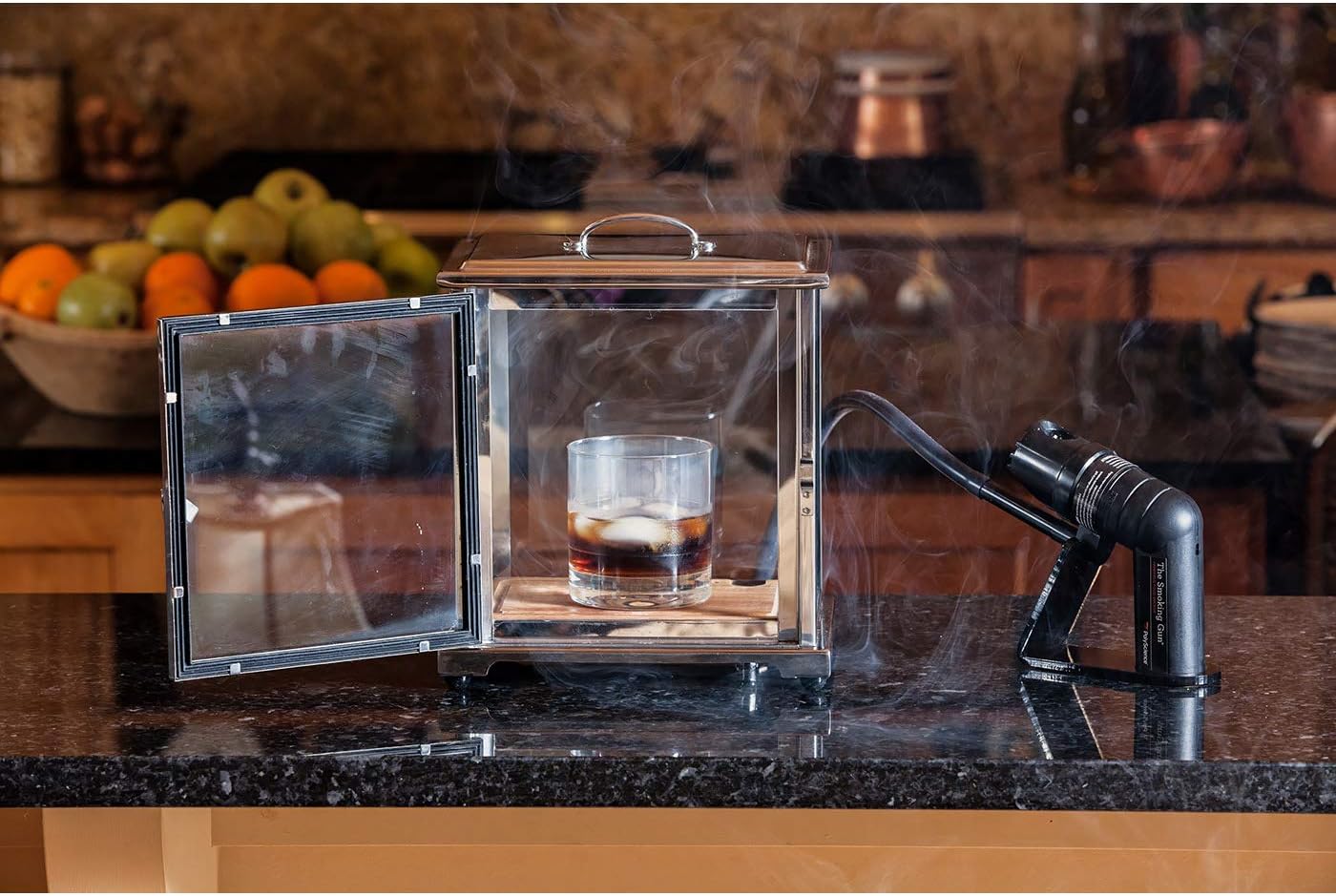
Handheld smoker mechanics and chip use
A handheld smoker typically ignites wood chips or pellets in a combustion chamber and channels the smoke through a hose or nozzle into the enclosure. The included 4-ounce wood chip packet supplies initial sessions but will deplete quickly in frequent professional environments. Chip packing density, airflow to the combustion zone, and the smoker’s burn design influence smoke duration and consistency. For predictable aroma delivery, users should test small chip quantities and short smoke bursts to assess intensity before treating delicate cocktails or food, as dense smoke can overwhelm subtler flavors.
Fuel-type implications compared with other systems
This wood-chip, handheld approach differs from pellet or charcoal systems that maintain prolonged, regulated combustion. For tabletop and cocktail applications, wood chips offer quick aromatic bursts without large thermal loads. Conversely, gas, charcoal, or pellet systems provide broader temperature control for cooking applications but are impractical for intimate, visible bar presentations. Electric smoking devices can offer steady smoke at low temperatures, yet they lack the tactile ritual and variability of wood-chip smoke that many bartenders prefer for signature presentations.
Flavor control strategies in a glass enclosure
Glass enclosures concentrate smoke and allow operators to see smoke density. Flavor control comes from limiting exposure time, selecting mild woods for nuanced cocktails, and venting promptly to prevent over-smoking. Enclosed spaces accelerate smoke absorption into porous garnishes and thin food surfaces, so short exposures and staged smoke introduction are effective. The handheld smoker’s manual control enables incremental smoke additions, while the glass box’s transparency helps time removal for consistent sensory outcomes.
Temperature containment, airflow, and smoke retention
The Crafthouse glass smoker is engineered for containment rather than active heating, relying on an enclosed volume to hold smoke around the item being flavored. Because the unit is not a heat-generating appliance, temperature control is not a design feature; cold or ambient-temperature smoke infusion is the primary use case. Airflow management is achieved via controlled injection of smoke through the handheld device and by venting the box when desired. The glass and stainless assembly will slow smoke dispersal compared with open-air smoking, increasing smoke retention and aroma concentration while necessitating disciplined venting to avoid over-extraction.
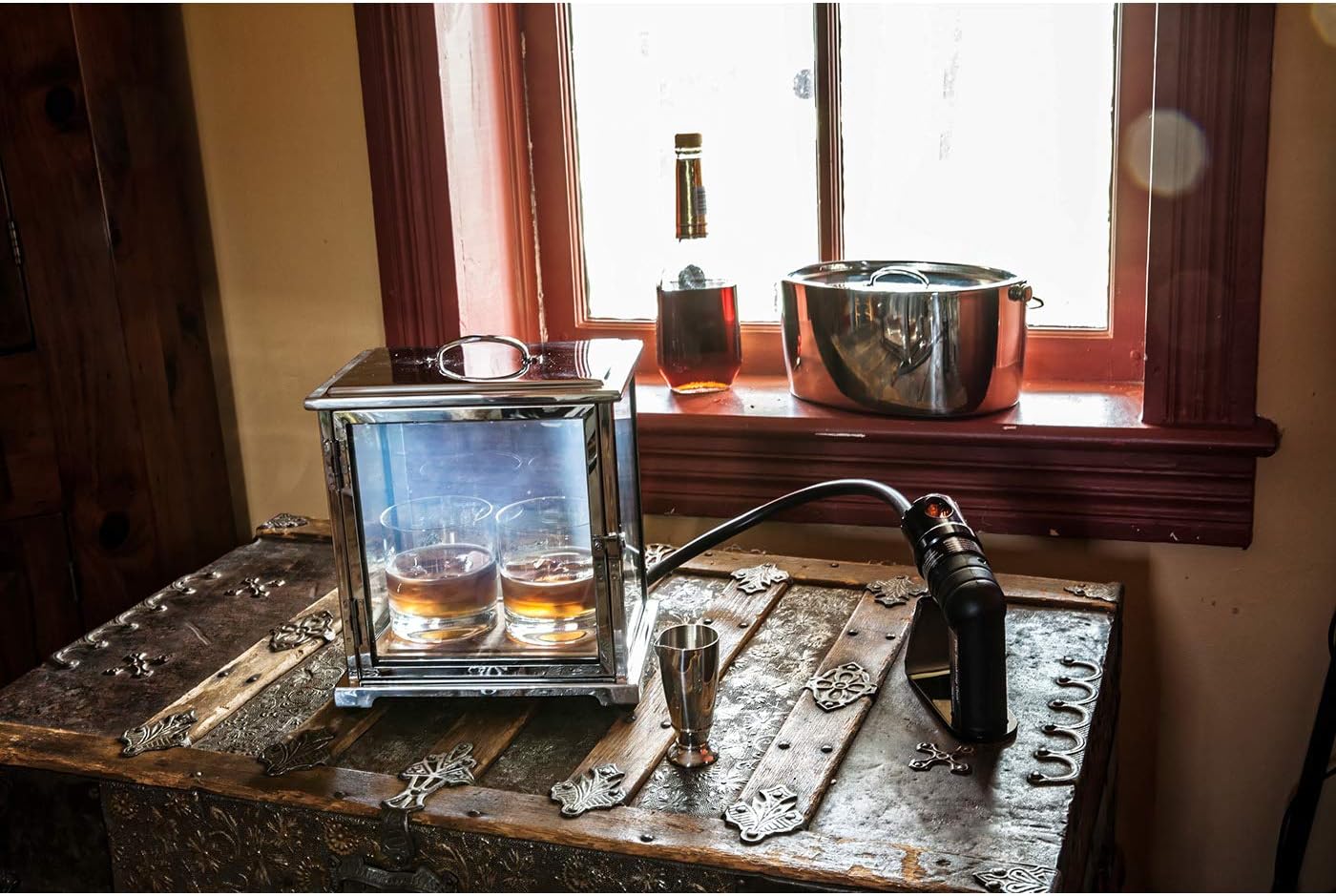
Smoke retention dynamics in a glass enclosure
Clear glass walls reduce convective loss compared with open-air methods, allowing smoke to linger and interact with exposed surfaces of food or drink. This increases extraction efficiency for volatile aromatic molecules, enabling shorter sessions to achieve perceptible smoke. However, over-retention can lead to bitter or chemical notes if smoke is too dense or prolonged; therefore, the balance of smoke volume and exposure time is critical. Visual feedback through glass helps operators judge smoke density and make real-time adjustments.
Airflow management and venting practices
Airflow into and out of an enclosed smoker box is governed by the injection point, any designed venting gaps, and manual opening of the lid or sides. Without engineered vents, most smoke escape occurs during deliberate opening, so operators must plan venting as part of the process. Slow, measured injection followed by short dwell periods and prompt venting reduces the risk of overpowering delicate cocktails. For food items, staged openings can moderate both surface deposition and penetration depth of smoke compounds.
Temperature-related limitations for cooking vs. finishing
Because the product lacks an integrated heat source, it is unsuitable for searing, braising, or long low-and-slow smoking intended to break down connective tissue. Cold smoking and finishing of thin proteins, cheeses, garnishes, and cocktails are appropriate applications. Any attempt to incorporate higher temperatures requires external heat sources and risks damaging the glass or wood base and voiding intended usage constraints; therefore, the product should be treated as a finishing and presentation tool rather than a replacement for outdoor grills or dedicated smokers.
Capacity, versatility, and intended use cases
The unit’s internal footprint and listed product dimensions indicate a compact working volume suitable for one to several cocktails, a small charcuterie plate, or a few canapés per session. This spatial limitation makes the smoking box effective for individualized presentations and small-plate service but impractical for bulk food smoking or full-meal preparation. Versatility emerges from the ability to cold-smoke both liquids and solids, to use different wood chip varieties, and to apply smoke for aroma-only service without raising significant ambient temperatures. The manual handheld smoker enables off-menu experimentation, while the glass enclosure supports theatrical presentation and controlled smoke application.
Cooking style suitability: grilling vs smoking vs combination
This product targets smoking and finishing rather than grilling. It does not provide heat for searing or grilling, so foods requiring high-temperature surface browning or long cook times must be prepared with separate equipment. Suitable styles include cold smoking, light hot-smoking finishes under controlled, low-heat conditions if performed safely, and aroma infusion for cocktails. Combination use with other cooking platforms (for instance, smoking a finished steak briefly for aroma after searing on a grill) is feasible, but the smoker box itself is not a complete cooking system.
Practical capacity and surface-area considerations
With interior dimensions around 9.5 by 10.8 inches, the smoking area accommodates single-plate presentations, slender boards, or a small cluster of glassware. The vertical clearance within the box determines whether taller glassware or multi-layered plating can be smoked without repositioning. For parties and higher throughput, expect multiple smoke cycles; the compact footprint favors staged service and intimate presentations rather than simultaneous bulk finishing.
Ease of maintenance and cleaning for frequent use
Glass surfaces clean readily with non-abrasive cleaners, and stainless components tolerate routine wiping and polishing. The walnut base will benefit from food-safe conditioning and should be shielded from prolonged moisture exposure. The handheld smoker will require ash and residue removal per manufacturer guidance. For professional or frequent use, the need for routine chip resupply, careful wood maintenance, and cleaning between sessions should be factored into operational planning to maintain consistent appearance and function.
Pros & Cons
Pros
- Clear visual presentation and controlled smoke containment enable theatrical cocktail service and precise aroma infusion; glass walls allow operators to monitor smoke density for consistent results.
- Materials selection of stainless steel and tempered glass supports corrosion resistance and easy surface cleaning, reducing flavor carryover between sessions.
- Walnut wood base offers an elevated aesthetic and sustainable sourcing stated by the manufacturer while providing a stable tabletop footprint suited to dining-room or bar environments.
- Included handheld smoker and 4-ounce wood chip packet make the product ready-to-use for demonstration and small-scale service without immediate accessory purchases.
- Compact interior dimensions are well-matched to single-serving cocktails, small charcuterie plates, and canapés, enabling staged service and focused flavor application.
- Manual smoke control via handheld device allows incremental smoke additions for delicate flavor management, which is useful when working with nuanced cocktail profiles.
- Low thermal load design reduces risk to heat-sensitive glassware and garnishes compared with full-size smoking systems, supporting perfume-forward smoke techniques.
Cons
- Not designed for high-temperature cooking or sustained smoking, so the product is unsuitable as a replacement for grills, charcoal smokers, or pellet cookers used for full meal production.
- Walnut base requires regular maintenance to prevent staining or surface degradation; wood components are more vulnerable to moisture and heat than metal-only designs.
- Included wood chip quantity is limited for repeated professional use, necessitating additional purchases and inventory planning for frequent service.
- Absence of specified manufacturer warranty details limits clarity about coverage for glass breakage or component failure in commercial settings.
Final Verdict: Who this smoking box is best for (and who should skip it)
The Crafthouse by Fortessa Glass Cocktail Smoking Box is best suited to bartenders, hosts, and boutique food-service operators who prioritize presentation, aroma-focused finishing, and small-plate smoke infusion. Its material composition — tempered glass, stainless steel, and walnut — and the included handheld smoker make it a strong fit for theatrical cocktail service, tasting menus, and single-plate enhancements where visibility and short smoke exposure deliver measurable flavor impact. Users seeking a compact, mobile smoke enclosure for sensory-forward service will find the box aligns with those priorities.
This product should be avoided by buyers whose primary need is cooking capacity, high-temperature grilling, or long-duration smoking for large cuts—those use cases require full-size smokers, grills, or pellet systems with active temperature control and greater heat tolerance. Additionally, venues requiring documented commercial warranties or heavy throughput should evaluate durability and warranty limitations before purchase. As a finishing and presentation tool, the Crafthouse smoking box complements larger cooking platforms rather than replacing them.
Frequently Asked Questions (FAQs)
What types of foods and drinks are appropriate for the Crafthouse glass smoking box?
The unit is optimized for cold smoking and short-duration aroma infusion, making it suitable for cocktails, garnishes, cheeses, thin fish slices, charcuterie, and small canapés. It is not intended for long low-and-slow smoking of large cuts or for searing; items that require sustained heat should be prepared on a dedicated grill or smoker and then finished or aromatized in the glass box.
Can the smoking box be used with pellet, charcoal, gas, or electric fuels?
The product is designed to accept smoke from wood chips delivered via the included handheld smoker. Pellet, charcoal, gas, and electric fuels are not intended for direct use inside the enclosure. For tabletop aroma infusion, wood chips provide the desired volatile compounds; other fuel systems serve different applications such as sustained temperature control or large-scale cooking and are not compatible with this enclosed presentation device.
How should the walnut base and glass be cleaned and maintained?
Glass surfaces should be cleaned with non-abrasive glass cleaners or mild detergent and water to remove smoke residue. Stainless steel trim can be wiped with a damp cloth and stainless-safe polish as needed. The walnut base benefits from periodic food-safe oiling or conditioning to prevent drying and staining; avoid prolonged soaking and store the unit dry to reduce wood movement and degradation.
Is the smoking box suitable for commercial bar use and high-frequency service?
The unit is suitable for boutique or lower-throughput commercial settings where presentation is prioritized. For high-frequency service, operators should account for chip resupply, routine cleaning, and potential wear of the wood base. Manufacturer warranty details are not specified, so businesses with heavy throughput should consider durability needs and maintenance protocols before relying on the product for continuous service.
How does the enclosed glass design affect smoke intensity and flavor control?
Glass enclosures retain smoke and concentrate volatile aromatic compounds, which increases extraction efficiency and allows shorter smoke sessions to achieve perceptible flavor. The transparent walls provide visual feedback so operators can control smoke density and exposure time precisely. However, over-retention can lead to overpowering or bitter notes, so measured smoke injections and prompt venting are recommended to maintain balance.
Does the smoking box provide temperature control for cooking?
No integrated temperature control is provided. The product is designed for cold and low-heat smoke infusion rather than active cooking. For applications requiring searing, long cooks, or tight temperature regulation, a dedicated grill, smoker, or pellet system with temperature controls should be used; the glass smoker is intended for finishing, aroma, and presentation tasks.
What additional accessories or supplies are recommended for regular use?
Additional wood chip varieties will allow a broader flavor palette and extended use beyond the included 4-ounce packet. Non-abrasive glass cleaners, stainless-safe polishes, and food-safe wood conditioners for the walnut base are recommended. For consistent service, spare handheld smoker consumables and a protocol for chip replenishment and ash disposal can help maintain predictable smoke delivery.
Are replacement parts available if glass or the wood base is damaged?
Manufacturer documentation does not specify replacement part availability. Given the materials, damaged glass panels or wood bases may require direct contact with the manufacturer or an authorized dealer for repair or replacement options. Preserving the unit through careful handling and routine maintenance is the most reliable approach to minimize the need for part replacement.