Cuisinart Petite Gourmet: Portable Grill Performance Guide
How to choose the right portable grill for outdoor cooking
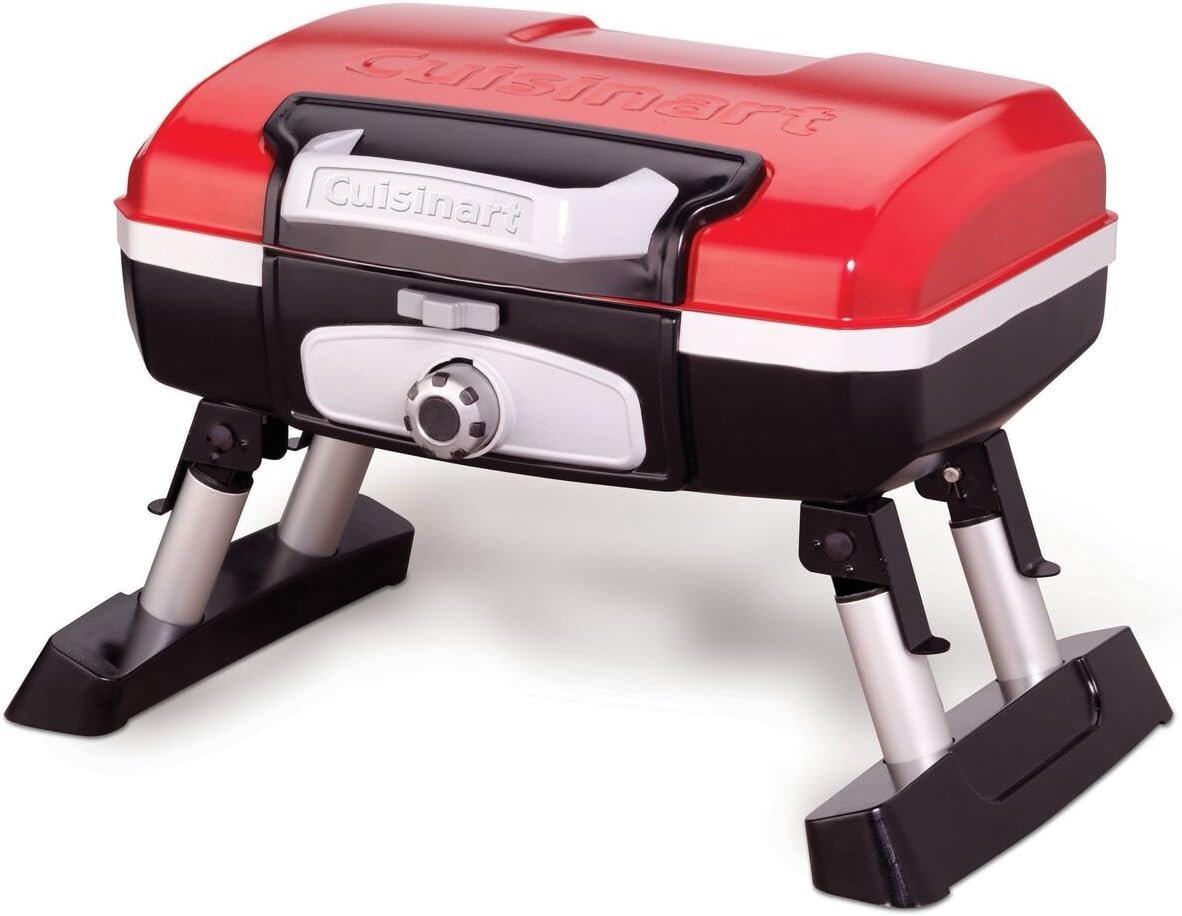
Selecting a portable grill affects cooking outcomes, transport logistics, and long-term satisfaction. The Cuisinart Petite Gourmet tabletop propane grill targets buyers who prioritize compactness, quick setup, and straightforward gas operation over large cooking loads or multi-zone heat management. Decisions should center on cooking style—direct searing versus indirect low-and-slow smoking—fuel preferences, and required temperature control. For short trips, tailgates, or small balcony use, a single-burner propane grill with a 5,500 BTU output and 150 square inches of porcelain-enameled cooking surface can be sufficient, but trade-offs include limited temperature range, single-zone heat, and constrained airflow. Evaluating whether portability, ease of cleaning, or cooking versatility is most important will determine if a compact gas tabletop grill fits the intended use case or if a larger multi-burner or charcoal unit is preferable.
Quick Overview
| Feature | Details |
|---|---|
| Grill type | Portable tabletop gas grill |
| Fuel type | Propane (disposable 1-lb cylinder or compatible adapter) |
| Total cooking area | 150 square inches |
| Burner output | 5,500 BTU (single burner) |
| Temperature control | Manual control knob with two power levels/continuous valve |
| Materials & construction | Painted finish, aluminum body, stainless steel handle, porcelain-enameled grate |
| Control system | Manual twist-to-start ignition |
| Best suited cooking styles | Direct grilling, quick searing, small-batch vegetables and protein |
| Intended use cases | Camping, tailgating, picnics, balcony or tabletop use |
| Warranty | 3-year limited warranty |
The specification set shows a grill designed for portability and simple gas-fired grilling rather than long low-temperature smoking or multi-zone searing. The 150 square inches of porcelain-enameled cooking surface and single 5,500 BTU burner enable compact, direct-heat cooking for small groups, while the painted aluminum/stainless construction and dishwasher-safe grate emphasize lightweight transport and easier cleanup.
Cooking performance and temperature control
This factor examines how heat output, burner design, and control mechanisms affect everyday grilling results. The Petite Gourmet’s 5,500 BTU single burner and manual control knob deliver quick ignition and the ability to reach medium cooking temperatures suitable for burgers, small steaks, and vegetables. However, the single-burner architecture limits multi-zone cooking and fine-grain temperature tuning compared with multi-burner or pellet systems. Temperature precision relies on responsive gas flow and lid retention; the compact lid and enclosed cavity assist in retaining heat, but the overall range and consistency will be narrower than larger gas grills and electric systems designed for precise setpoint control.

Heat output and burner’s practical implications
The 5,500 BTU rating defines the maximum theoretical heat available from the single burner under ideal conditions. For a 150 square inch cooking area, this BTU-to-area ratio supports moderate surface temperatures suitable for direct grilling and quick sears on thinner cuts. The limited raw output means thicker cuts or multiple dense items can reduce peak surface temperatures and increase cook times. Ambient conditions—wind, cold temperatures, and altitude—affect the actual heat at the grate. In practice, this burner is optimized for short-duration grilling tasks rather than prolonged high-heat searing or sustained high-volume cooking.
Temperature control and precision
Temperature control is manual via a twist-to-start ignition and a single control knob that modulates gas flow. The absence of digital thermostatic control or multiple burners reduces the capacity for tight temperature holds or creating distinct hot and cool zones. The compact lid helps retain heat, contributing to more stable temperatures than open tabletop burners, but fine adjustments require practiced knob work and awareness of fuel depletion. For users prioritizing consistent low-temperature smoking or precision roasting, a grill with more advanced control systems would be preferable.
Heat distribution and airflow management
Heat distribution in a single-burner portable grill depends on burner geometry, the gap between burner and grate, and internal airflow. The Petite Gourmet’s small cavity and close grate-to-burner spacing tend to focus heat toward the center, producing a hotter core and cooler edges. Airflow is mostly passive, with venting based on lid fit and side openings rather than adjustable dampers. This design simplifies user operation but can yield hotspots and the need for food repositioning during longer cooks. For balanced results, users should expect to rotate and monitor items to compensate for non-uniform heat patterns.
Portability, size, and setup
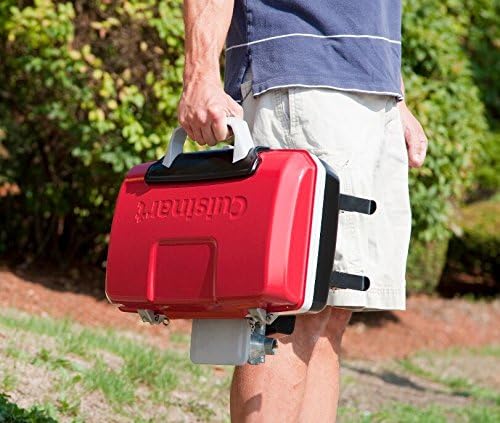
This decision factor centers on transportability, physical footprint, and setup complexity, which are critical for buyers who plan frequent movement between locations. The Petite Gourmet is engineered as a briefcase-style portable grill with folding legs, an integrated lid lock, and a carrying handle; it folds down to compact dimensions that suit car trunks and small storage spaces. Assembly is tool-free and advertised as quick, reducing setup time at campsites or tailgates. Weight and external materials favor lightweight travel but also influence rigidity; the painted aluminum body and simple leg mounts provide low mass for transport while requiring attention to handling to avoid dents or frame stress when packed with other gear.

Dimensions, weight, and carrying considerations
With a folded footprint around 22.5 by 17.5 by 9.75 inches and a listed light item weight, the unit is intended for easy carrying and transport. The briefcase-style handle and lid-latch system make single-person movement feasible, and the tabletop installation option eliminates the need for a dedicated cart. For packing into a backpack or tight cargo area, the grill’s size still necessitates a vehicle or external carry solution rather than full backpack portability. The relatively light construction reduces load but may transmit more vibration or flex during transit compared with heavier steel-bodied units.
Setup, connection, and ignition routine
Setup is designed to be simple and tool-free: unfold legs, secure lid with latch, connect a compatible 1-lb propane cylinder or adapter, and use the twist-to-start ignition. The single-knob control simplifies operation but requires familiarization with gas flow response to achieve desired surface temperatures. The use of disposable cylinders or quick-connect adapters increases convenience for camping scenarios, although users should verify compatibility and secure connections according to manufacturer guidance to maintain consistent fuel delivery.
Folding legs, lid lock, and transport durability
Folding legs and an integrated lid lock contribute to transport security and compact storage. The leg hinges and latch points are wear items that influence long-term portability; robust hinge design and corrosion-resistant fasteners increase lifespan, while lighter stamped components may show deformation after extended field use. For frequent movers, protective casing or careful packing reduces bashing and potential misalignment of legs or latches, preserving the grill’s portability features.
Capacity, cooking versatility, and user suitability
Capacity and versatility determine which cooking styles and group sizes a grill can support. The 150 square inch porcelain-enameled grate is sized for up to eight small burgers or several chicken breasts, making it suitable for couples or very small groups. The single-burner layout supports straightforward direct grilling and short-duration searing, but it limits simultaneous temperature zones and indirect cooking workflows needed for low-and-slow smoking. Accessories and arrangement techniques—such as using a foil pan for indirect heat or external cold-smoking attachments—can add versatility but do not replicate the sustained low-temperature stability of dedicated smokers or multi-burner gas grills.

Cooking styles: grilling versus smoking versus combination use
The Petite Gourmet excels at direct grilling where foods require high surface contact and moderate heat for quick cooks. Low-and-slow smoking is constrained by the single burner’s limited BTU control and the small cavity’s difficulty maintaining consistent low temperatures for extended periods. Combination cooking strategies can be attempted using indirect pans or offset heat techniques, yet these workarounds are less reliable than designs built for multi-zone temperature control. For occasional light smoking, short-duration smoke flavoring or cold-smoking adapters are possible, but the product’s architecture favors direct-heat grilling.
Cooking capacity and meal planning
A 150 square inch cooking area supports meals for one to four people depending on portion sizes and food types. For larger gatherings, staggered cooking sessions or supplemental cookware will be necessary. The porcelain-enameled grate provides a durable, non-reactive surface, but limited surface area requires efficient staging and rotating of items. Meal planning that emphasizes quick-cook proteins, smaller portions, and batch rotations aligns best with the grill’s capacity.
Accessories, adaptability, and upgrades
The grill’s simple geometry allows use of common portable accessories like grill pans, small roasters, and foil trays to extend functionality. Dishwasher-safe porcelain grates simplify maintenance after accessory use. While aftermarket add-ons can enhance short-term flexibility, structural constraints—single burner, small cavity, and basic control—limit the degree to which accessories can transform the unit into a full-featured cooker for advanced techniques.
Materials, durability, and maintenance
Materials and construction determine long-term reliability and upkeep needs. The Petite Gourmet combines painted aluminum, stainless steel handle components, and a porcelain-enameled cooking grate. Painted body panels and aluminum components keep weight low and reduce corrosion risk relative to untreated steel, while porcelain enamel offers a hard, cleanable cooking surface. Maintenance demands focus on protecting painted finishes from scratches, routinely cleaning the porcelain grate (dishwasher-safe as advertised), and ensuring gas fittings and leg hinges are kept free of debris and corrosion to preserve functionality and safety over time.

Construction materials and corrosion resistance
Aluminum panels resist rust and contribute to the grill’s light weight but are more susceptible to denting compared with heavier gauge steel. The painted finish provides a protective layer but can chip under impact, exposing substrate to environmental degradation. Stainless steel used for the handle and select fittings improves resistance in high-touch areas. Users in humid or coastal environments should pay attention to salt exposure and rinse external surfaces after beach use to limit accelerated corrosion.
Cleaning procedures and dishwasher-safe components
The porcelain-enameled grate’s dishwasher-safe designation simplifies maintenance—allowing removal and machine washing to remove baked-on residues. The compact drip tray and accessible interior also reduce time spent scrubbing. Painted exterior panels should be cleaned with mild detergents and non-abrasive pads to preserve finish. Regular inspection and cleaning of the burner ports and ignition assembly helps maintain reliable ignition and consistent flame patterns.
Warranty, replacement parts, and expected lifespan
A 3-year limited warranty provides coverage for manufacturing defects within defined conditions; details are provided by the manufacturer and should be consulted for specifics. Replacement parts for common items—grates, igniters, and leg hardware—are typically available through manufacturer channels or third-party suppliers. Expected lifespan depends on frequency of use, maintenance diligence, and storage conditions; lightweight portable designs can last many seasons when properly cared for but may show earlier cosmetic or mechanical wear than heavier-duty backyard grills.

Pros & Cons
Pros
- Highly portable and compact design. Folding legs, a lid latch, and a briefcase-style carrying handle make transport and storage straightforward for camping, tailgating, and small-space living. The compact folded footprint eases packing in vehicles and small storage areas.
- Dishwasher-safe porcelain-enameled cooking grate. Removable, enamel-coated grates simplify cleanup and reduce the need for abrasive scrubbing, which is a notable convenience for frequent outdoor use. Porcelain coating also helps prevent reactive flavor transfer with acidic foods.
- Simple gas ignition and operation. A twist-to-start ignition and single control knob minimize complexity for users who prefer straightforward, low-fuss grilling without electronic controls. This simplicity reduces learning curve for novice users.
- Lightweight materials reduce carry weight. Aluminum body panels and streamlined hardware lower overall mass, making the unit easier to move and better suited to travel compared with heavier steel grills.
- Adequate cooking area for small groups. The 150 square inch surface fits several burgers or chicken breasts, supporting meals for one to four people without crowding the grate excessively.
- 3-year limited warranty. Manufacturer-provided limited warranty coverage adds a level of consumer protection for defects and product integrity within specified terms.
- Compatible with common propane cylinder arrangements. Use with disposable 1-lb cylinders or compatible adapters increases operational flexibility in outdoor environments where standard tanks are impractical.
- Painted finish and stainless hardware for aesthetic durability. The combination of painted body panels and stainless components aims to balance cost, weight, and resistance to environmental wear.
Cons
- Limited heat output and single-burner design. The 5,500 BTU single burner constrains maximum achievable temperatures and prevents multi-zone cooking, limiting suitability for thicker cuts, extended searing sessions, and multi-dish cooks.
- Uneven heat distribution potential. The compact cavity and burner-to-grate spacing may create hotter center zones and cooler edges, requiring rotation and monitoring of food to achieve even results across the cooking surface.
- Lightweight construction can reduce long-term ruggedness. Aluminum panels and lighter stamped components can dent or misalign under rough handling compared with heavier-gauge steel grill bodies.
- Not optimized for low-and-slow smoking. Achieving consistent low temperatures for prolonged smoking runs is challenging with this single-burner portable gas architecture; dedicated smokers or multi-burner grills perform better for that cooking style.
- Small fuel capacity using disposable cylinders. Dependence on 1-lb cylinders without larger onboard tanks limits runtime and increases the need to carry spare fuel for extended outings.
Final Verdict: Who This Grill or Smoker Is Best For (and Who Should Skip It)
The Cuisinart Petite Gourmet tabletop propane grill is best for buyers prioritizing portability, fast setup, and simple gas-fired grilling for small groups. It is well-suited to campers, tailgaters, balcony cooks, and users who want a lightweight, easy-to-clean grill for quick meals and moderate direct-heat cooking tasks. Its porcelain-enameled grate, briefcase-style transport, and dishwasher-safe components align with practical convenience and low-maintenance use.
Those who should consider alternatives include cooks needing multi-zone temperature control, sustained low-and-slow smoking capability, large-group cooking capacity, or professional-grade durability. For thicker cuts requiring sustained high sear temperatures, or for extended smoking sessions, larger multi-burner gas grills, charcoal smokers, or pellet systems provide superior temperature range and heat management. For users whose primary priorities are compactness, quick grilling performance, and straightforward maintenance, the Petite Gourmet remains a practical portable choice with clear design trade-offs relative to larger, more feature-rich grills.

Frequently Asked Questions (FAQs)
Is the Cuisinart Petite Gourmet suitable for smoking food?
The Petite Gourmet is primarily designed for direct-heat grilling and short cooks. Its single 5,500 BTU burner and compact cavity make maintaining consistently low temperatures for prolonged smoking difficult. Short smoking sessions or adding smoke flavor via wood chips in a pan can be attempted, but for reliable low-and-slow smoking, a dedicated smoker or multi-zone grill is recommended.
What type of fuel does the Petite Gourmet use and how does that affect cooking?
This grill uses propane, typically supplied by disposable 1-lb cylinders or compatible adapters. Propane offers quick ignition and responsive heat control suitable for direct grilling. The small cylinder size limits runtime, so longer outings require spare fuel. Compared with charcoal or pellet systems, propane provides cleaner operation and easier temperature adjustment but less smoke character and lower peak heat potential in this compact form.
How much food can fit on the 150 square inch cooking surface?
A 150 square inch grate accommodates approximately six to eight small burgers or multiple chicken breasts, making it appropriate for one to four diners depending on portion size. Meal planning that uses smaller cuts or staggered cooking will maximize throughput. For larger gatherings, multiple cooking batches or supplementary cookware will be necessary.
Are the cooking grates dishwasher safe and easy to maintain?
Yes, the porcelain-enameled cooking grate is marketed as dishwasher-safe, which simplifies cleanup by allowing removal and machine washing. The compact drip tray and accessible interior also make manual cleaning straightforward. Painted exterior surfaces should be wiped with mild detergent and non-abrasive tools to protect the finish.
How durable is the Petite Gourmet for frequent travel and outdoor use?
Durability balances lightweight construction and portability. Aluminum panels and stamped components reduce weight but can dent under rough handling. Stainless steel hardware improves wear resistance in key areas, while painted finishes may chip if not carefully packed. Regular maintenance, careful transport, and storage will extend service life, but heavy-duty backyard use may expose limitations over time.
Can the grill reach high searing temperatures for steaks?
The 5,500 BTU single burner provides moderate heat appropriate for searing thin cuts and quick cooks, but it is less capable of sustaining the very high surface temperatures produced by larger high-BTU grills or dedicated searing stations. For thick steaks that require intense searing, a more powerful multi-burner gas grill or charcoal setup will produce more consistent high-heat results.
Is assembly required and how easy is setup at the campsite?
Assembly is tool-free and designed for quick setup: unfold the legs, secure the lid, connect a compatible propane cylinder or adapter, and ignite using the twist-to-start mechanism. The briefcase-style portability and folding legs make campsite setup fast, but users should always follow manufacturer instructions for secure gas connections and stable placement.
What warranty coverage is provided with this grill?
The manufacturer provides a 3-year limited warranty that covers certain defects in materials and workmanship under defined conditions. Users should consult the warranty terms supplied by the manufacturer for specific coverage details, exclusions, and instructions on obtaining replacement parts or service.