George Foreman GR10B Review: Compact Electric Grill, Ideal

Why grill selection matters for compact kitchens
Selecting an appropriate grill or smoker reshapes everyday cooking routines, especially for those constrained by counter space or apartment rules. For buyers prioritizing convenience, quick searing, and minimal cleanup, fuel type and form factor are central: electric contact grills deliver direct, rapid heat without ventilation or outdoor clearance, while charcoal, gas, and pellet units prioritize flavor complexity and higher temperature range at the cost of space and setup. Performance expectations should align with intended use—single-plate indoor searing, pressed sandwiches, and quick protein finishing—rather than slow smoking or large-batch grilling. Durability hinges on materials and construction: plate coating quality, exterior plastics, and internal heating elements are predictive of maintenance needs and expected lifespan. Temperature control strategy and grease management determine food outcome and ease of cleaning. The George Foreman GR10B targets tight kitchens, couples, and routine weekday cooking; its compact footprint, 760-watt dual-contact heating, sloped grease tray, and George Tough nonstick plates reflect a design optimized for fast, low-fuss grilling rather than smoking or multi-rack meal preparation.
Quick Overview
| Feature | Details |
|---|---|
| Grill type | Electric contact grill / panini press |
| Fuel type | Electric (120V, 760 watts) |
| Cooking surface | 7.36 in L x 5.67 in W (approx. 41.7 sq in) |
| Temperature control | Single fixed setting; no adjustable thermostat |
| Materials & construction | Plastic exterior, George Tough nonstick coated plates, removable drip tray |
| Control system | Manual single-setting lid and hinge |
| Best suited cooking styles | Quick contact grilling, paninis, small steaks, burgers, vegetables |
| Intended use cases | Small apartments, couples, countertop cooking, dorm rooms |
| Warranty | Limited warranty (manufacturer) |
These specifications translate into a compact, plug-in solution for rapid indoor grilling and pressed sandwiches. The small cooking area and single fixed heat level favor quick, single-portion meals and reheating, with simplified cleanup via a removable drip tray and nonstick plates; the unit is not configured for low-and-slow smoking or high-volume outdoor grilling.

Cooking style suitability and capacity
As an electric contact grill, the GR10B is tailored to direct-contact searing and panini-style pressing rather than smoking or open-flame grilling. The dual-contact plates apply heat to both sides simultaneously, reducing active cook time and making the unit well-suited for burgers, thin steaks, chicken cutlets, fish fillets, and pressed sandwiches. The cooking area—roughly 7.36 by 5.67 inches—accommodates one to two small servings per cycle, ideal for singles or couples but insufficient for family-sized batches or whole birds. The low-profile, enclosed design limits airflow needed for smoke infusion, so flavor development relies on marinades, rubs, and direct sear rather than smoke. For users seeking occasional searing, quick weeknight dinners, or compact reheating, the unit’s format provides convenience, while multi-course or large-quantity cooking will require multiple cycles or a larger appliance.

Grilling vs. smoking: why form factor matters
Contact grills produce browning and grill marks primarily through conduction from heated plates, which promote Maillard reactions on protein surfaces. However, smoking requires steady low temperatures, sustained airflow, and a combustible fuel source to generate and circulate smoke compounds; the GR10B’s sealed electric design and lack of smoke-generating fuel make it unsuitable for smoking. Use cases should reflect this distinction: the appliance excels at rapid searing, pressed sandwiches, and compact portion cooking, while smoke flavor must be introduced by pre-smoking, smoked ingredients, or liquid smoke in recipes when needed.
Cooking capacity and meal planning for small households
With approximately 42 square inches of cooking surface, the GR10B performs best when meal planning aims for single-portion efficiency. Staggered cooking, batch planning, or side dish staging are practical strategies: cook proteins sequentially and keep hold-warm items in covered containers, or combine grilling with stovetop sides. The unit’s limited capacity restricts direct suitability for entertaining or multi-person meals without repetition, so buyers prioritizing throughput should consider larger contact grills or outdoor units.
Fuel type impact and indoor usability
Electric operation defines the GR10B’s primary advantages and limitations. As a plug-in 120V, 760-watt appliance, it eliminates the need for ventilation, outdoor setup, or combustible fuels, which increases indoor usability in apartments, dorms, and small kitchens. Electric heat delivers stable conduction to the nonstick plates, enabling consistent contact searing, but lacks the open-flame caramelization and smoke compounds produced by gas, charcoal, or pellet systems. Energy efficiency considerations hinge on wattage and cook time: 760 watts is modest and efficient for quick single-serve applications, but extended or repeated cycles increase cumulative energy draw. The single-setting control simplifies operation but reduces precision compared with thermostatic electric grills or adjustable gas burners. Users should weigh the convenience of electric operation against the flavor and temperature flexibility offered by outdoor fuel types.

Comparing electric contact heat to gas and charcoal
Electric contact grills supply heat through embedded elements under nonstick plates, producing rapid, direct conduction. Gas and charcoal systems offer broader temperature ranges and convective heat with variable flame exposure and smoke production, which are important for searing larger cuts and developing complex smoked flavors. For someone prioritizing indoor convenience, compact size, and low cleanup, electric contact grills like the GR10B provide consistent, fast results. For hobbyists pursuing high-temperature crust formation, open-flame charring, or smoke-driven profiles, portable gas or charcoal options yield more control and sensory complexity but require outdoor use and more maintenance.
Indoor safety and regulatory considerations for electric units
Electric contact grills are often acceptable in indoor residential settings where open flames are restricted, but adherence to manufacturer guidelines and local regulations is required. The GR10B’s sealed plate design and enclosed heating elements reduce airborne grease and smoke relative to open grills, but routine cleaning of the drip tray and nonstick surfaces helps prevent residue buildup. Proper placement on heat-resistant countertops and avoidance of obstructing ventilation slots preserve safe operation and thermal regulation. Users should consult building policies—particularly in multiunit housing—before installing any heat-producing appliance indoors.
Temperature control, heat output, and cooking precision
Temperature management for the GR10B is defined by fixed dual-contact heating and a 760-watt power rating rather than an adjustable thermostat. This design delivers a single effective heat level when preheated, with cooking speed and sear intensity dependent on contact time, food thickness, and moisture content. Precision is achieved through timing and technique—preheating to manufacturer-recommended readiness, using thin cuts for fast cook-through, and employing short rest periods for carryover cooking—rather than via selectable temperature settings. The lack of variable temperature control narrows the range of techniques that demand low-and-slow temperature holds or precise grill searing at defined degrees. For routine items like burgers, paninis, and vegetables, consistent plate temperature and even contact often produce reliable results, but advanced techniques requiring fine temperature modulation will require alternative equipment.
How wattage and contact heating influence results
A 760-watt rating indicates moderate power: sufficient for fast surface browning on small portions but limited for heavy thermal mass or thick cuts. Dual contact plates heat both sides simultaneously, reducing cook time and improving perceived evenness, but heat penetration still depends on food thickness. Thicker cuts may achieve surface browning before center doneness is reached, necessitating finishing in an oven or reducing plate contact pressure. Wattage also affects recovery time between cycles; lower wattage units may require longer intervals to regain full searing temperature after opening and closing the lid.
Techniques for compensating for fixed temperature
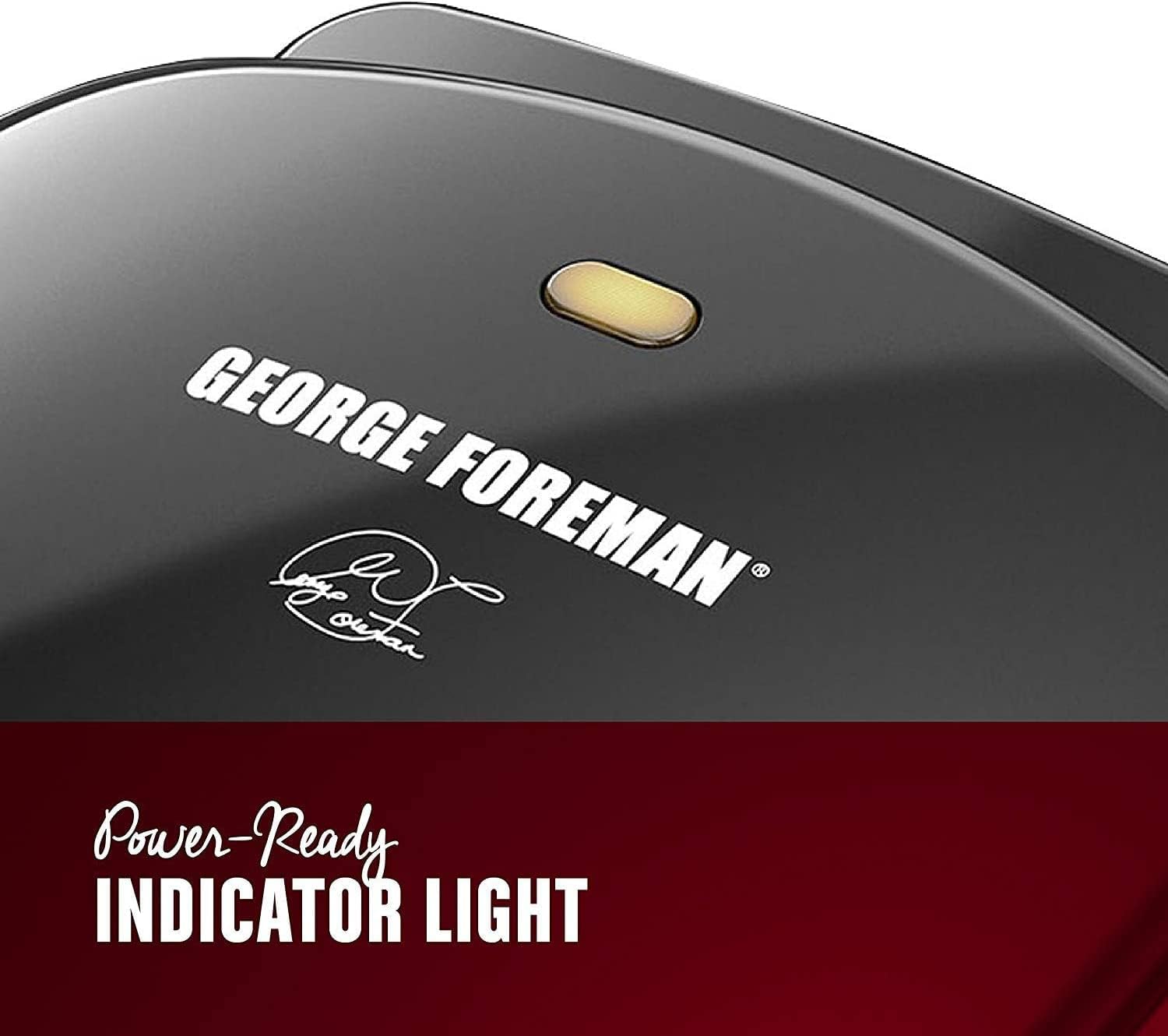
Because the GR10B does not provide adjustable setpoints, successful use depends on technique: preheat until indicator readiness (if provided), use consistent portion sizes and thicknesses, monitor time per side, and utilize carryover by resting proteins briefly after contact cooking. For items needing medium-rare centers or gentle cooking, par-cooking by sous-vide or stovetop finishing before brief contact searing can achieve desired interior doneness while preserving exterior crust. Where temperature precision is essential, complementary appliances with thermostats or oven finishing provide greater control.
Heat distribution, grease management, and airflow
Heat distribution in the GR10B derives from flat, nonstick-coated plates that transfer conduction heat directly to food surfaces. Plate material and the George Tough coating affect contact uniformity and heat transfer efficiency; consistent plate-to-food contact promotes even browning, while warping or uneven pressure can create hot and cool spots. The sloped grilling surface and dishwasher-safe drip tray are engineered to channel expelled fat away from food into a removable container, reducing surface grease and easing cleanup. Airflow in an enclosed contact grill is minimal by design, limiting convective heat movement and smoke circulation—beneficial for containing odors but incompatible with smoke-based techniques. Periodic cleaning of the drip tray and plate surfaces prevents grease accumulation that could affect heat transfer and longevity.

Plate contact and evenness of searing
Even searing depends on complete surface contact between the plate and food; irregularly shaped items or thick cuts may only partially contact the plate, reducing uniform browning. The fixed hinge and lid pressure of compact contact grills deliver a degree of conformity, but dense or uneven items may benefit from light pressing or portioning to maximize contact. The nonstick coating facilitates release and reduces sticking, but sustained high-heat exposure or abrasive cleaning can degrade the coating over time, affecting searing performance and necessitating replacement or careful maintenance.
Grease management and cleaning impact on performance
The sloped plate design diverts rendered fat into a dishwasher-safe drip tray, which reduces pooled grease beneath food and lowers smoke and spatter. Regular removal and washing of the tray and plate surfaces maintain heat transfer efficiency and reduce the risk of burned residue that alters flavor and thermal response. Nonstick coatings simplify wiping, but aggressive cleaning materials or metal utensils can damage the surface. Adherence to manufacturer cleaning instructions—cooling the unit, removing the drip tray, and wiping plates with nonabrasive cloths—preserves both hygiene and heating consistency.
Maintenance, construction quality, and expected lifespan
The GR10B’s materials and component details point to a design optimized for compactness and ease of use rather than heavy-duty commercial performance. A lightweight plastic exterior reduces weight and manufacturing cost but may be less resistant to impacts and high-temperature warping compared with metal-bodied alternatives. The George Tough nonstick plate coating offers user-friendly cleanup and reduced need for added fats, yet all nonstick finishes have finite lifespans that depend on use frequency, utensil choice, and cleaning techniques. The internal heating element and single-setting control simplify electronics and potential failure points, but repeated thermal cycling over years can lead to diminished plate heating uniformity or element degradation. The provided limited warranty offers baseline manufacturer support, and typical longevity expectations for compact electric contact grills—assuming regular maintenance and moderate use—span several years; heavy daily use or improper cleaning accelerates wear.

Durability trade-offs of compact design
Compact grills favor portability and low-profile storage but often use thinner materials and simplified controls that trade off long-term robustness. Plastic exteriors and lighter hinges can wear faster than heavier gauge metal components, especially under frequent opening and closing. Nonstick coating durability is contingent on avoiding metal utensils, abrasive cleaners, and overheating. For low-to-moderate users who value space efficiency, the expected lifespan aligns with typical consumer-grade small appliances; power users or those seeking commercial-grade durability may prefer larger, heavier-duty electric grills with replaceable plates and reinforced construction.
Replacement parts, serviceability, and maintenance best practices
Serviceability is influenced by the availability of replacement parts, such as drip trays and removable plates, and by manufacturer support channels. Simple components—like dishwasher-safe drip trays—are user-replaceable, while internal heating elements are typically service-level repairs. Maintenance best practices extend component life: avoid preheating the unit empty for extended periods, allow complete cooling before cleaning, use nonabrasive cleaning aids, and refrain from metal utensils on coated surfaces. Regular inspection of power cords, hinge mechanisms, and plate surfaces helps identify potential wear before functional failure.

Pros & Cons
Pros
- Compact footprint and lightweight construction enable easy countertop placement and storage in small kitchens or apartments. The small dimensions favor users with limited space and simplify portability.
- Dual-contact heating shortens active cook times by applying heat to both sides simultaneously, making it efficient for quick meals and pressed sandwiches. This design reduces total cooking cycles compared with single-sided units.
- George Tough nonstick coating simplifies cleanup and reduces the need for added oils, which streamlines post-cooking maintenance and minimizes food sticking. The nonstick surface also supports delicate items like fish and vegetables.
- Sloped plate and dishwasher-safe drip tray provide a grease-management system that channels rendered fat away from food, improving perceived healthfulness and easing tray cleaning in a dishwasher.
- Moderate wattage (760W) balances reasonable energy consumption with sufficient power for small-portion searing and reheating, making it suitable for single-serve or couple-sized meals.
- Simple, single-setting operation reduces user complexity and suits buyers who prefer straightforward plug-and-play appliances without selectable temperature menus.
Cons
- Limited cooking surface (approx. 42 sq in) constrains throughput to one or two small servings per cycle, making the unit impractical for families, gatherings, or batch cooking without repeated cycles.
- Absence of adjustable temperature control restricts precision for techniques that require low-and-slow cooking or exact sear temperatures, limiting culinary versatility compared to thermostatic grills.
- Electric contact design prevents authentic smoking and reduces exposure to open-flame charring, which may disappoint users seeking traditional grilled or smoked flavor profiles.
- Plastic exterior and consumer-grade nonstick coating represent durability trade-offs versus heavier metal-bodied grills; frequent or abrasive use can accelerate wear and reduce long-term serviceability.
Final Verdict: Who This Grill or Smoker Is Best For (and Who Should Skip It)
The George Foreman GR10B is best suited for single cooks, couples, dorm residents, and small-kitchen households seeking a compact, low-maintenance electric contact grill for everyday searing and panini pressing. Its 760-watt dual-contact plates and nonstick coating make it an efficient option for quick protein searing, toasted sandwiches, and vegetable grilling without the need for outdoor space or combustible fuels. The sloped grease-management system adds convenience for users prioritizing easier cleanup and lower surface fat. Conversely, those seeking smoking capability, high-volume cooking, precise temperature control, or heavy-duty longevity should consider alternatives: outdoor gas, charcoal, or pellet grills deliver broader temperature ranges and smoke production, while larger indoor electric grills with thermostatic controls provide greater precision and capacity. Compared to similar compact grills available in 2026, the GR10B offers a reliable, entry-level profile emphasizing convenience and space efficiency rather than professional-level control or large-batch throughput.
Frequently Asked Questions (FAQs)
Can the George Foreman GR10B be used for smoking meats indoors?
No. The GR10B is an electric contact grill designed for conduction searing with dual-contact plates and minimal internal airflow. Smoking requires steady low temperatures, sustained airflow, and a combustible fuel source to produce smoke compounds. The GR10B’s sealed electric design does not generate smoke for flavor infusion; smoked flavors must be introduced through pre-smoked ingredients, marinades, or liquid smoke when using this appliance.
How many servings fit on the GR10B cooking surface?
The cooking surface measures about 7.36 by 5.67 inches, roughly 41.7 square inches, which typically accommodates one to two small servings per cycle. This size is optimized for singles or couples and is not intended for large-batch cooking. For multiple portions, plan for sequential cooking or consider a larger unit to avoid repeated cycles.
Does the GR10B offer adjustable temperature controls for precise cooking?
No. The GR10B uses a single fixed heat setting powered by a 760-watt element and does not include an adjustable thermostat. Temperature control is achieved through cook time, preheating, and portion thickness rather than selectable setpoints. For tasks requiring exact temperature holds or low-and-slow techniques, an appliance with a thermostat or oven finishing is recommended.
Is the drip tray dishwasher safe and how does grease management work?
Yes. The unit features a sloped plate that channels rendered fat into a removable drip tray designed to be dishwasher safe. This grease-management system reduces pooled grease beneath food and simplifies cleaning. Regular emptying and washing of the tray helps maintain performance and prevent residue buildup that could affect heat transfer.
What maintenance practices extend the GR10B’s lifespan?
To prolong service life, avoid metal utensils and abrasive cleaners on the nonstick plates, remove and wash the drip tray regularly, allow the unit to cool before cleaning, and avoid prolonged preheating without food. Inspect power cords and hinge mechanisms periodically. Following manufacturer cleaning recommendations preserves the George Tough coating and internal heating element performance.
Is the GR10B suitable for apartment or dorm use?
Yes. As an electric, plug-in contact grill with enclosed heating elements and a grease drip tray, the GR10B is well-suited for indoor residential environments where open flames or outdoor grills are restricted. Proper placement on heat-resistant surfaces and adherence to building policies and manufacturer guidelines are advised.
How does the GR10B compare to outdoor gas or charcoal grills?
The GR10B prioritizes indoor convenience, compact size, and quick contact searing using electric power, whereas gas and charcoal grills offer broader temperature ranges, open-flame searing, and smoke generation for deeper flavor complexity. Buyers choosing between them should weigh indoor usability and cleanup against the higher heat and smoke capacity of outdoor fuel-based grills.
Are replacement parts available for the GR10B, like drip trays or plates?
Common replaceable components such as the drip tray are typically user-replaceable and may be available through manufacturer support channels or parts retailers. Internal components like heating elements are service-level parts and may require authorized repair. Availability varies by manufacturer policies and regional support.