Megamaster 6-Burner Propane Grill Review — 753 sq in Cooking
Why grill selection matters for outdoor cooks
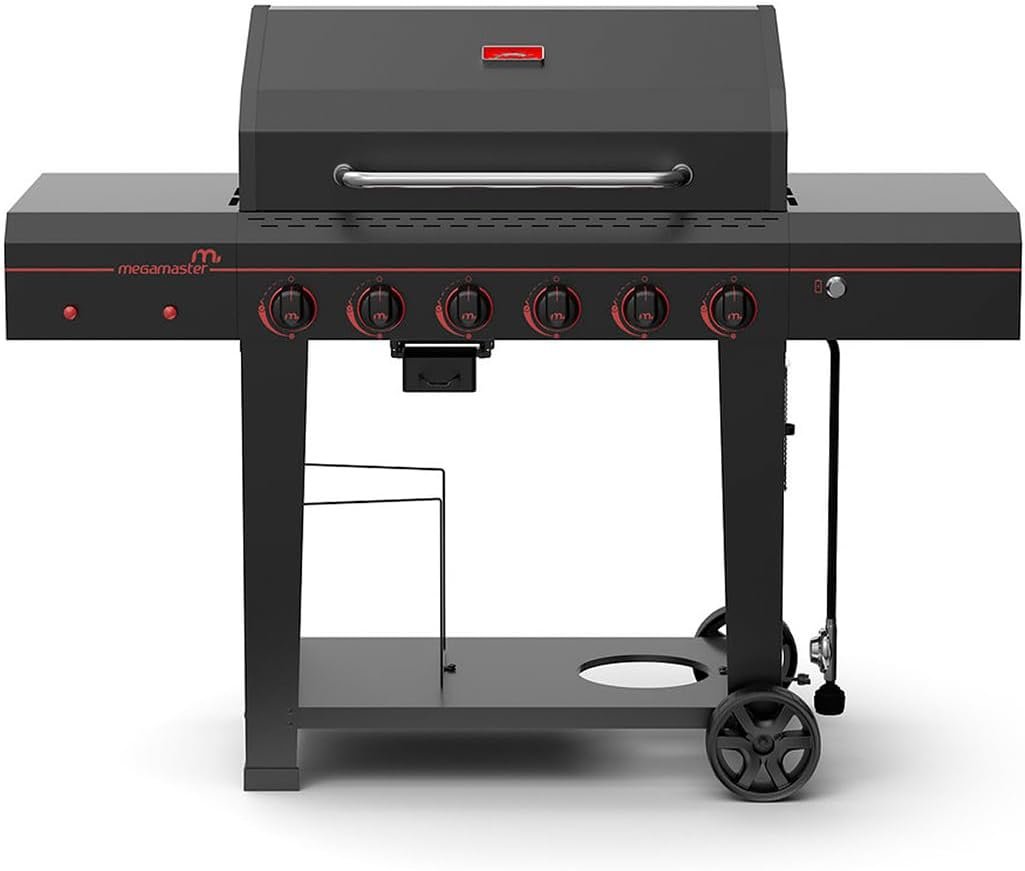
Choosing an outdoor grill affects meal versatility, fuel convenience, temperature control, and longevity. For buyers who grill regularly on patios, in camp settings, or at backyard gatherings, equipment must align with preferred cooking styles—high-heat searing, indirect roasting, or occasional low-and-slow smoking—while matching fuel preferences and maintenance tolerance. The Megamaster 6-burner propane model targets users who prioritize a large cooking footprint, rapid heat delivery, and straightforward controls. Key decision points include burner count and BTU output for heat intensity, grate material for heat retention and sear quality, firebox construction for corrosion resistance, and the presence of side prep surfaces and tool hooks for workflow. Consideration of assembly requirements, portability features, and manufacturer-disclosed materials helps set realistic expectations for durability and routine upkeep in outdoor environments.
Quick Overview
| Feature | Details |
|---|---|
| Grill type | Freestanding open cart propane gas grill |
| Fuel type | Propane (LP) with tank holder and lock |
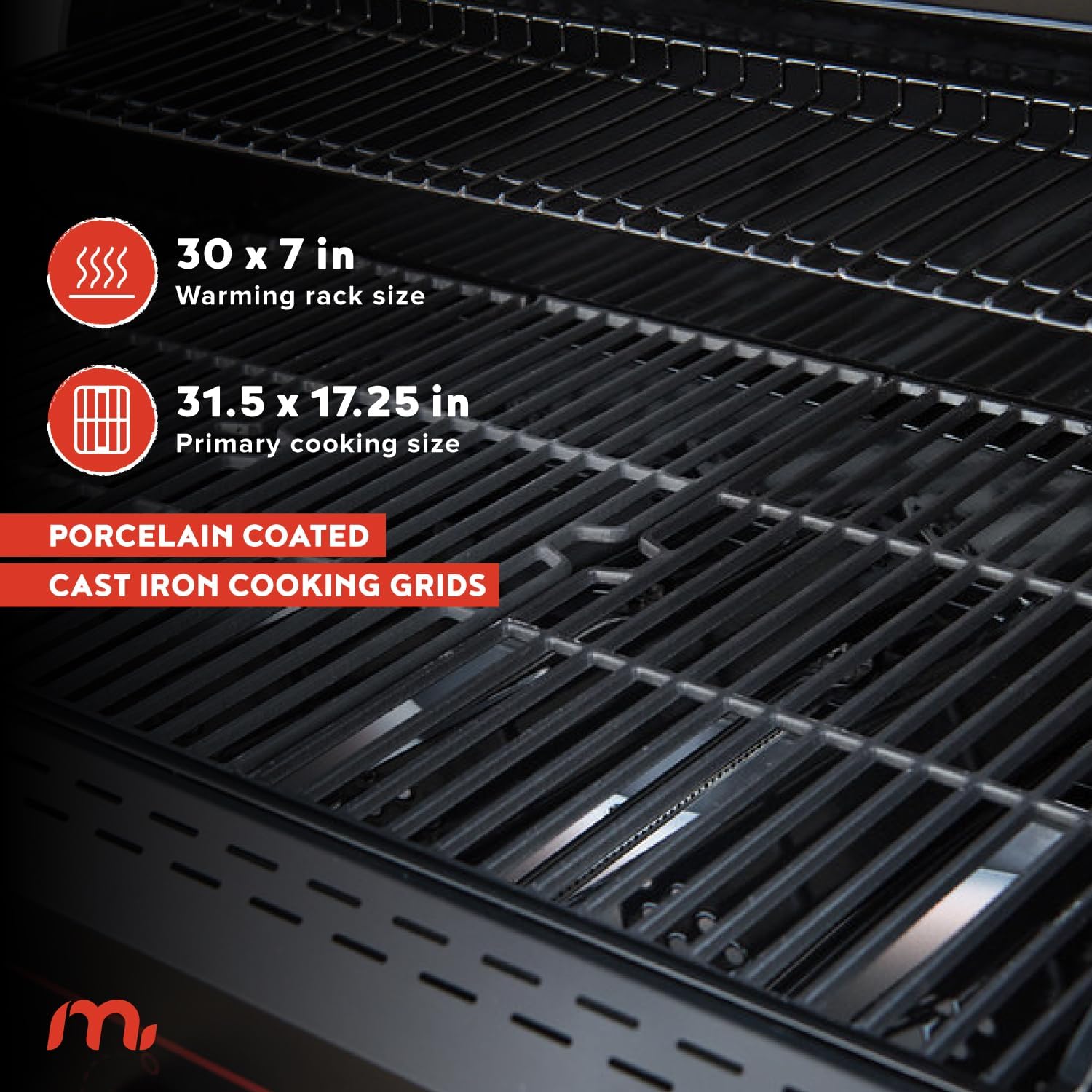
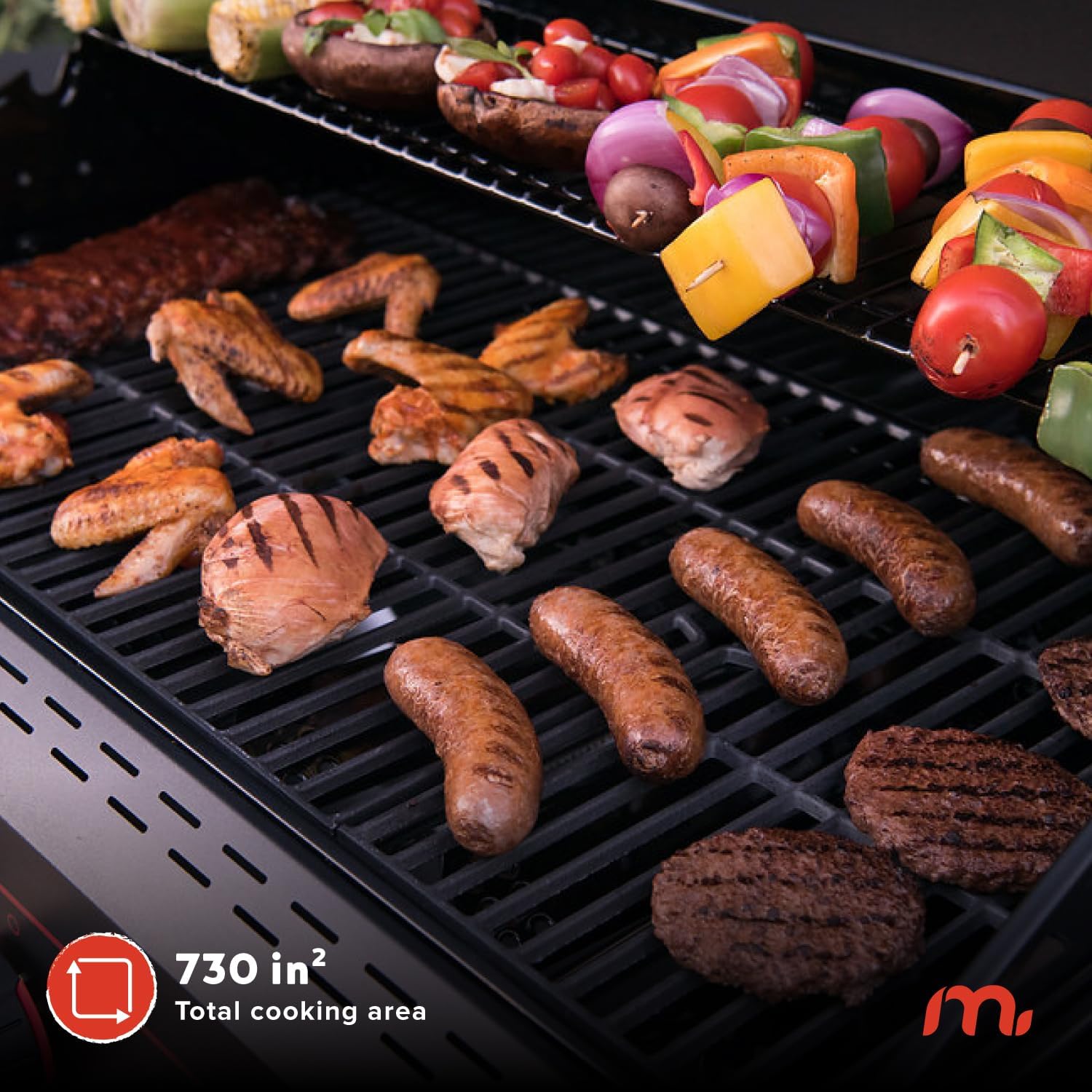
| Total cooking area | 753 square inches (primary and warming racks combined) |
| Burner configuration | Six stainless steel burners, 9,000 BTU each; total 54,000 BTU |
| Materials & construction | Porcelain-coated steel firebox, porcelain-coated cast iron grill grates, alloy steel frame components, stainless steel handle |
| Control system | Electronic ignition with manual control knobs |
| Best suited cooking styles | Direct grilling, searing, indirect roasting; limited smoking without accessories |
| Intended use cases | Patio, backyard gatherings, portable outdoor cooking and camping setups |
| Warranty | Not specified by manufacturer in provided disclosures |
The table summarizes manufacturer-disclosed features and construction. The 753 square inches of cooking area plus six burners with electronic ignition translate into a grill that emphasizes surface capacity and rapid heat delivery. Porcelain-coated cast iron grates and a porcelain steel firebox offer heat retention and corrosion resistance, while side prep tables and tool hooks support a typical backyard cooking workflow.

Cooking style suitability: grilling, searing, and smoking considerations
The choice between grilling, searing, and smoking hinges on burner design, cooking surface, and airflow. The Megamaster 6-burner configuration and high combined BTU output are optimized for conventional direct grilling and searing, where concentrated heat and cast iron grates provide strong contact heat and surface caramelization. For indirect cooking or roasting, the ability to run one or more burners at lower settings creates distinct heat zones across the 753-square-inch footprint. Smoking or sustained low-and-slow cooking is feasible only with added accessories or smoker boxes because the grill is designed primarily for propane direct heat and lacks dedicated pellet or charcoal systems. Buyers should therefore match the grill to a cooking plan that prioritizes grilling and occasional indirect roasting rather than dedicated long-duration smoking.
Grilling and searing performance
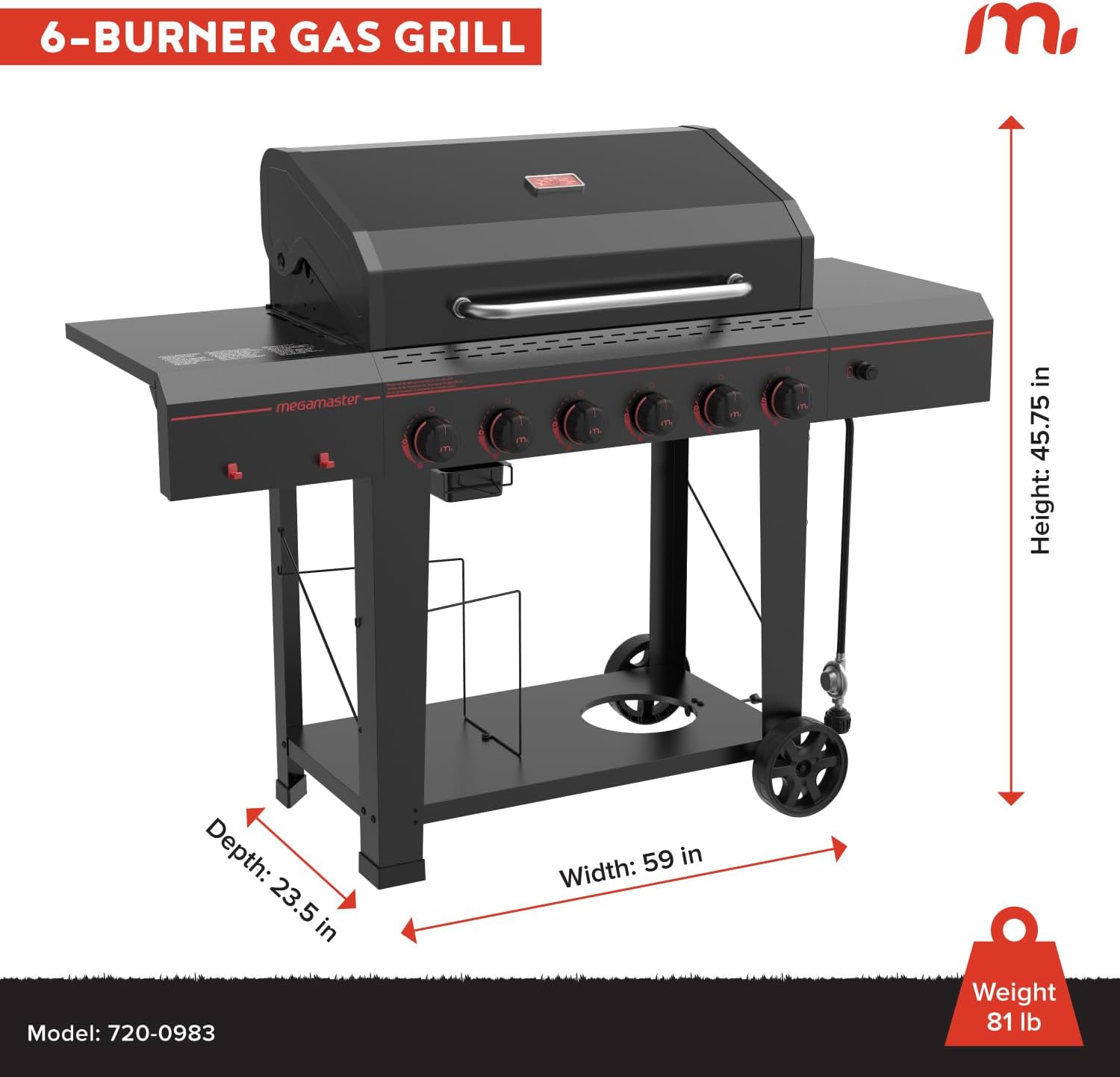
The six stainless steel burners, rated at 9,000 BTU each, supply substantial heat delivery for high-temperature searing when burners are run at full output. Porcelain-coated cast iron grates retain heat well and produce clear sear marks while supporting stable contact temperatures. The open cart layout and generous surface area allow placement of high-heat zones and cooler zones for finishing or resting foods. For efficient searing, preheating until the grates reach stable radiative temperature is recommended; the combination of cast iron grates and a porcelain steel firebox aids retention, though heat-up speed will depend on ambient conditions and proper lid use to trap heat.
Suitability for low-and-slow smoking
The Megamaster’s propane design and burner-centric heat source make sustained low-and-slow smoking a secondary function rather than a primary purpose. Without a built-in smoke box or pellet system, smoke generation requires an external smoker box, foil packet with wood chips, or conversion accessories; airflow and burner adjustments must be managed to maintain lower temperatures over extended periods. The presence of a lid and multiple burners enables indirect cooking by turning off or lowering select burners, but precision long-duration temperature control will be inherently less stable than dedicated offset smokers or pellet grills that are engineered for tight low-temperature regulation.
Fuel type impact and operational efficiency
Propane offers immediate ignition, high power density, and simple refueling logistics, attributes reflected in the Megamaster’s six-burner propane layout. The gas fuel choice supports rapid heat-up and straightforward control through individual burner knobs and an electronic ignition system, which benefits searing and multi-zone cooking. However, fuel efficiency depends on burner use patterns; running all six burners at full output consumes more propane and is best reserved for high-heat tasks. The grill’s listed 54,000 BTU total indicates potential for powerful output, but real-world consumption will vary with flame settings, ambient temperature, and cooking duration. Buyers who prioritize fuel economy or very long unattended cooks should weigh how propane compares to pellet or charcoal systems in terms of runtime and flavor profile.
Propane advantages and limitations
Propane’s advantages include rapid temperature ramp-up, consistent flame control via individual burner valves, and portability due to commonplace cylinder availability. The Megamaster’s tank holder and lock support on-cart mobility and secure tank placement for outdoor use. Limitations of propane include less intrinsic smoke flavor compared with charcoal or wood, and the need to manage cylinder replacement or refilling for extended events. For users prioritizing classic charcoal flavor or automated long-duration smoking, propane may require additional accessories to approximate those results.
Fuel efficiency and BTU distribution
The specification of six burners at 9,000 BTU each yields a theoretical 54,000 BTU combined output, enabling a mix of intense direct heat and moderated zones when burners are adjusted individually. Heat efficiency depends on how burners are zoned—running a subset of burners for indirect cooking reduces fuel use. Porcelain-coated components and cast iron grates help retain radiative heat, meaning lower continuous burner settings can maintain cooking temperatures more effectively than thinner steel grates, improving fuel economy for medium-heat tasks.
Temperature control and precision for consistent results
Precise temperature control is influenced by burner modulation, lid design, and feedback from on-lid thermometry. The Megamaster offers electronic ignition and manual control knobs for individual burner adjustment, while a built-in thermometer provides a broad indicator of internal lid temperature. The manufacturer does not specify a numeric temperature range, so temperature precision depends on user skill in balancing burner outputs and monitoring the built-in gauge. For tasks requiring narrow control bands—such as low-temperature smoking or candying—external probe thermometers and heat-management techniques are advisable to supplement the integrated thermometer and manual knobs.

Control features: burners, knobs, and thermometer
Individual burner valves enable creation of distinct heat zones and allow partial shutdowns for indirect cooking, a practical method for roasting or finishing larger cuts. The electronic ignition supports reliable start-up without matches, and manual knobs permit proportional flame adjustments for responsive control. The built-in lid thermometer functions as a general reference point but can under- or over-represent grate-level temperatures; placement relative to the food and calibration variance mean that independent probe thermometers are valuable for precision cooking or when consistent low-temperature holds are required.
Temperature stability and adjustment strategies
Temperature stability improves with insulated or well-sealed lids and heat-retaining grates; the porcelain-coated cast iron grates and porcelain steel firebox contribute to retained heat, smoothing fluctuations when burners cycle. For stable indirect cooking, employing one or two burners for sustained heat while placing food over unlit burners reduces direct radiative exposure and fosters even cooking. Using drip pans, foil baffles, or heat deflectors can further moderate radiant heat and improve repeatability, which is helpful where the manufacturer has not provided fine-grain temperature control settings.
Heat distribution and airflow management
Heat distribution depends on burner placement, grate design, and the firebox geometry. The six-burner layout allows the cook to create multiple temperature zones across the 753-square-inch surface, enabling searing zones and cooler zones for finishing. Porcelain-coated cast iron grates conduct and retain heat effectively, promoting even grill marks and reducing cold spots immediately beneath the grates. Airflow is governed by lid venting and the openness of the cart design; unmanaged airflow can produce hot or cool areas, so managing venting and lid position during different cooking phases helps maintain consistent convection and radiant heating across the cooking surface.
Burner layout and heat zones
Multiple burners arranged across the cooking footprint allow for deliberate zoned cooking—full-power sear zones on one side, medium-heat indirect zones on the other. This flexibility supports cooking multiple proteins with different heat requirements simultaneously. Heat distribution across zones will depend on grill geometry and distance from individual burners; the cast iron grates help even out localized temperature peaks by storing and radiating heat across the cooking surface, but awareness of burner alignment relative to food placement remains important for predictable results.
Airflow, venting, and hot/cold spots
Controlled airflow supports both combustion efficiency and temperature uniformity. The open cart design and the presence of a lid enable convection, but the manufacturer-provided specifications do not list adjustable vents or dampers; therefore, airflow management largely relies on lid position and burner control. Hot and cold spots can be mitigated by preheating, using the warming rack for indirect holding, and rotating food between zones. For precision smoking or very low-temperature tasks, supplemental venting accessories or conversion kits may be necessary to refine airflow and stabilize lower temperature ranges.
Cooking capacity, layout, and practical throughput
The stated 753 square inches of total cooking area positions the grill for larger family meals and entertaining, accommodating multiple racks of food simultaneously. A three-rack configuration supports use of both main grates and warming racks for staging or indirect finishing. The open cart with oversized side prep tables provides workflow advantages for ingredient staging, basting, and utensil placement. Capacity alone does not guarantee throughput; burner control, heat distribution, and grill height affect how many items can cook simultaneously without overcrowding, and the ability to establish multiple heat zones is essential for staggered cooking of different proteins and vegetables.
Cooking grid layout and rack count
Manufacturer disclosures list three racks and a large primary cooking surface formed by porcelain-coated cast iron grates. Warming racks are useful for holding cooked items at lower temperatures without overcooking, while the main grates handle primary searing and roasting tasks. The grate material supports steady heat transfer, and the inclusion of multiple racks increases flexibility when preparing multi-course meals, though careful arrangement is necessary to avoid airflow obstruction and to maintain consistent heat exposure across stacked items.
Practical capacity for different group sizes
With 753 square inches, the grill is well-suited to cook for moderate to large gatherings—family dinners, weekend barbecues, and small events—allowing simultaneous cooking of burgers, chicken, and vegetables. For smaller households or solo cooks, the large surface may be underutilized but provides convenience for meal prepping and batch cooking. For very large events or commercial use, multiple units or a larger specialized grill may be preferable, since propane cylinder capacity and burner turn-down ability limit indefinite high-volume operation without refueling or burner cycling strategies.
Maintenance, durability, and expected lifespan
Durability is determined by materials, coatings, and corrosion resistance. The Megamaster specifies a porcelain-coated steel firebox and porcelain-coated cast iron grates, both of which improve resistance to rust compared with bare steel when maintained properly. Frame components include alloy and stainless steel elements which resist weather exposure. Item weight and construction imply a balance between portability and structural stability, but longevity will depend on storage practices, exposure to elements, and frequency of maintenance. Availability of replacement parts and modular components supports extended service life where the owner performs routine upkeep.
Materials, corrosion resistance, and component longevity
Porcelain coatings on the firebox and grates protect underlying metals from oxidation but can chip under impact or thermal shock; when coatings remain intact they provide durable, easy-to-clean surfaces that retain heat. Alloy steel and stainless steel frame elements offer structural resilience in outdoor conditions, yet weld points, fasteners, and wheel casters should be inspected periodically for corrosion. Regular cleaning and protection from prolonged moisture exposure will extend usable lifespan; replacement parts for commonly stressed items (ignition modules, burners, grates) are typical service items over multi-year ownership.
Cleaning, grease management, and replacement parts
A removable grease tray simplifies regular cleaning and reduces the risk of flare-ups when debris accumulates. Porcelain-coated cast iron grates are easier to maintain than raw cast iron because they resist rust and food adhesion, but they still benefit from routine cleaning and occasional reseasoning if surface wear occurs. Electronic ignition components and burner ports should be kept free of insect nests and grease buildup to ensure reliable ignition and consistent flame patterns. Consumers should verify parts availability from the manufacturer or third-party suppliers to plan for long-term maintenance needs.
Pros & Cons
Pros
- Large cooking area and multiple burners: The 753 square inches of total cooking surface combined with six burners rated at 9,000 BTU each create flexibility for multi-zone cooking, enabling searing and indirect roasting in a single session. This capacity supports family meals and small gatherings without frequent batch cooking.
- Strong heat delivery for searing: The high combined BTU output and porcelain-coated cast iron grates aid in achieving and retaining searing temperatures, producing efficient Maillard reaction conditions for steaks and burgers.
- Porcelain-coated surfaces for corrosion resistance: Porcelain-coated cast iron grates and a porcelain-coated steel firebox limit direct metal exposure to elements and aid in heat retention and cleaning compared with bare steel.
- Electronic ignition and individual burner control: An electronic ignition system simplifies startup, while discrete knobs allow creation of distinct heat zones for versatile cooking techniques.
- Oversized side tables and tool hooks: Large side prep surfaces and integrated hooks improve workflow by keeping utensils and ingredients within easy reach during active grilling sessions.
- Portable with tank holder and lock: The inclusion of a tank holder and locking mechanism supports safer transport and storage compared with loose-tank setups, benefiting portable outdoor use and camping scenarios.
- Removable grease tray for easier cleaning: A removable grease management system reduces residue accumulation in the firebox and provides a straightforward path for routine maintenance.
Cons
- Limited built-in smoking capability: The propane design and absence of a dedicated smoke management system mean that low-and-slow smoking requires accessory boxes or modifications, making it less suitable for consumers wanting turnkey smoke performance.
- Manufacturer warranty not specified: Lack of clear warranty information in the provided disclosures makes it harder to assess post-purchase protection; buyers should verify warranty terms prior to purchase.
- Assembly required and potential alignment issues: The open cart and modular components necessitate assembly; common buyer reports for similar grills indicate potential for misalignment or missing hardware that can affect fit and finish if not carefully completed.
- Porcelain coating vulnerability: Although porcelain coatings improve corrosion resistance, they can chip with impact or thermal shock, exposing base metal to corrosion over time and requiring careful handling.
Final Verdict: Who This Grill or Smoker Is Best For (and Who Should Skip It)
The Megamaster 6-burner propane grill is best suited for buyers seeking a high-capacity, gas-powered solution for backyard grilling, weekend entertaining, and portable outdoor cooking where rapid heat and multi-zone control matter. Its 753 square inches of cooking area, six 9,000 BTU burners totaling 54,000 BTU, and porcelain-coated cast iron grates make it a practical choice for searing, direct grilling, and moderate indirect roasting. The inclusion of electronic ignition, side prep tables, and tool hooks supports an efficient workflow for hosts and family cooks who value prep space and staging.
Those who should consider alternatives include buyers prioritizing dedicated low-and-slow smoking without accessories, users seeking factory-backed warranty clarity, and purchasers who require an insulated, precision-controlled cooking chamber for very long unattended cooks. Compared to purpose-built smokers or pellet grills in 2026, this propane unit emphasizes grilling versatility and capacity over specialized smoke profile and autonomous temperature control. For its intended audience—backyard cooks wanting sizeable cooking real estate and strong heat output—the Megamaster offers a balanced specification set when paired with routine maintenance and supplemental temperature instrumentation.
Frequently Asked Questions (FAQs)
What cooking styles is the Megamaster 6-burner best suited for?
The grill is optimized for direct grilling and searing due to its six 9,000 BTU burners and porcelain-coated cast iron grates, which retain heat for strong sear performance. Indirect roasting is possible by using burner zoning techniques, but dedicated low-and-slow smoking is limited without a smoker box or accessory designed to introduce wood smoke and control airflow.
How does propane fuel affect performance and convenience?
Propane provides rapid heat-up, adjustable flame control, and common refueling options, making it convenient for backyard and portable use. Propane tends to produce less intrinsic smoke flavor than charcoal or wood, and fuel efficiency varies with burner usage; zoning burners and leveraging heat-retaining grates can improve runtime and reduce consumption.
Does this grill provide precise temperature control for low-temperature cooking?
The grill offers individual burner knobs and a built-in lid thermometer for general temperature guidance, but no manufacturer-specified numeric temperature range is provided. For precise low-temperature holds, external probe thermometers and careful burner zoning or additional heat deflectors are recommended to maintain consistent conditions over long durations.
What maintenance steps extend the life of porcelain coatings and grates?
Routine cleaning after each use, avoiding metal scrapers that can chip coatings, and protecting the unit from prolonged moisture exposure will extend porcelain surfaces. Periodic inspection of grates, seals, and fasteners, along with replacement of worn components, helps maintain performance and reduces the risk of corrosion where coatings may have been damaged.
Can the Megamaster be used for camping or transportable outdoor cooking?
The grill is designed as a freestanding portable unit with a tank holder and locking mechanism, making it suitable for transport to outdoor events or camping where vehicle access is available. Consideration should be given to weight, required assembly or disassembly, and safe storage of the propane cylinder during transport.
Are replacement parts like burners and grates available for long-term repairs?
Replacement parts are commonly available for mainstream grill components such as burner tubes, grates, igniters, and grease trays, but buyers should verify part availability from the manufacturer or authorized suppliers to ensure long-term maintenance options before purchase.
How effective is grease management on this model?
A removable grease tray is specified, simplifying routine cleaning and reducing grease build-up in the firebox. Regular emptying and cleaning of the tray and inspection of drain paths are important preventive measures to minimize flare-ups and maintain hygienic cooking conditions.
Who should consider a different grill type instead of this propane model?
Those seeking a turnkey solution for extended low-and-slow smoking, an automated pellet system, or the distinct flavor profile of charcoal should consider specialized smokers or pellet grills. Additionally, buyers needing explicit manufacturer warranty details or insulated chambers for precise temperature control may prefer alternative models with those specific features.