
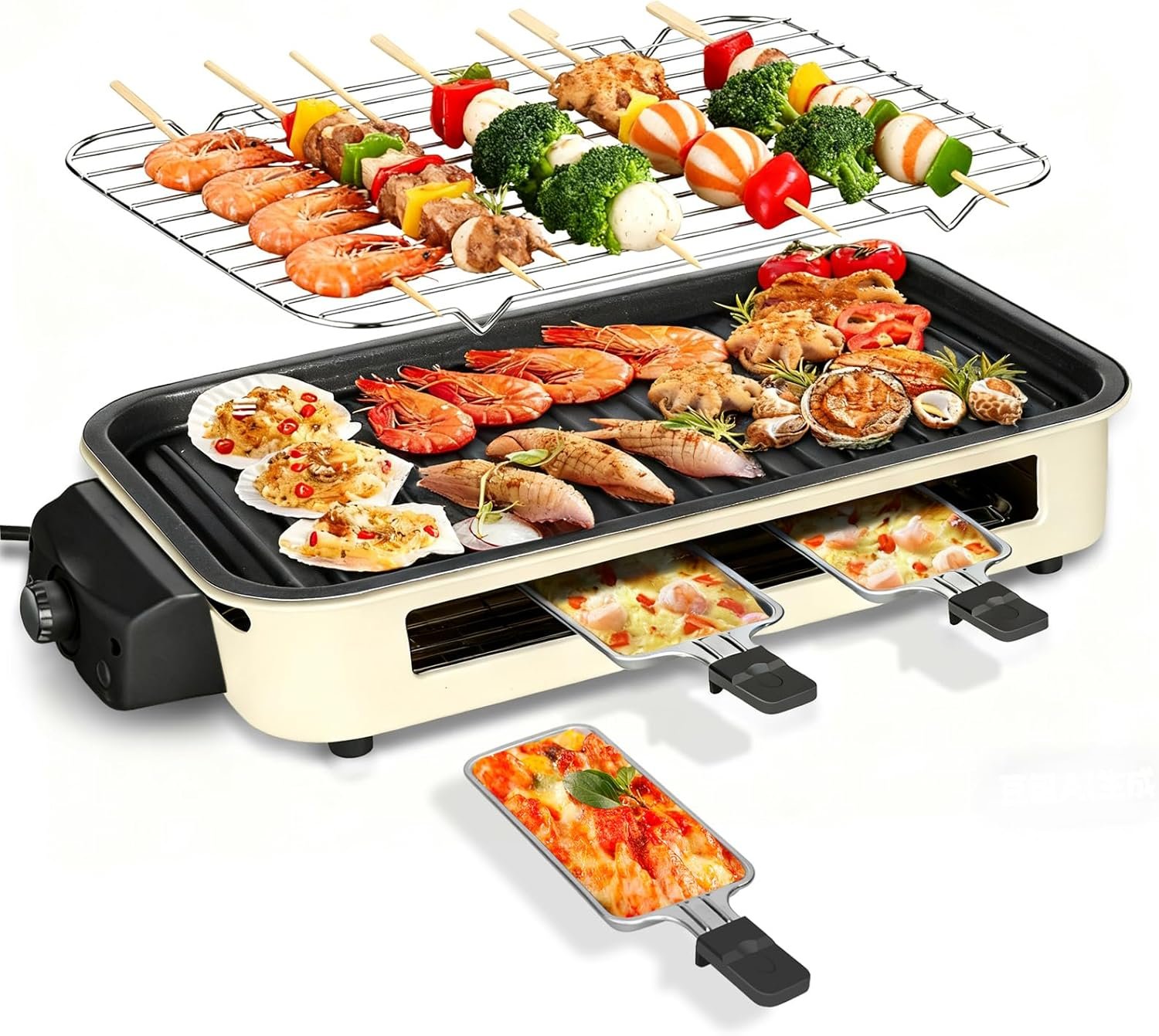
Choosing an indoor grill that fits cooking style, space, and fuel preferences
Selecting the right indoor grill matters as much as choosing the recipe. For cooks in apartments, condos, or homes without reliable outdoor space, an electric indoor grill promises year-round grilling, raclette-style entertaining, and quick weeknight meals. Buyers evaluating the YOHAWJAN 1500W 2-in-1 smokeless indoor grill should weigh cooking style suitability, fuel trade-offs, temperature control, heat distribution, and cleanup. The unit’s 1500-watt electric heating element, removable non-stick grill and griddle plates, and included mini raclette trays position it toward searing, pan-griddling, and cheese-melting applications rather than long-format charcoal smoking. Performance expectations should align with electric heat delivery—faster preheat and consistent power, with limits in high-mass searing and smoke infusion. Durability and maintenance also influence suitability: stainless steel construction and detachable plates reduce cleaning effort, but non-stick surface longevity and tray capacity remain practical considerations. This review focuses on how those attributes translate into everyday cooking outcomes for small households and social dinners.
Quick Overview
| Feature | Details |
|---|---|
| Grill type | 2-in-1 electric indoor grill and griddle with raclette capability |
| Fuel type | Electric, 110 volts, 1500 watts |
| Total cooking surface | Approximate plate dimensions 15.95″ x 8.85″ (approx 141 sq in) |
| Temperature range | Adjustable temperature control (numeric range not disclosed by manufacturer) |
| Materials & construction | Stainless steel body, removable non-stick grill and griddle plates, plastic housing components |
| Control system | Manual adjustable temperature control dial |
| Best suited cooking styles | Pan-grilling, searing, raclette melting, vegetables, seafood, quick-cook proteins |
| Intended use cases | Indoor BBQ gatherings, apartment cooking, tabletop raclette parties, portable countertop use |
| Warranty | Limited warranty (manufacturer-disclosed) |
This compact electric grill combines a reversible grill/griddle plate and three mini raclette pans, translating into a versatile countertop appliance for quick searing, cheese melting, and small-group grilling. The 1500W electric element delivers steady heat for short- to medium-duration cooking; however, the device is optimized for indoor convenience and raclette-style meals rather than extended smoking or high-mass searing sessions.

Cooking style suitability: grilling, searing, and raclette versus smoking
The YOHAWJAN 2-in-1 focuses on tabletop grilling, griddling, and raclette-style service rather than traditional smoking. Its non-combustion electric heat source excels at surface searing and even browning for steaks, burgers, seafood, vegetables, and pancakes, while the raclette pans accommodate melted cheese and side-dish warming. Smoking in the conventional sense—using wood, charcoal, or pellet smoke for long, slow flavor infusion—requires controlled low temperatures, smoke generation, and airflow management that this electric, smokeless design does not provide. For users seeking smoky bark, long smoke rings, or barbecue-style low-and-slow cooks, pellet or charcoal smokers remain the better fit. Conversely, those prioritizing indoor convenience, minimal ventilation and social raclette gatherings will find the grill’s 2-in-1 design aligned with those cooking styles.

Grilling and searing performance expectations
Electric heating elements deliver consistent surface heat and faster preheat compared with many low-wattage alternatives, which supports effective searing and quick browning on small cuts and thin steaks. The provided grill plate surface concentrates heat at the contact points, enabling Maillard reactions when proper preheating and dry-surface techniques are used. However, electric plates have thermal mass and heat-transfer limits compared with high-BTU gas burners or charcoal, so thick roasts or very large cuts will not develop the same char and crust as outdoor grills. The raclette function is well suited to communal serving and melting tasks but does not replicate smoke-flavored profiles.
Suitability for smoking or low-and-slow techniques
The grill’s smokeless design and electric heating element preclude traditional smoking workflows that rely on direct combustion of wood or pellets. Low-and-slow smoking depends on stable, low-temperature ranges over extended hours and deliberate smoke generation and circulation—capabilities outside the stated design intent. While indirect methods such as using liquid smoke or smoked ingredients can add smoky notes to food prepared on this unit, those approaches are flavor approximations rather than true smoke infusion. Buyers prioritizing barbecue-style smoke flavor and extended cooks should consider dedicated smokers with fuel options designed for that purpose.
Fuel type impact: electric power trade-offs versus gas, charcoal, and pellets
Electric grills offer predictable, plug-and-play convenience that appeals to indoor users and renters; the YOHAWJAN’s 1500W element is sized to deliver usable surface temperatures for quick-cook items while avoiding open flames. Compared with gas and charcoal, electric units produce far less ambient combustion byproduct and require no external fuel storage. The trade-offs include lower peak surface temperatures relative to high-BTU gas burners and the flavor differences inherent to combustion-free cooking. Pellet and charcoal smokers provide deep smoke penetration and longer thermal inertia for extended cooks, while gas models often offer higher instantaneous heat and rapid recovery. For indoor use cases and short-duration cooking, electric fuel provides simplicity and lower ventilation needs, but buyers seeking authentic smoked barbecue or maximum sear performance will note functional limitations tied to fuel choice.

Energy delivery and cooking rhythms for electric units
A 1500W heating element concentrates energy through a compact footprint, producing fast warm-up cycles and stable mid-range temperatures suited to searing small cuts and griddling. Electric systems reach setpoints without burners or open flames, enabling consistent control during short-to-medium cooks. Recovery after opening the lid or adding cold food is generally slower than high-output gas systems, so cooking techniques that minimize lid opening and rely on shorter cook intervals are recommended. The unit’s electric nature also means heat output correlates to mains voltage and ambient temperature; consistent indoor environments favor repeatable performance.
Flavor outcomes and smoke emulation strategies
Because the grill operates smokelessly, smoky flavors are not generated by wood combustion. Flavor-conscious cooks can incorporate smoked salts, liquid smoke, smoked cheeses, or pre-smoked ingredients to approximate barbecue notes. For some applications—such as indoor raclette or quick sears—these techniques provide satisfactory flavor complexity without needing a smoker. However, authentic smoke ring formation, deep bark, and the layered aromatics produced over multi-hour smokes remain characteristics of pellet, charcoal, or wood-fired systems rather than electric tabletop grills.
Temperature control and heat output: precision, range, and user feedback
The YOHAWJAN model uses a manual adjustable temperature control dial combined with its 1500W element to offer graduated heat settings for varied cooking tasks. Manual dials allow intuitive adjustments but lack the numerical precision and programmability of digital thermostats or PID controllers found on higher-end grills. Manufacturer disclosures do not list a numeric temperature range, so users should assume heat is delivered in stepped or continuous zones rather than exact degree control. For searing, melting, and griddling, manual control plus visual food cues and timing provide practical results. Users who require precise set-and-forget temperature maintenance for sous-vide finishing, low-temperature smoking, or scientific thermal control may prefer devices with explicit degree readouts and closed-loop feedback systems.

Control fidelity for sear versus low-heat tasks
Manual dial systems deliver responsive changes to power but depend on the element’s thermal mass and plate conductivity, which moderate how quickly surface temperatures shift. High-heat searing benefits from preheating and leaving the dial at higher settings to maximize contact heat. Low-temperature tasks, such as keeping raclette pans warm or gently cooking delicate seafood, are facilitated by lower dial positions but will require observation because exact degree settings are not indicated. The absence of a digital readout means reliance on visual cues, timers, or external infrared thermometers for exact temperature confirmation.
Impact of wattage on recovery and temperature stability
At 1500 watts, the unit balances quick preheat with moderate recovery. Recovery time after loading multiple cold items will be slower than commercial gas or high-wattage electric griddles, making staggered cooking or pre-warming plates effective tactics. The wattage supports stability for short to medium-length sessions—typical for raclette meals and tabletop grilling—while extended continuous use at maximum setting may lead users to monitor device temperature and ventilation to avoid excessive heat buildup in the surrounding countertop area.
Heat distribution and airflow management: expected hot spots and cooking consistency
Heat distribution on compact electric plates depends on element geometry, plate material, and conductive coupling between plate and heater. The YOHAWJAN’s stainless-steel construction and removable non-stick plates are designed for even surface contact, but compact dimensions can still exhibit localized hot spots near element runs and cooler margins at plate edges. Airflow management in indoor electric grills is limited—this model emphasizes smokeless operation and lacks fan-forced circulation. Consistent cooking across the surface is achievable for small batches when foods are rotated and plates are preheated. Buyers should anticipate manual mitigation—moving food, using the griddle side for more surface contact, and staggering items to account for thermal gradients rather than expecting industrial uniformity.

Plate material and its role in heat transfer
Non-stick coated plates on a stainless-steel base combine ease of release with moderate thermal conductivity. Stainless steel provides structural strength and corrosion resistance but is a less efficient conductor than cast iron or thick aluminum. The adhesive and contact between the heating element and plate determine how uniformly heat spreads; manufacturer-supplied removable plates are convenient but may introduce slight thermal interface resistance compared with welded or integrated heating surfaces. For best results, allow adequate preheat time and use thinner cuts that rely more on surface heat than deep thermal penetration.
Airflow, smoke control, and indoor ventilation considerations
The unit’s smokeless positioning reduces typical indoor smoke output, but cooking fatty or sugary foods at high heat can still produce localized smoke and odors. Without directed airflow or an integrated exhaust, users should plan basic ventilation—kitchen range hood or open window—during high-heat searing sessions. The absence of fan-assisted circulation limits convective heat movement, making conduction (direct contact) the primary heat transfer mode; this favors foods that benefit from plate contact and quick, surface-focused cooking rather than bulky roasts that require convective airflow.
Cooking capacity, maintenance, and durability for everyday use
With approximate plate dimensions near 15.95″ by 8.85″ and a lightweight 7.04-pound assembly, the grill is sized for small groups, family meals, and tabletop raclette service. The removable non-stick plates and included mini raclette pans simplify cleaning and meal turnover. Stainless-steel construction for the body supports corrosion resistance in a kitchen environment, but non-stick coatings have finite lifespans influenced by utensil choice, cleaning methods, and heat cycling. Typical customer themes highlight easy cleanup and portability as strengths, while recurring concerns involve coating durability and limited grease-trap capacity. For users who prioritize low maintenance and portability, the design aligns well; for heavy daily commercial use or high-heat professional searing, more robust, higher-wattage materials and thicker plate conductors would be preferable.

Cleaning workflow and non-stick surface care
Detachable plates permit hand washing or gentle dishwasher cycles where allowed, reducing post-meal effort compared with fixed-plate appliances. To maximize coating life, non-abrasive utensils and soft sponges are recommended; prolonged use of metal utensils or aggressive scrubbing can erode the finish. The unit likely includes a small drip tray or grease catcher—common on raclette-style electric grills—but users should empty trays regularly to prevent overflow and maintain hygienic conditions. Observed review patterns advocate gentle cleaning routines and proper cooling before plate removal to preserve non-stick performance.
Expected lifespan and durability considerations
Stainless-steel housing and a modest overall weight suggest a consumer-grade appliance intended for domestic, not commercial, lifecycles. Lifespan depends on usage frequency, maintenance habits, and operating practices such as avoiding overheating and using recommended cleaning methods. Aggregated consumer feedback for similar units points to multiple seasons of reliable use when cared for properly, while heavy daily use or exposure to abrasive cleaning often accelerates wear on non-stick surfaces and control components. The limited warranty covers certain defects but does not substitute for routine care to achieve expected longevity.

Pros & Cons
Pros
- Versatile 2-in-1 design with grill and griddle plates plus three raclette pans. This configuration supports a range of cooking tasks from searing to melting and communal tabletop meals, expanding use cases beyond a single cooking style.
- Compact footprint and lightweight construction. The appliance fits small kitchens and portable tabletop setups, making it convenient for apartment living and entertaining without dedicated outdoor space.
- 1500W electric heating element for steady and relatively quick preheat. Electric power enables consistent heat delivery appropriate for short-to-medium cooks and raclette-style service.
- Removable non-stick plates simplify cleaning. Detachable surfaces reduce post-cook time and allow targeted plate washing or gentle dishwasher cycles where permitted.
- Stainless-steel body offers corrosion resistance. External stainless surfaces provide durability in kitchen environments and a neutral aesthetic that integrates with typical countertops.
- Smokeless operation suits indoor use. The design minimizes smoke generation compared with combustion grills, reducing the need for extensive ventilation during normal use.
- Included raclette trays increase social cooking options. Small individual pans enable melted cheese service and side-dish warming for gatherings.
- Manual temperature dial supports intuitive adjustments. The control offers immediate user feedback and simple operation for everyday cooking tasks.
Cons
- No manufacturer-disclosed numeric temperature range or digital readout. Lack of exact degree settings reduces precision for cooks who need exact temperatures for delicate or low-temperature techniques.
- Non-stick plate durability can be a recurring issue. Aggregated customer themes indicate that abrasive utensils, high-heat misuse, or aggressive cleaning can shorten coating lifespan, requiring careful maintenance.
- Limited capacity for large groups or bulky cuts. Approximate 141 sq in surface favors small batches and raclette sessions rather than whole-roast preparations or large party grilling.
- Electric fuel limits true smoke and high-BTU searing outcomes. For buyers seeking authentic barbecue smoke, deep bark, or very high sear temperatures, charcoal, pellet, or high-output gas alternatives deliver different results.
- Potential for localized hot spots and edge cool zones. Compact plate geometries can produce thermal gradients that require food rotation and attentive cooking for uniform results.
Final Verdict: Who This Grill or Smoker Is Best For (and Who Should Skip It)
The YOHAWJAN 1500W 2-in-1 smokeless indoor grill targets cooks who prioritize indoor convenience, compact design, and social raclette-style dining. It suits apartment dwellers, small households, and hosts of tabletop gatherings who want a lightweight, easy-to-clean appliance for searing steaks, grilling vegetables, and melting cheese. Electric operation, removable plates, and included raclette pans make it a strong fit for users valuing portability and low-ventilation cooking. Conversely, buyers aiming for authentic long-format smoking, deep charcoal or wood-fired flavor, or high-output searing for very large cuts should consider dedicated smokers or higher-BTU outdoor grills. Similarly, those who demand precise digital temperature controls and industrial-grade plate conductivity for professional workloads may find this consumer electric model limiting. Overall, the unit represents a balanced indoor grilling option for 2026-era small-space cooks seeking versatility and ease of use rather than traditional smokehouse performance.

Frequently Asked Questions (FAQs)
Can this indoor electric grill produce authentic smoky barbecue flavor?
This electric, smokeless design does not generate wood or charcoal smoke, so it cannot produce traditional smoke-infused flavors or bark associated with low-and-slow smoking. To approximate smoky notes, cooks may use smoked ingredients, smoked salts, or liquid smoke. For authentic smoke penetration and long-duration barbecue, dedicated charcoal, pellet, or wood smokers are more appropriate.
Is the temperature control precise enough for delicate cooking?
The unit uses a manual adjustable dial rather than a digital thermostat with numeric readout, so temperature changes are intuitive but not precisely indicated in degrees. Delicate tasks can be managed using lower dial settings, visual cues, and timing, but users requiring exact set-and-hold temperatures should consider appliances with digital or PID controls.
How large is the cooking surface and how many people can it serve?
Based on the plate dimensions of about 15.95 by 8.85 inches (roughly 140 square inches), the grill suits small groups and family meals, typically serving two to four people comfortably for tabletop grilling or raclette-style dinners. It is not designed for high-capacity party grilling or whole large roasts.
Are the cooking plates dishwasher-safe and easy to clean?
The removable non-stick plates simplify cleaning and can generally be hand-washed with non-abrasive tools. Manufacturer guidance should be consulted for dishwasher compatibility; aggregated user feedback recommends gentle cleaning to preserve the non-stick finish and avoiding metal utensils that can degrade the coating.
Does this grill require special ventilation when used indoors?
The grill is marketed as smokeless and produces less smoke than combustion-based grills. However, high-heat searing or cooking fatty foods can still create localized smoke or odors. Basic kitchen ventilation, such as a range hood or an open window, is advisable during intensive cooking sessions to manage steam and aromas.
Is this model suitable for frequent daily use or commercial settings?
The YOHAWJAN 1500W grill is designed for consumer domestic use, with stainless-steel housing and detachable non-stick plates. While durable for routine home use, heavy daily commercial use may accelerate wear—especially on non-stick coatings and control components. Commercial cooks should consider industrial-grade equipment with higher wattage and thicker conductive plates.
Can the raclette pans be used for sauces and side dishes safely?
The included mini raclette pans are intended for melting cheese and warming small side dishes or sauces. They are sized for individual servings and provide convenient portioned heating. Users should avoid overfilling and follow manufacturer care instructions regarding heat exposure and cleaning to maintain pan integrity.
What maintenance steps extend the lifespan of the non-stick plates?
To prolong non-stick life, use silicone, wooden, or plastic utensils instead of metal, allow the plates to cool before cleaning, avoid abrasive scrubbers, and follow any manufacturer limits on dishwasher use. Regularly emptying and cleaning the grease tray also prevents buildup that can affect performance and hygiene.