
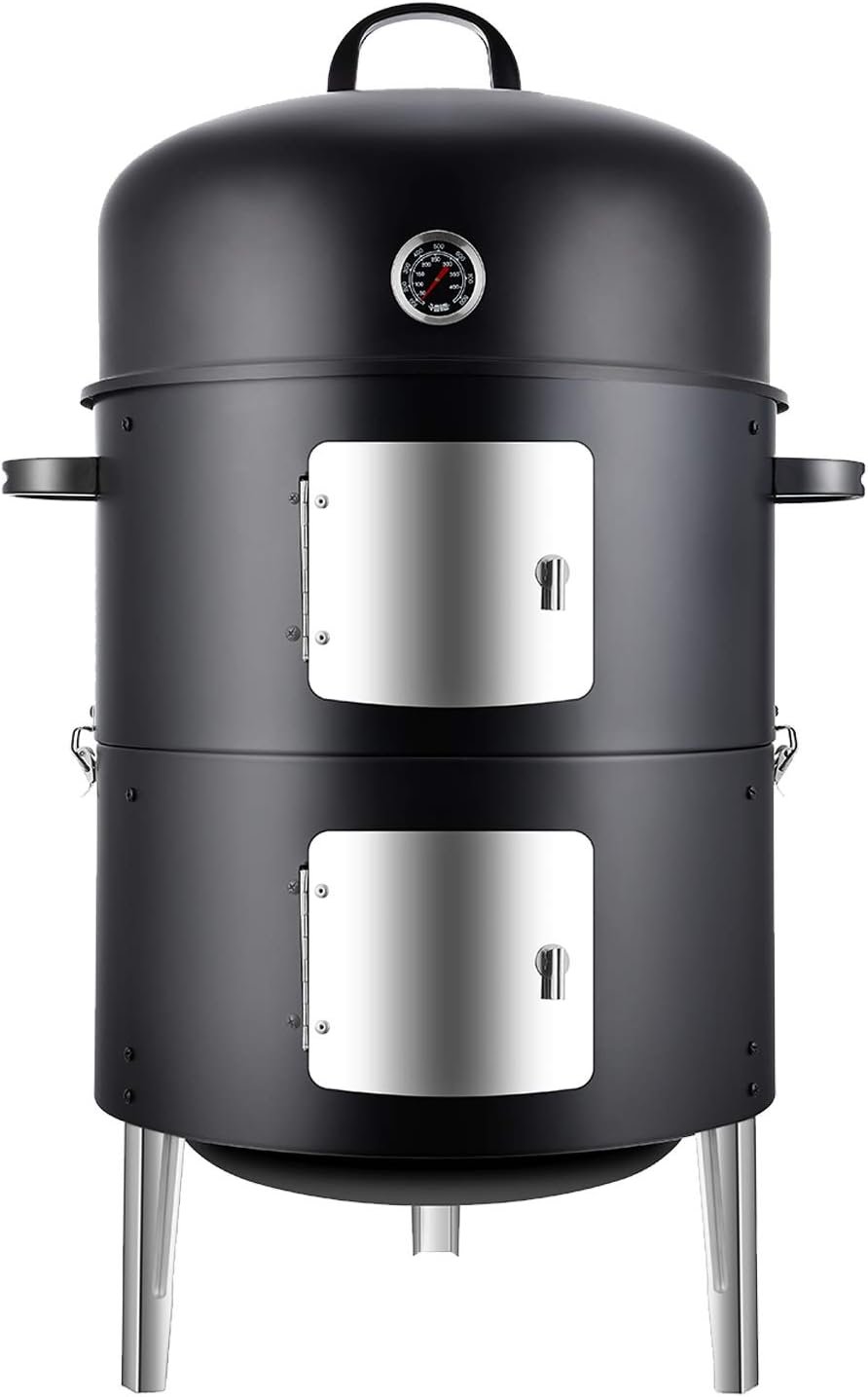
Realcook Vertical 17 Inch Steel Charcoal Smoker: A Compact Two-Tier Unit for Charcoal-Based Backyard Smoking
The Realcook Vertical 17 Inch Steel Charcoal Smoker is a charcoal-fueled, alloy-steel vertical smoker built around a 453-square-inch two-tier cooking area, a lid-mounted thermometer with an adjustable air-supply damper, and a pair of access doors for managing fuel and food independently. This Realcook Vertical 17 Inch Steel Charcoal review examines how those specifications translate into practical cooking performance for backyard cooks who want an entry-level charcoal smoker rather than a large-capacity or digitally controlled rig. The intended user is someone drawn to traditional charcoal smoking for its flavor characteristics and hands-on fuel management, working within a compact 17-inch-diameter footprint that suits patios, balconies, and smaller yards better than full-size offset smokers. Because the unit relies entirely on charcoal and manual airflow adjustment rather than gas lines or digital thermostats, temperature management depends on the operator’s fuel choices and damper settings throughout a cook. The sections below examine fuel behavior, cooking capacity, build materials, and day-to-day usability so prospective buyers can judge whether this smoker’s dimensions, construction, and control scheme match their outdoor cooking routine and expectations for a compact charcoal vertical smoker.
Quick Overview
| Feature | Details |
|---|---|
| Product Type | Vertical charcoal smoker with combination grill function |
| Fuel Type | Charcoal (also supports wood chunks for added smoke) |
| Total Cooking Area | 453 square inches across two cooking grids |
| Temperature Control | Built-in lid thermometer with adjustable air-supply damper |
| Outer Material | Alloy steel body |
| Inner Material | Stainless steel components |
| Pan Construction | Porcelain-enameled water pan and charcoal pan |
| Access Points | Two doors (upper for food, lower for charcoal and wood) |
| Best-Suited Cooking Styles | Smoking, grilling, steaming, baking, braising, roasting |
| Item Weight | 18.6 pounds |
| Dimensions | 17 inches deep by 22 inches wide by 35 inches tall |
These specifications describe a lightweight, charcoal-only smoker designed for manual temperature management rather than automated or high-volume cooking. The two-tier grid layout and 453 square inches of surface area suit small batches of ribs, poultry, or sausages, while the porcelain-enameled pans and dual-door access point toward a unit built for repeated backyard use with straightforward, low-tech controls that depend on operator attentiveness rather than electronic regulation.

Fuel Type, Heat Distribution, and Temperature Control
As a charcoal-only smoker, the Realcook Vertical 17 Inch unit depends on burning briquettes or lump charcoal in its base pan to generate heat, which then rises through the water pan and cooking chambers before escaping through the lid’s adjustable damper. This fuel approach is central to the flavor profile charcoal smoking is known for, since partial combustion and smoke from wood chunks added to the coals impart characteristics that gas or electric heat sources cannot replicate as directly. Temperature regulation is entirely manual, achieved by adjusting the lid-mounted air-supply damper and managing the charcoal bed itself, rather than through any digital thermostat or automated feed system. The built-in thermometer on the lid gives the operator a visual reference for interior temperature, though accuracy on analog dial thermometers of this type can vary somewhat from the actual grate-level temperature, a common characteristic across charcoal smokers in this price and size category.

Charcoal as a Fuel Source
Charcoal burns hotter and less predictably than gas but is widely regarded among smoking enthusiasts as producing a more traditional, smoke-forward flavor, particularly when lump charcoal or wood chunks are introduced alongside briquettes. This smoker’s design accommodates that flexibility, since the lower charcoal pan is sized to hold a fuel bed while the porcelain-enameled water pan above it helps moderate temperature swings and add humidity to the cooking environment. Charcoal-fueled operation requires more active fuel management than gas or pellet systems, since briquettes burn down over a period of hours and typically need replenishing during longer cooks.
Adjustable Air Supply and Damper Control
The adjustable air-supply damper on the lid functions as the primary temperature control mechanism, since restricting or opening airflow directly affects how quickly the charcoal bed burns and how much heat circulates through the chamber. Wider damper openings feed more oxygen to the coals, raising internal temperature, while closing the vent further slows combustion for longer, lower-temperature smoking sessions. This manual approach demands more operator involvement than gas smokers with dial-controlled burners, since achieving and holding a target temperature range typically requires periodic damper adjustments as ambient conditions and fuel levels change throughout a cook.
Built-In Thermometer Considerations
The lid-mounted thermometer with a detailed temperature scale provides a reference point without requiring a separate probe device, which is useful for cooks who want quick visual confirmation of chamber conditions. Analog dial thermometers positioned in the lid typically read the air temperature near the top of the unit rather than at grate level, so experienced smokers often supplement this built-in gauge with an independent probe thermometer placed closer to the food for more precise readings. This is a common characteristic of vertical charcoal smokers in this size class rather than a defect specific to this model.
Cooking Capacity and Culinary Versatility
With 453 square inches spread across two removable cooking grids, this smoker offers a moderate capacity suited to small households or gatherings rather than large-scale entertaining, since the vertical, narrower chamber trades footprint for height rather than sprawling surface area. The two-tier layout allows different foods to cook simultaneously at different chamber heights, while a crossbar and four hangers inside the lid extend functionality to hanging preparations like sausages or jerky that benefit from full smoke exposure on all sides. Beyond straightforward smoking, the manufacturer positions the unit as multi-functional, capable of grilling, steaming, baking, braising, and roasting depending on fuel placement and pan configuration. This versatility appeals to cooks who want one compact appliance to handle several cooking methods rather than investing in separate dedicated equipment for each style.

Two-Tier Grid Layout for Batch Cooking
The two cooking grids create distinct upper and lower zones within the chamber, which can be used to smoke items of different sizes or types simultaneously, such as poultry on one level and vegetables or smaller cuts on the other. Because heat and smoke rise through a vertical chamber, the upper grid typically runs slightly cooler and receives less direct exposure than the lower grid closer to the heat source. Cooks working with temperature-sensitive items should plan grid placement accordingly rather than assuming identical conditions across both levels.
Hanging Capability for Sausages and Jerky
The crossbar and four hangers built into the lid area allow sausages, jerky strips, or similar hanging preparations to smoke vertically rather than resting on a flat grid, which can improve even smoke exposure on all sides of thinner cuts. This hanging function is a distinguishing feature relative to flat-grid-only smokers, since it opens up preparation styles that benefit from suspended airflow. Available hanging space is limited by the four-hanger configuration, so this feature suits smaller batches of hung items rather than large-volume sausage or jerky production.
Multi-Function Cooking Modes
Beyond traditional low-and-slow smoking, the unit’s water pan and vent configuration support steaming, braising, and roasting by adjusting moisture levels and airflow within the chamber. Removing the water pan and running the charcoal hotter shifts the unit toward more direct grilling-style heat, while retaining the water pan supports the moisture retention associated with slower cooks. This flexibility makes the smoker a reasonable single-appliance solution for households that want to experiment with multiple outdoor cooking techniques without purchasing separate grills and smokers.
Build Quality, Materials, and Durability
The smoker’s outer body is constructed from alloy steel with stainless steel components used internally, paired with porcelain-enameled water and charcoal pans designed to resist rust and withstand repeated exposure to heat and moisture better than uncoated metal. Heat-resistant bakelite handles are fitted to the unit to allow transport, basting access, and general handling without direct contact with hot metal surfaces, a practical detail for a smoker that reaches sustained high temperatures during use. A latch locking system secures the stacked chamber sections together, adding stability during transport and use while still allowing the two-layer body to be separated for cleaning. At 18.6 pounds, the unit is notably lighter than heavier-gauge steel or cast-iron smokers, which affects both portability and, to some degree, heat retention characteristics compared to thicker-walled competitors.

Alloy Steel Body and Porcelain-Enameled Pans
Alloy steel provides a reasonable balance of strength and weight for a compact smoker, though it is generally thinner-gauge than the heavy steel used in premium offset smokers, which affects how well the chamber retains heat during temperature swings or windy conditions. The porcelain-enameled coating on the water pan and charcoal pan is intended to resist corrosion and ease cleanup, since enameled surfaces typically release residue more easily than bare steel. Over repeated use, enameled coatings can chip if scraped aggressively with metal tools, so gentler cleaning tools help preserve the coating’s protective qualities over the smoker’s lifespan.
Bakelite Handles and Latch Locking System
Heat-resistant bakelite handles are positioned at points where users need to move the unit, adjust the lid, or access internal components, reducing the risk of direct contact with hot metal during a cook. The latch locking system that secures the stacked sections together is intended to improve stability, particularly important for a tall, narrow vertical design that could otherwise be prone to shifting when lifted or moved. This locking mechanism also plays a role in maintaining a tighter seal between chamber sections, which can help retain heat and smoke more effectively during longer cooking sessions.
Long-Term Durability Expectations
Given its lighter-gauge steel construction and 18.6-pound weight, this smoker is best understood as an entry-level to mid-range charcoal unit rather than a heavy-duty, multi-decade investment piece. Regular cleaning of the porcelain-enameled pans, proper storage away from prolonged moisture exposure, and periodic inspection of the latch and handle hardware are typical maintenance steps that extend service life for smokers built from similar materials. Buyers seeking the thicker steel walls and extended heat retention associated with premium offset or cabinet smokers should recognize that this unit prioritizes affordability and portability over maximum structural mass.
Assembly, Cleaning, and Portability
The two-layer body design, combined with a latch locking system, is intended to simplify both initial assembly and later disassembly for cleaning or transport, since owners can separate the stacked sections rather than working around a single fused chamber. Two access doors, positioned on the upper and lower sections respectively, allow independent monitoring of food and fuel without needing to lift the entire lid each time, which reduces heat loss during a cook compared to single-door designs. At 17 inches in diameter and 35 inches tall, the unit’s vertical footprint is compact enough for smaller patios, balconies, or storage spaces, while its 18.6-pound weight makes it manageable for one person to lift and relocate without specialized equipment.

Two-Layer Disassembly for Cleaning and Transport
Separating the upper and lower chamber sections for cleaning allows more direct access to interior surfaces, water pans, and charcoal residue than a single-piece body would permit. This design also supports easier transport, since the unit can be broken down into smaller components for storage or travel rather than moved as one bulky assembly. The latch locking system needs to be properly re-secured after disassembly to maintain a stable seal during subsequent cooking sessions.
Dual Access Doors for Fuel and Food Monitoring
Having separate doors for the upper cooking chamber and lower charcoal area lets users check food progress or add wood chips without disturbing the fuel bed, and separately manage charcoal levels without exposing the food chamber to temperature loss. This two-door approach is more flexible than single-access designs common on smaller smokers, since it reduces the frequency and duration of full-lid openings that can otherwise cause temperature dips during a smoke.
Weight and Footprint for Smaller Outdoor Spaces
The 17-inch-diameter, 18.6-pound profile positions this smoker as a practical choice for renters, apartment dwellers, or anyone with limited patio space who still wants a dedicated charcoal smoking setup. Its vertical orientation uses height rather than floor area to create cooking capacity, which is an advantage over horizontally sprawling offset smokers in tight outdoor spaces, though the lighter build also means it is less resistant to being tipped by strong wind than heavier cabinet-style units.

Pros & Cons
Pros
- The 453-square-inch two-tier cooking area provides reasonable capacity for smoking multiple food items at once without requiring a large footprint, suiting smaller yards and patios.
- The crossbar and four hangers inside the lid enable vertical hanging of sausages and jerky, a preparation style not supported by flat-grid-only smokers in this size class.
- Porcelain-enameled water and charcoal pans resist corrosion and simplify cleanup compared to bare, uncoated steel pans found on some budget smokers.
- Heat-resistant bakelite handles allow safer handling of the lid and body during transport, basting, and general operation around a hot cooking surface.
- Two independent access doors let users monitor food or manage charcoal without fully opening the lid, helping reduce heat loss during extended smoking sessions.
- The latch locking system improves stability for a tall, narrow vertical design and helps maintain a tighter seal between chamber sections during cooks.
- A lightweight 18.6-pound build makes the unit easy for a single person to lift, relocate, or store compared to heavier cast-iron or thick-steel alternatives.
- Multi-functional design supports smoking, grilling, steaming, baking, braising, and roasting, giving buyers flexibility beyond a single-purpose smoker.
Cons
- Fully manual, charcoal-based temperature control requires more hands-on attention than gas or digitally regulated pellet grills, which may not suit buyers seeking hands-off convenience.
- The lid-mounted analog thermometer may read air temperature less precisely than a dedicated probe placed at grate level, a limitation common to smokers in this price range.
- Lighter-gauge alloy steel construction offers less heat retention and wind resistance than heavier offset or cabinet-style smokers built from thicker steel.
- The four-hanger capacity limits how many sausages or jerky strips can be smoked vertically in a single session compared to larger commercial-style hanging smokers.
- Porcelain-enameled pans can chip if cleaned with abrasive tools, requiring gentler maintenance practices to preserve their corrosion-resistant coating over time.
Final Verdict: Who This Grill or Smoker Is Best For (and Who Should Skip It)
The Realcook Vertical 17 Inch Steel Charcoal Smoker suits backyard cooks who value traditional charcoal flavor, want a compact vertical footprint for smaller outdoor spaces, and are comfortable managing temperature manually through damper adjustments and charcoal replenishment rather than relying on automated controls. Its two-tier grid layout, hanging crossbar, and dual-door access make it a reasonable entry point for smoking sausages, ribs, poultry, and other cuts, while its multi-functional design extends usefulness into grilling, steaming, and roasting for buyers who want one appliance covering several outdoor cooking styles. The lightweight, alloy-steel build and porcelain-enameled pans favor portability and easy cleanup over the maximum heat retention and structural mass of premium offset smokers.
This unit is less suited to buyers seeking large-capacity cooking for bigger gatherings, precise digital temperature control, or the heavier-gauge steel construction associated with long-term, heavy-duty use. Cooks who prefer researching pellet grill reviews for hands-off, thermostat-driven operation may find the manual charcoal approach here more demanding than they want. Compared with other compact charcoal smokers available in 2026, this model occupies an accessible, budget-conscious niche: a functional, flexible introduction to vertical charcoal smoking rather than a premium, high-capacity centerpiece for serious competition-style barbecue.

Frequently Asked Questions (FAQs)
What size cooking area does the Realcook Vertical 17 Inch Steel Charcoal Smoker offer?
The smoker provides 453 square inches of total cooking space, split across two removable grids stacked inside the vertical chamber. This layout supports cooking different foods simultaneously at separate heights, such as poultry on one grid and vegetables or smaller cuts on the other, though the narrower vertical design trades horizontal surface area for a smaller overall footprint compared to wider offset smokers with similar total capacity and cost.
Does this smoker use charcoal or wood pellets?
This model is a charcoal-only smoker, meaning it burns briquettes or lump charcoal in a dedicated lower pan rather than using wood pellets or gas. Wood chunks can be added alongside the charcoal for additional smoke flavor, but the unit has no pellet hopper, auger, or digital controller, distinguishing it from pellet-fed smokers that regulate fuel and temperature automatically without ongoing manual attention from the operator during a cook.
How is temperature controlled on a vertical charcoal smoker like this one?
Temperature is managed manually through an adjustable air-supply damper on the lid, which restricts or increases oxygen flow to the charcoal bed below. Opening the damper raises internal heat while closing it slows combustion for lower, longer cooks. A built-in lid thermometer offers a general temperature reference, though grate-level readings can differ slightly from the lid gauge, so many owners pair it with a separate probe thermometer for more precise monitoring.
Can this smoker be used for grilling as well as smoking?
Yes, the manufacturer describes the unit as multi-functional, supporting grilling, steaming, baking, braising, and roasting in addition to traditional smoking. Adjusting charcoal placement, damper settings, and whether the water pan is used allows the same chamber to shift between moisture-retaining low-and-slow cooks and hotter, more direct grilling-style heat, giving one compact appliance several distinct outdoor cooking functions without added equipment.
How does a charcoal vertical smoker compare to options covered in pellet grill reviews?
Charcoal vertical smokers like this one require manual fuel and airflow management, while units featured in typical pellet grill reviews rely on an auger-fed hopper and digital controller to maintain set temperatures automatically with minimal intervention. Charcoal designs generally demand more operator attention throughout a cook but are often associated with a more traditional, smoke-forward flavor profile among backyard cooking enthusiasts who prioritize taste over convenience.
Is the Realcook Vertical 17 Inch Steel Charcoal Smoker easy to clean?
The two-layer body can be disassembled using the latch locking system, giving direct access to interior surfaces, grids, and pans for cleaning. Porcelain-enameled water and charcoal pans resist residue buildup better than bare steel, simplifying routine wipe-downs, though manufacturer guidance generally recommends avoiding abrasive scrubbing tools or metal scrapers that could chip the protective enamel coating over repeated cleaning cycles.
What is the hanging feature used for on this smoker?
A crossbar with four hangers is built into the lid area, allowing sausages, jerky, or similar cuts to hang vertically inside the smoking chamber rather than resting flat on a grid. Hanging exposes food to smoke and heat more evenly on all sides, which can benefit thinner cuts and irregularly shaped items, though the four-hanger capacity limits batch size compared to larger commercial-style hanging smokers built for higher-volume production.
How much space does this vertical smoker require in a backyard or patio?
At 17 inches in diameter and 35 inches tall, the smoker has a relatively small footprint that fits on smaller patios, balconies, or storage areas better than wider offset smokers requiring significantly more floor space. Its 18.6-pound weight also makes it manageable for one person to lift and relocate, though the lighter build offers somewhat less wind resistance than heavier, thicker-walled smoker cabinets during gusty outdoor conditions.